Nutrition

How your calorie target is calculated (and why it keeps moving)
The number on your dashboard isn't a guess or a round figure. Here's the equation behind it, the size of the deficit, and why it drops again as you do.

1g per pound of goal weight: where your protein number comes from
Not a bro-science round number. Here's the evidence range it sits in, why it's anchored to goal weight, and what happens at the top and bottom of it.

The first week: why the scale drops fast (and what it actually means)
Five pounds in five days isn't fat — and it isn't fake either. What the week-one whoosh really is, and how to use it without being fooled by it.

3.5 litres: the hydration target, decoded
Where the number comes from, what counts toward it, and why the first week of a cut makes you thirstier than you expect.
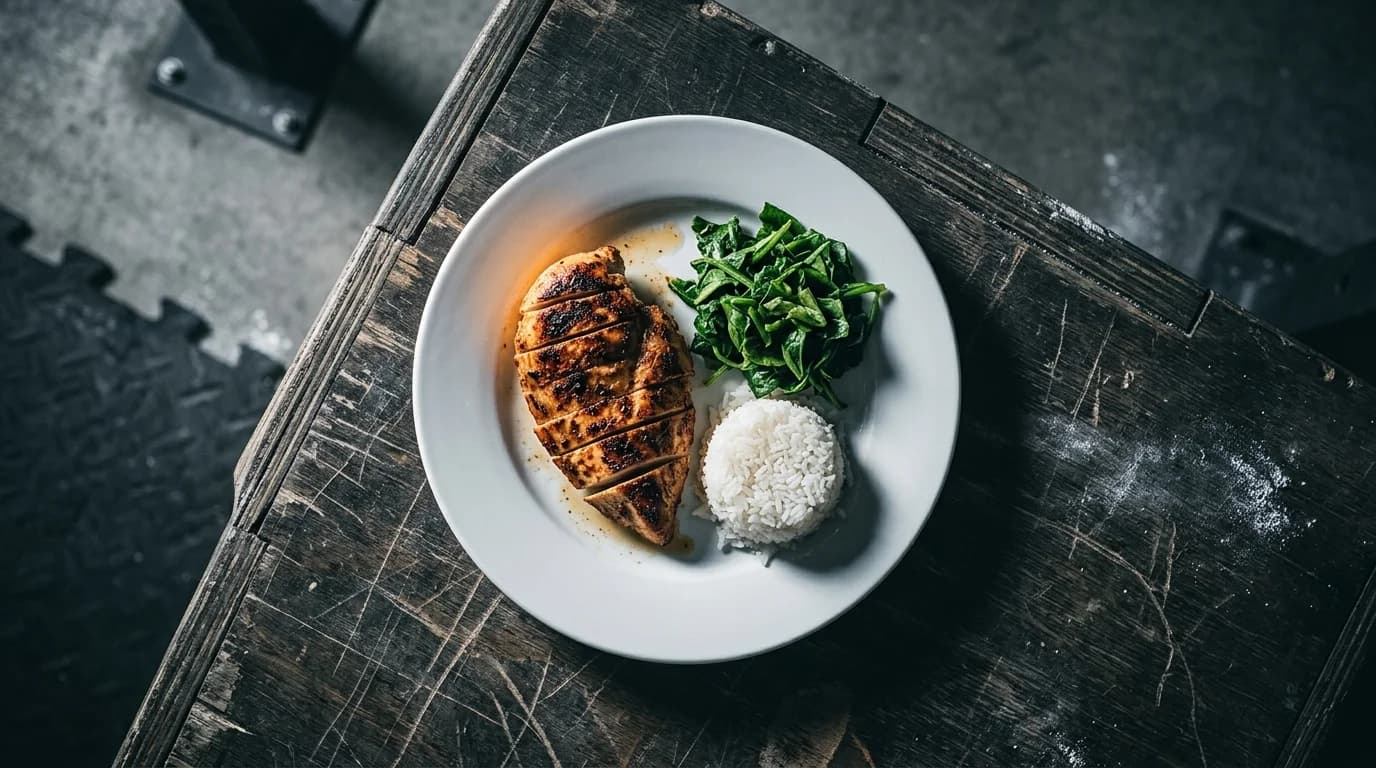
Protein first: the one rule that makes cutting easy
Hit one gram per pound of goal weight and eat it before anything else on the plate. Most of what's hard about dieting quietly disappears.

The plateau playbook: what to do when the scale stalls
Four flat days isn't failure — it's physics with a delay. The exact order of moves that breaks a stall without wrecking the rest of the program.
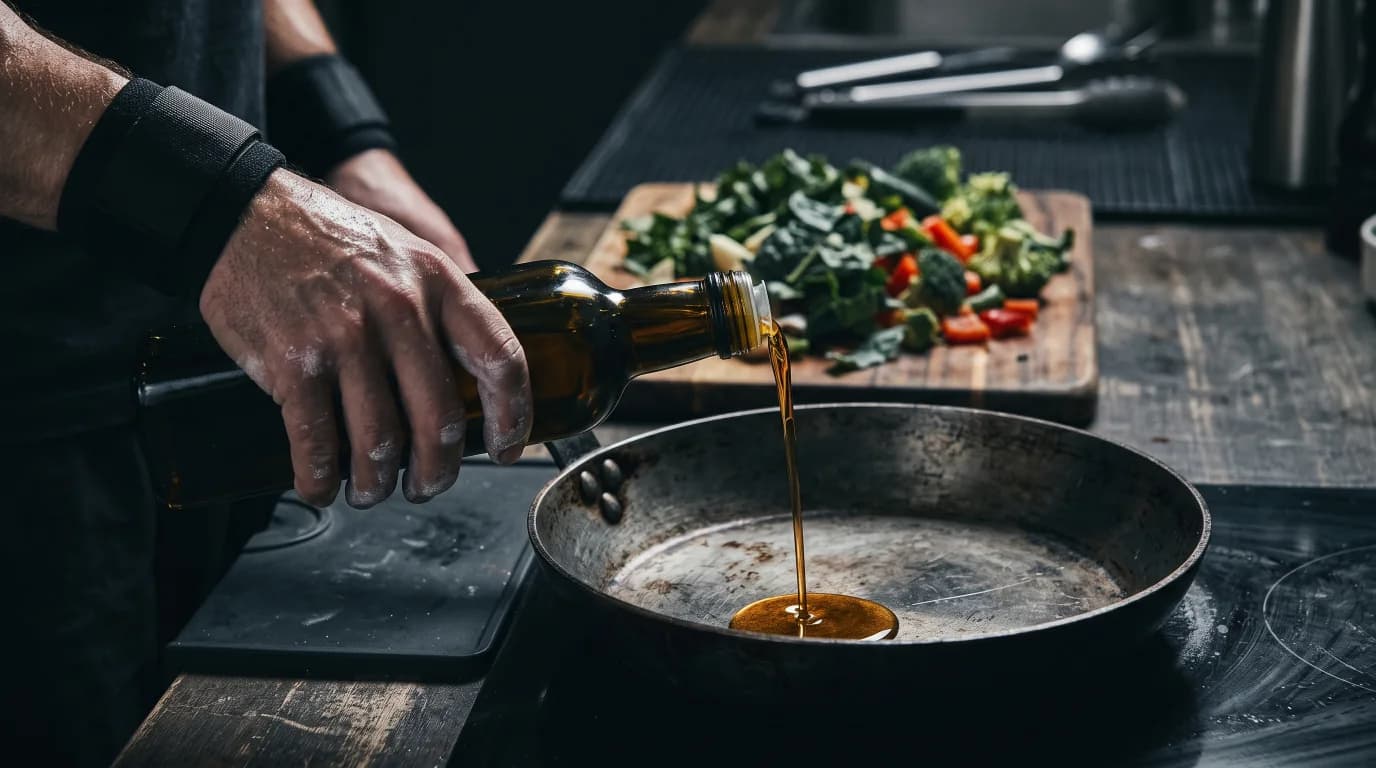
Hidden calories: the 300 a day you're not counting
Oil, dressing, the two forkfuls while cooking, the milk in four coffees. None of it feels like eating. All of it lands, and it's usually the entire reason a good week reads flat.

Why there are no liquid calories for 30 days
Calories you drink barely register as food. That makes them the cheapest thing in your diet to delete — and for most people it's a few hundred a day for no loss of satisfaction.

Coffee, tea and zero-sugar drinks: what's actually allowed
The full permitted list, a sensible ceiling on caffeine, where diet drinks currently sit in the evidence, and the two health-aisle drinks that break the rule without anyone noticing.

Your targets shrink as you do — here's that math
Lose ten pounds and your maintenance drops by roughly 50 to 100 calories a day. Do nothing about it and week three stalls while you're still doing everything right.
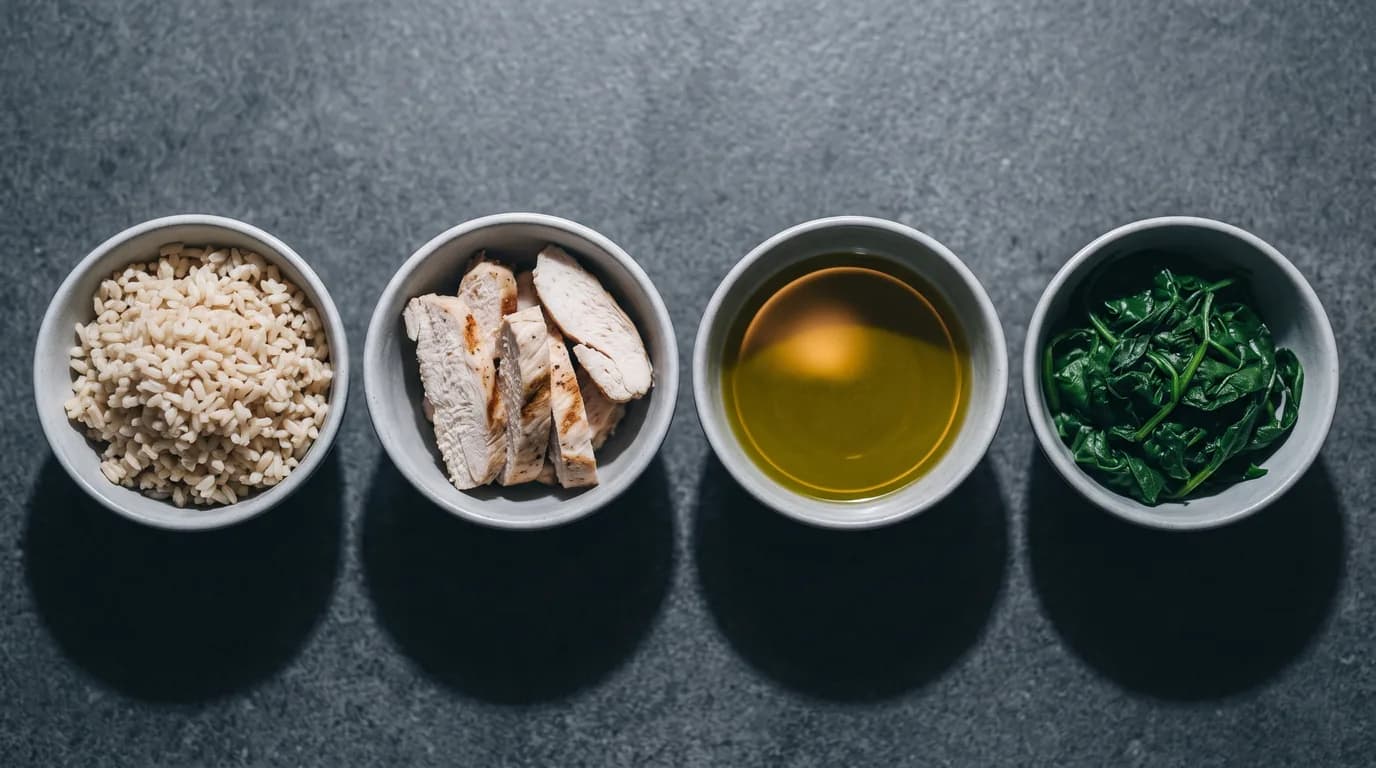
The swap table, explained: why any-for-any works
Category swapping only works if each row holds one variable constant. Here's what's controlled in each row, and the single rule that makes every swap legal.
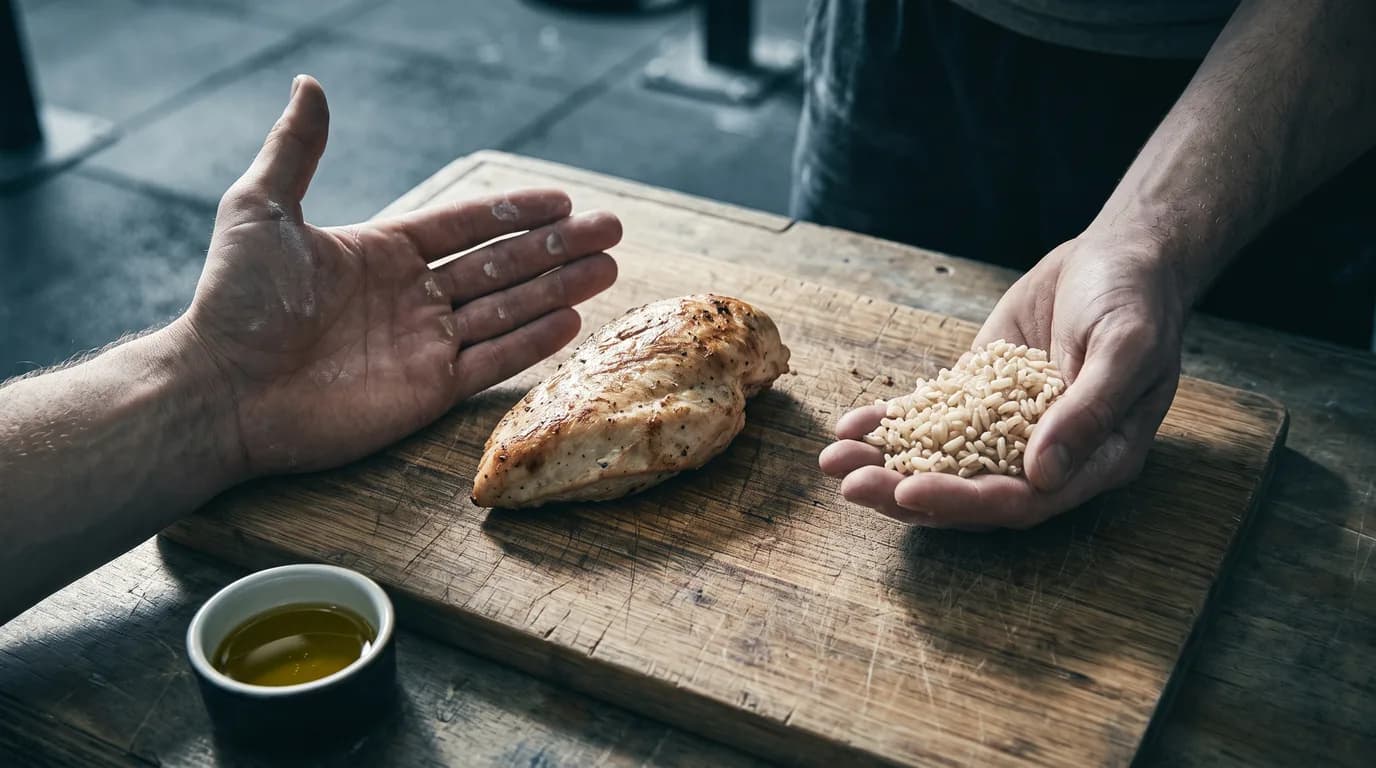
Palm, fist and thumb: portions without a food scale
Your hand scales with your body, which makes it a surprisingly good portion tool. Here's how accurate it really is, and the two foods you should still weigh.
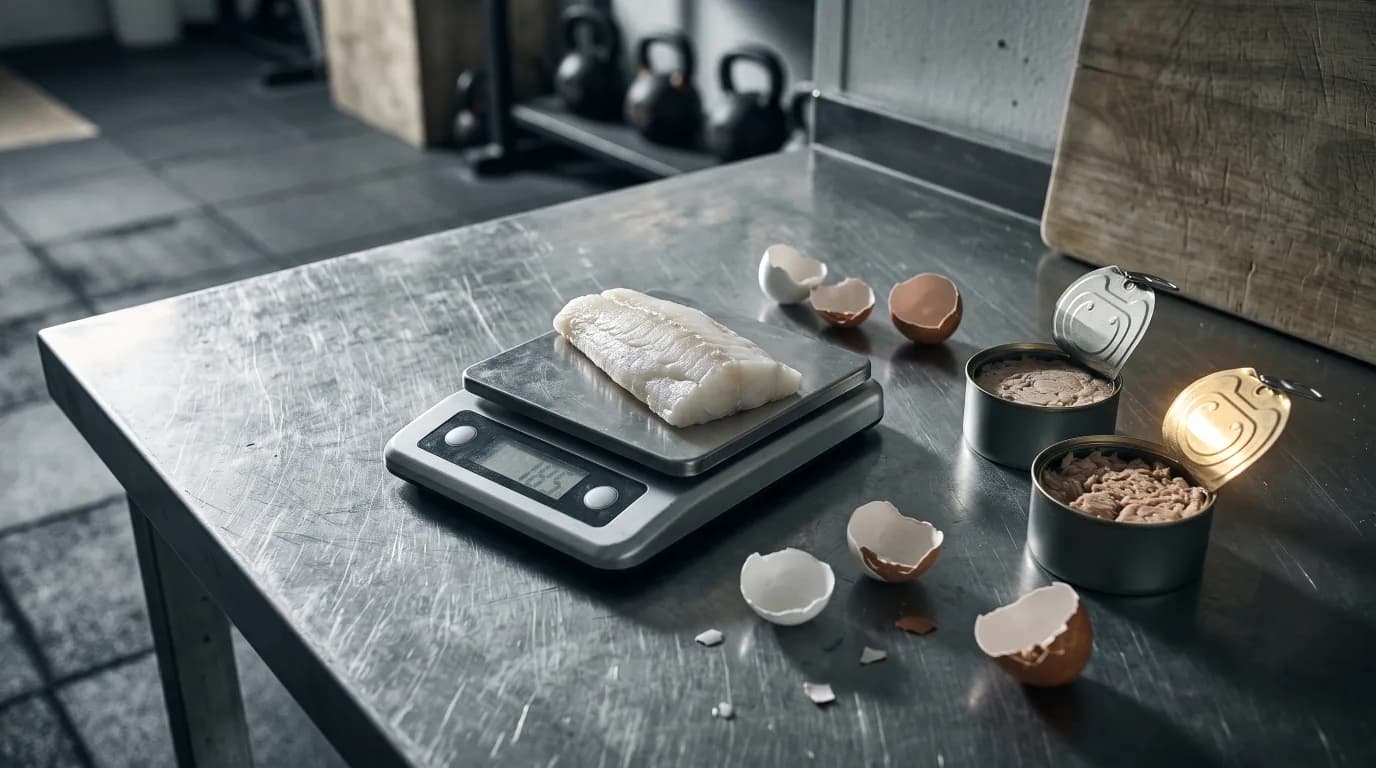
Protein sources ranked by grams per 100 calories
The only ranking that matters on a cut is protein per calorie, not protein per serving. Here's the swap-table list sorted by it, and what the top band actually buys you.
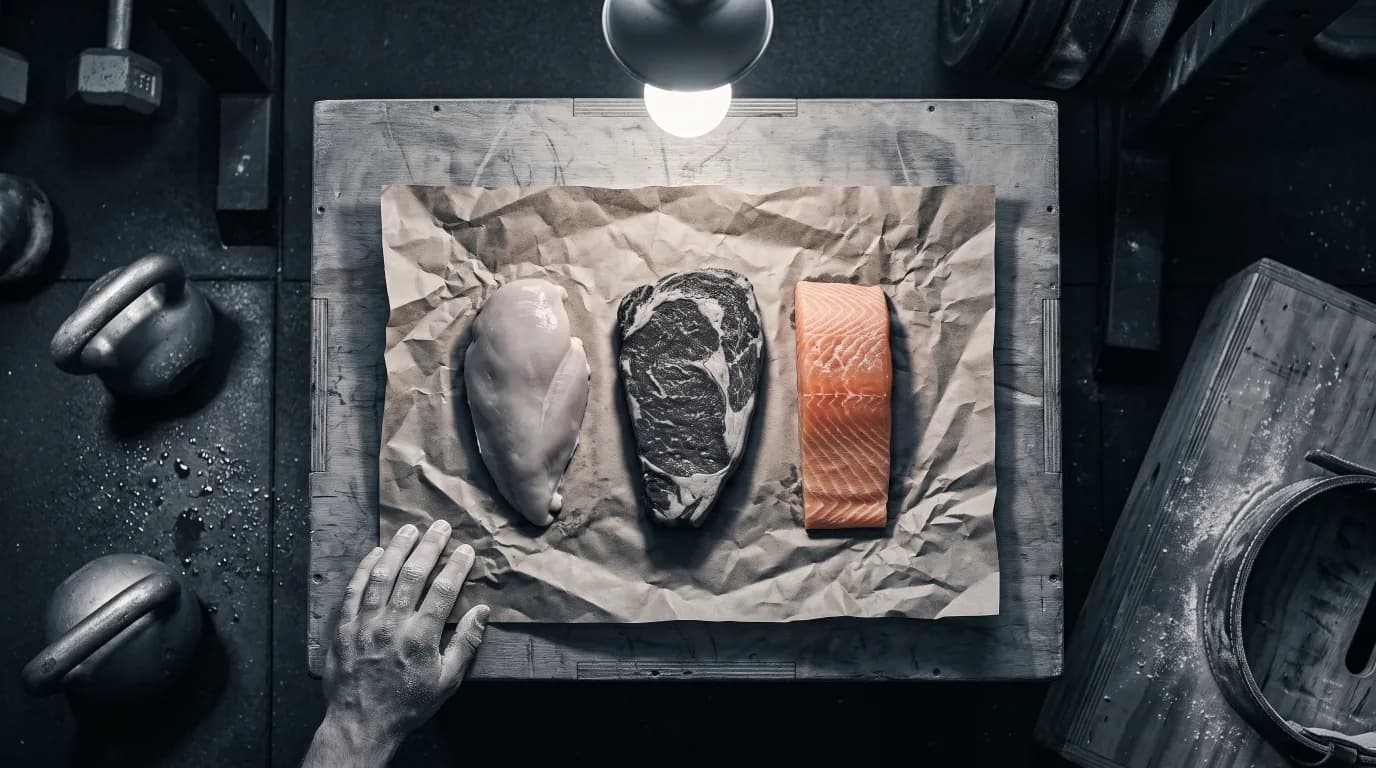
Chicken, beef or salmon: does the protein source matter?
Leucine, digestibility and the fat riding along. Three places the source genuinely changes the result, and the much larger area where it's noise once the daily total is hit.

Greek yogurt, cottage cheese and casein: the dairy protein tier list
Ranked on protein per 100 calories, satiety, digestion speed and cost — plus which of the three earns the late-evening slot and which one you should stop buying full-fat.

Whey protein: what it is, when to use it, what to buy
Concentrate, isolate or hydrolysate, what third-party testing certifies, and the honest case — whey is a convenience tool, not a fat-loss supplement.
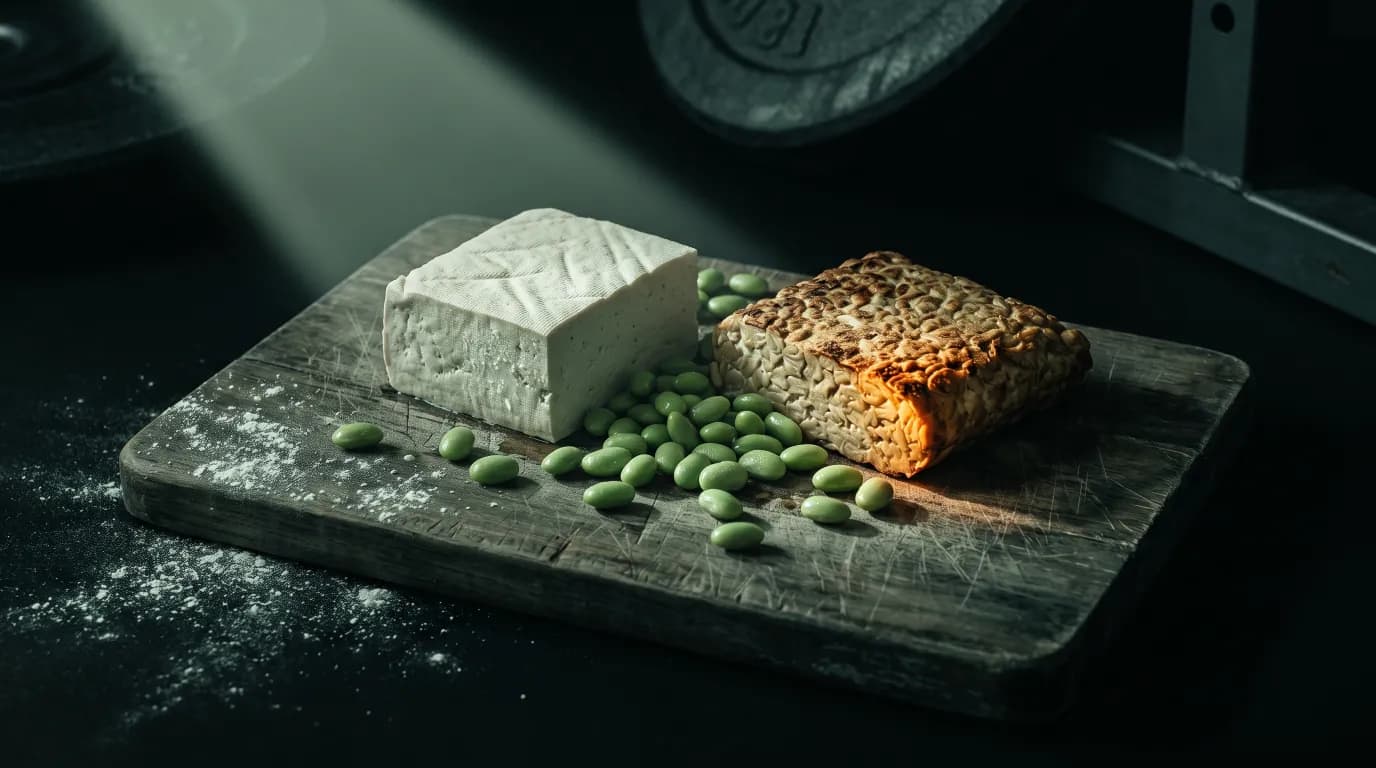
Plant-based on SHRED30: hitting 150g without meat
A parallel swap table for tofu, tempeh, seitan and legumes — plus the two adjustments, one to total intake and one to meal spacing, that make a plant-based cut work.
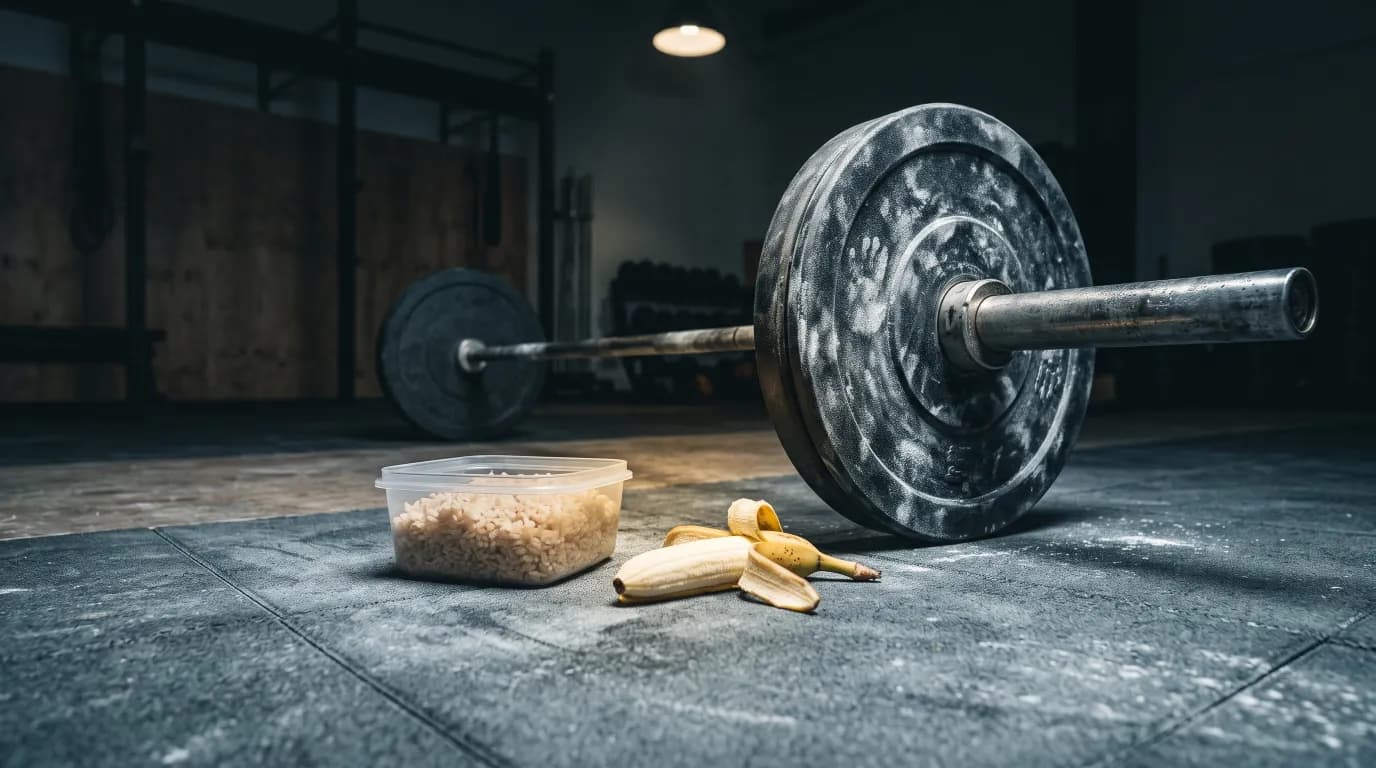
Carbs near training: the timing rule that isn't a myth
Total intake decides your fat loss. Placement decides whether the fourth interval feels possible. What 'keep the carbs near training' means in practice, and what it can't do.
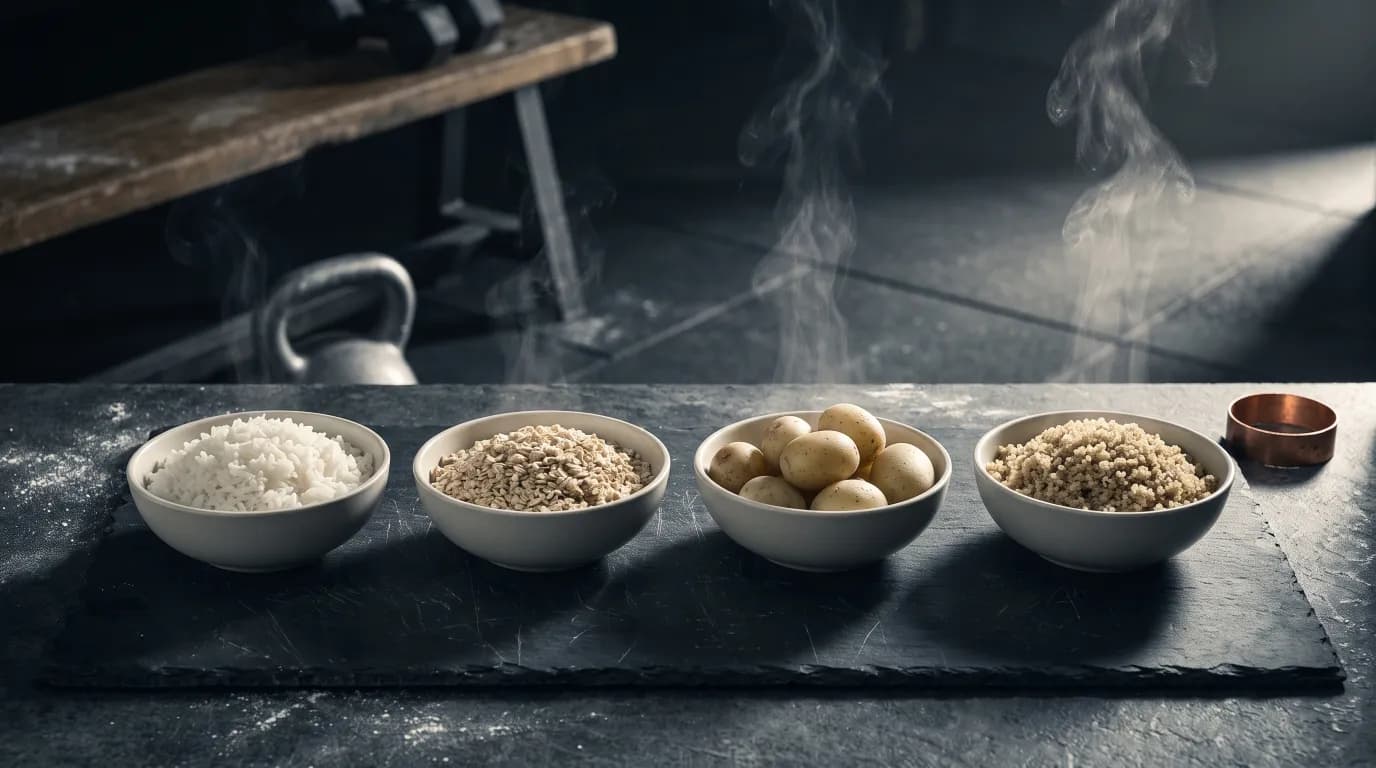
Rice, oats, potato, quinoa: the carb swap cheat sheet
Cooked-weight equivalents for every carb in the swap table, plus the fibre and water content that decides which ones keep you full at the same calorie number.
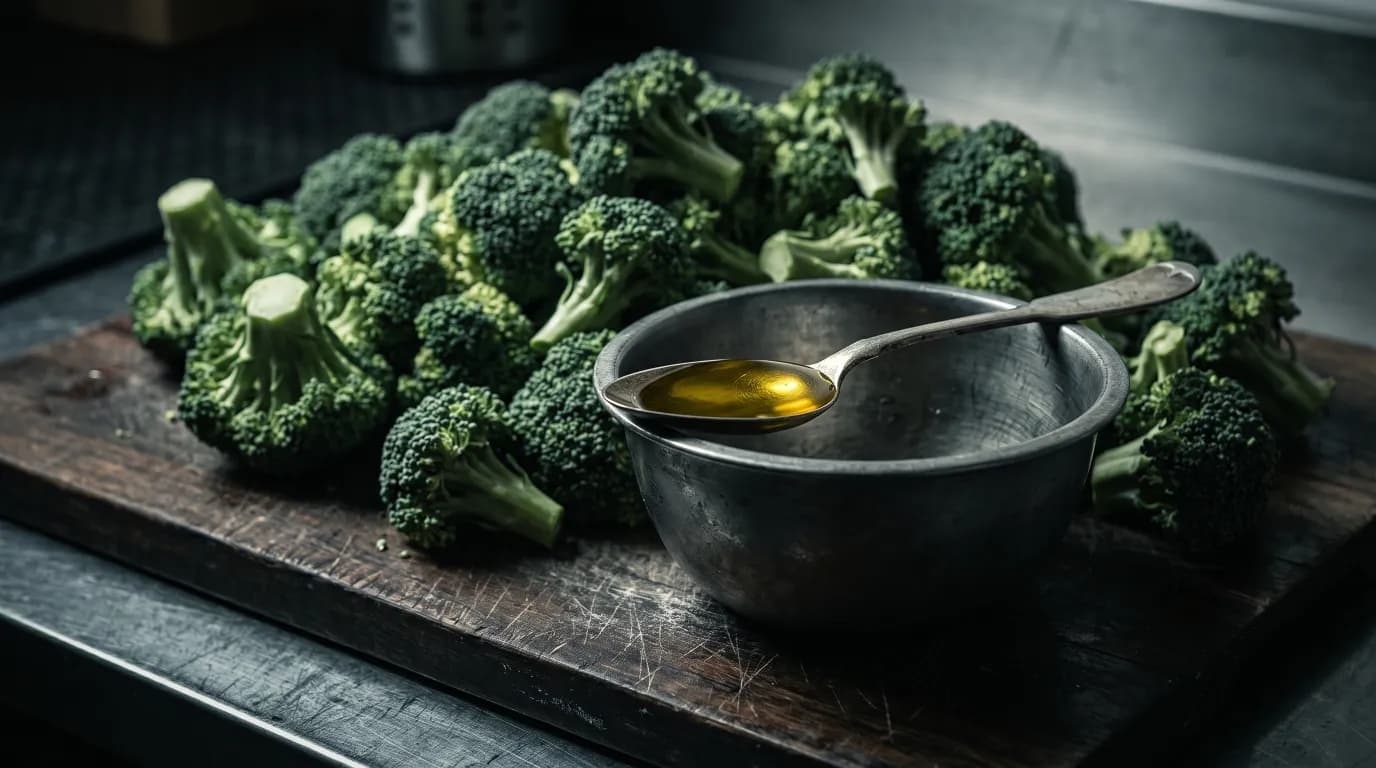
Why fats are measured and vegetables never are
A tablespoon of olive oil costs the same calories as roughly three and a half heads' worth of broccoli. That ratio is the entire reason one column has portions and the other doesn't.

Fibre: the target nobody set for you
Around 14 grams per 1,000 calories, and a high-protein deficit is the easiest place in nutrition to fall short of it. The swap-table foods that fix it for almost no calories.
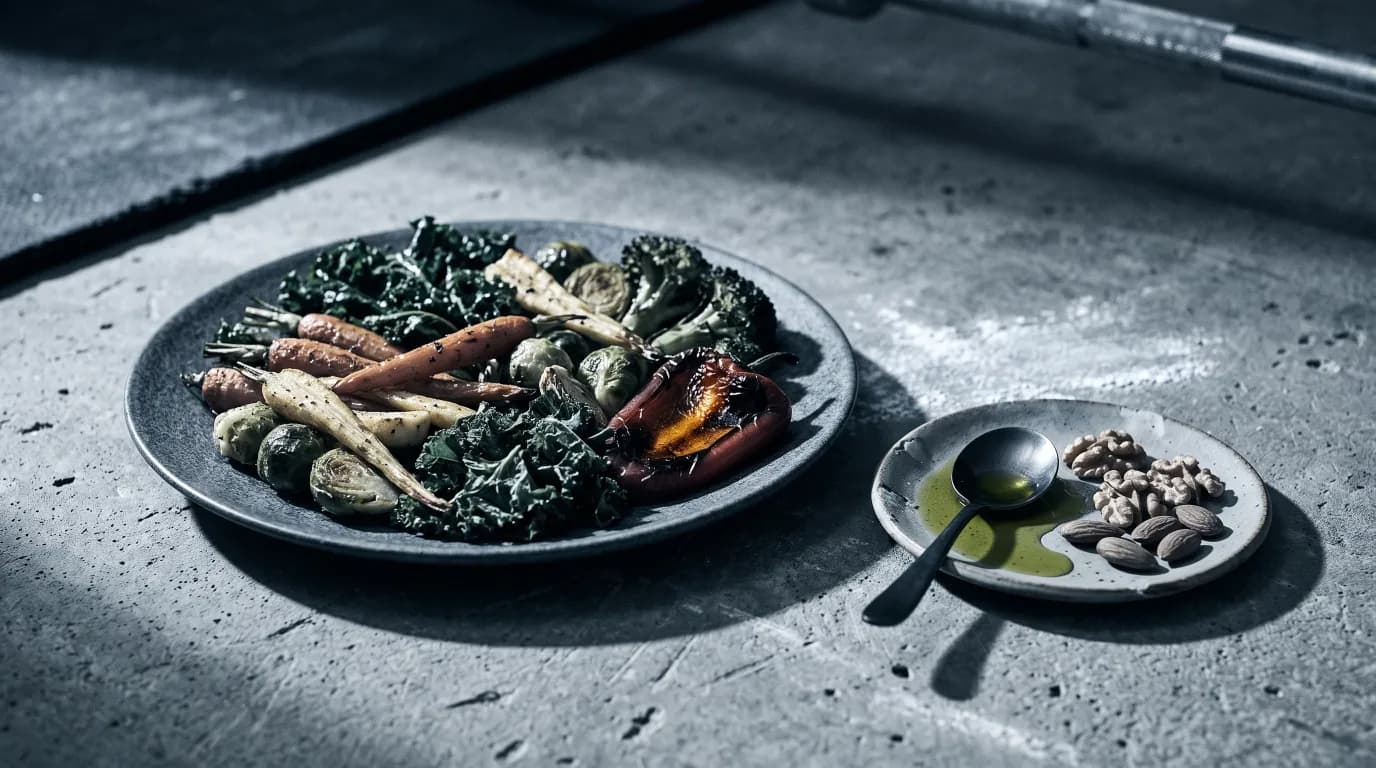
Vegetables are the off-switch: the volume-eating principle
People eat a fairly consistent weight of food each day, not a consistent number of calories. Five meal templates that use that fact instead of fighting it.

The weekly grocery run: one trolley, seven days, six targets
Buy for the protein number and the meals arrange themselves. Here is the full list in aisle order, with quantities for one person for seven days.

Meal prep in 90 minutes: the batch-cook blueprint
Three proteins, two carbohydrates, one sauce, one oven. The exact running order, what keeps how long, and the food-safety limits that decide what you freeze.
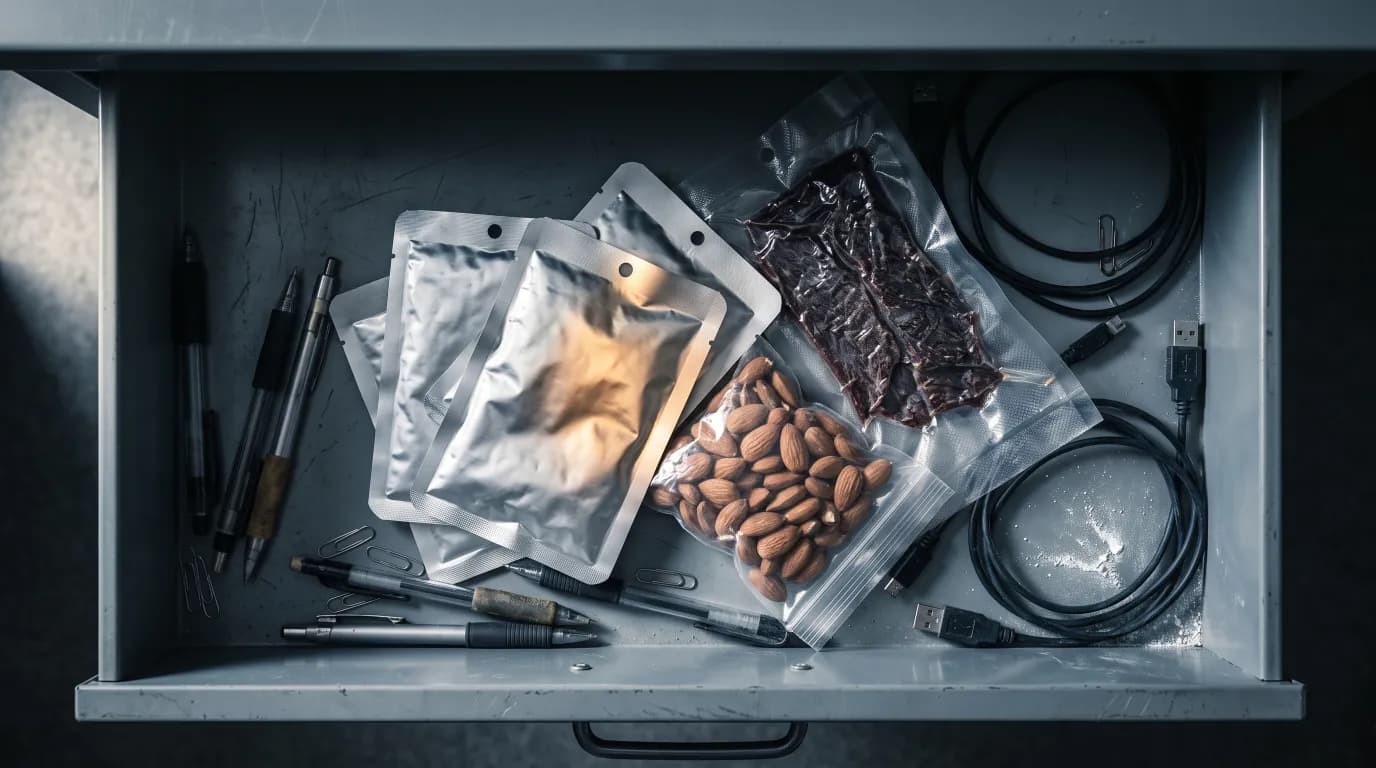
The emergency kit: jerky, tuna, bars — what to actually buy
What belongs in the desk drawer and the glovebox, judged on one number: grams of protein per 100 calories. Most protein bars fail it badly.
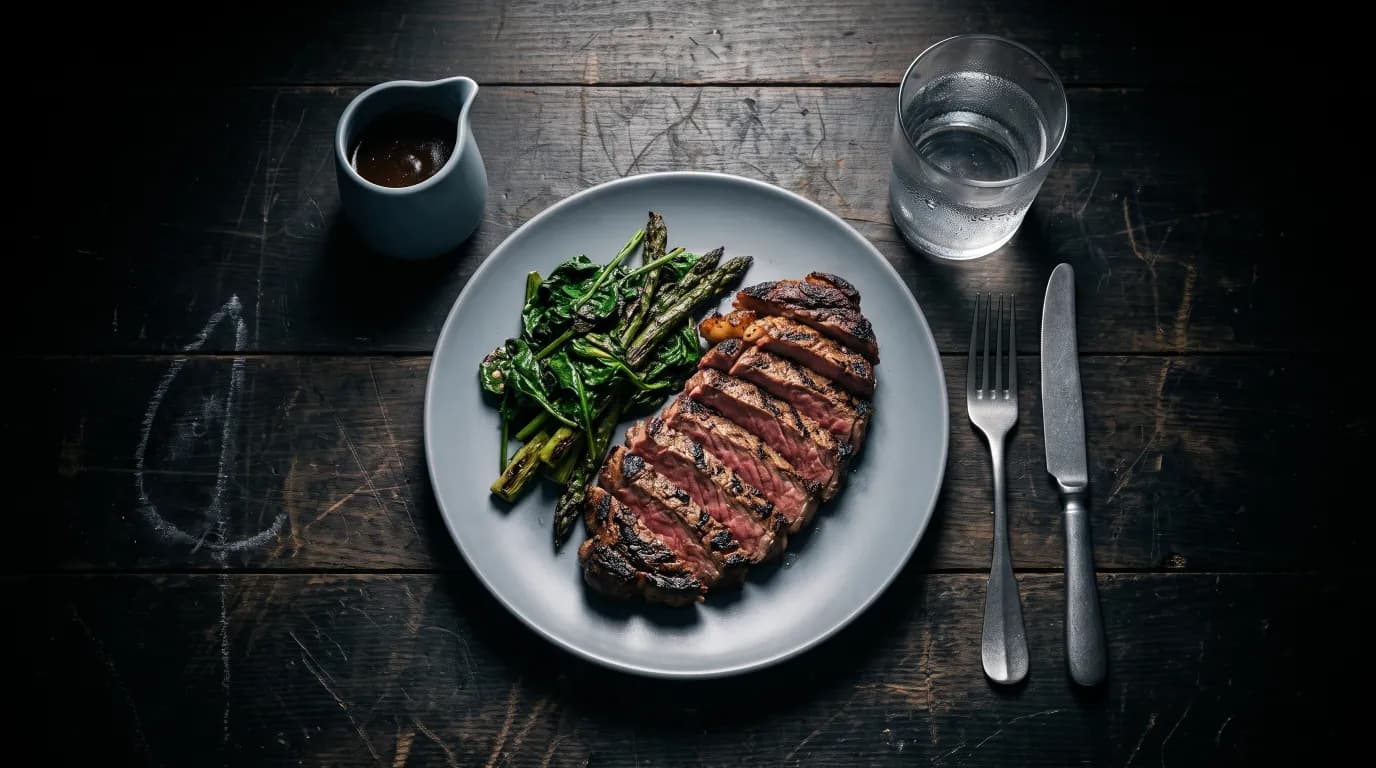
Eating out: the restaurant play for every cuisine
Double the protein, halve the starch, sauce on the side. Three rules, applied concretely to Italian, Indian, Chinese, Mexican, pub, sushi and steakhouse menus.

Alcohol on a 30-day cut: the honest cost
Seven calories a gram is the smallest part of the problem. Here is what drinking does to fat oxidation, sleep and the food that follows — and the harm-reduction plan if you are not abstaining.

Breakfast: does it matter, and what should it be?
The trials that assigned breakfast rather than observing it found very little. The program still front-loads protein at breakfast, for a reason that has nothing to do with metabolism.

Meal timing and intermittent fasting: do they beat the deficit?
When calories and protein are matched, fasting protocols perform about the same as ordinary dieting. What they are genuinely good at is something else entirely.
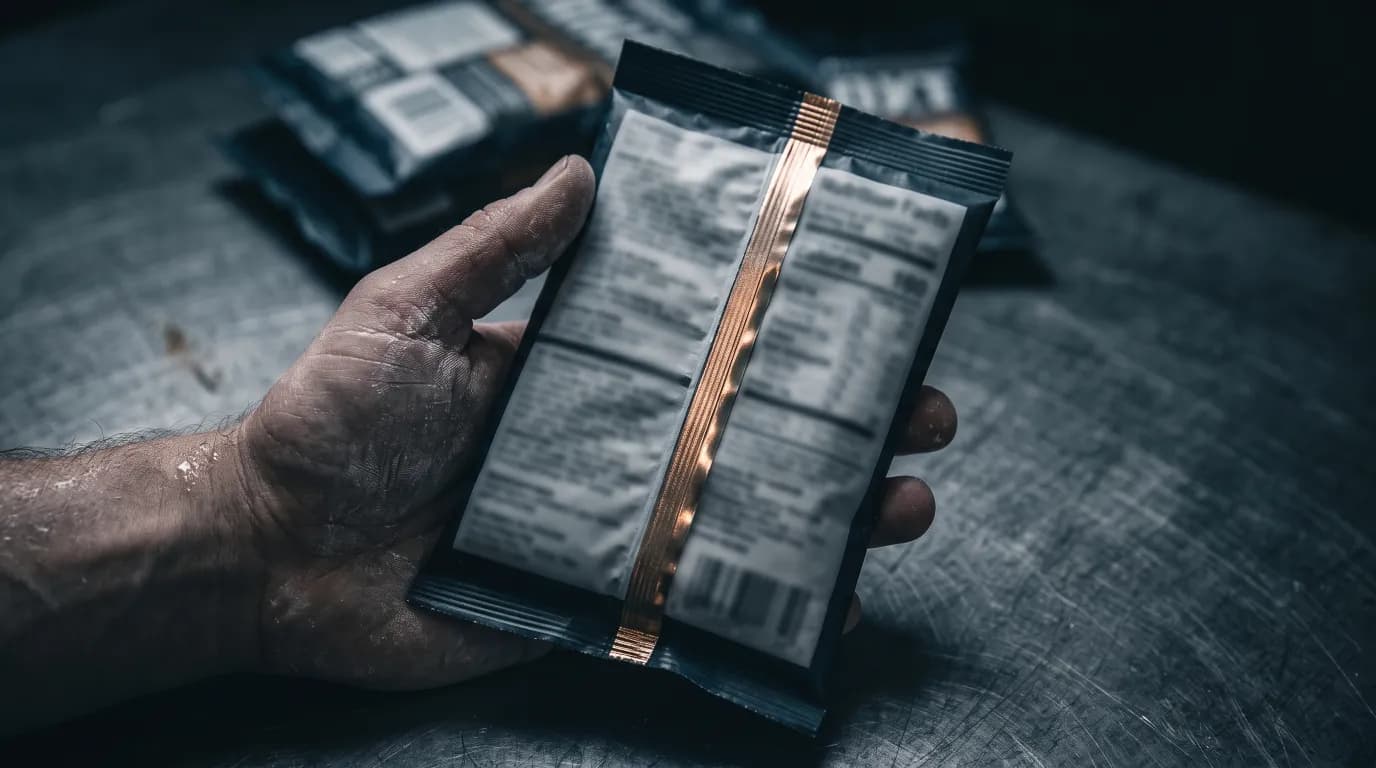
How to read a nutrition label in ten seconds
Four glances, one decision: serving size, protein per 100 calories, the sugar line and the order of the first three ingredients. Everything on the front is advertising.

Sodium, carbs and the two-pound overnight swing
Two pounds of fat is about seven thousand calories. You did not eat that at dinner. Here is what actually moved, how long it takes to clear, and why this is where week two ends for most people.

Cravings: the physiology and the four-move response
Habit cue, true hunger, or a protein shortfall — they feel identical and need different answers. A four-step ladder that resolves most of them inside ten minutes.

The refeed question: should you have a high-calorie day?
A refeed refills glycogen and buys you a better session. It does not reset your metabolism. Here's what one costs inside 30 days, and the single situation where the program says take it.

Cheat meals vs planned swaps: which survives a 30-day sprint
An unplanned cheat costs more than its calories — it costs three days of readable scale data and the next decision after it. The swap system gives you the same release with a known price.

Cooking oil is the most underestimated calorie in your kitchen
One level tablespoon is about 120 calories. Most people free-pour two without noticing. That habit alone is a third of a typical daily deficit, every day, for thirty days.

Coffee and caffeine as a training tool
The dose that has evidence behind it is 3 to 6 mg per kilogram, about an hour before you train. The cut-off that protects your sleep target matters more than the dose does.

Electrolytes: who actually needs them
The light-headed feeling in week one is usually sodium, not a detox. Here's what a deficit does to your electrolytes, and when a pinch of salt beats a forty-pound box of sachets.

Do you need a multivitamin at 1,500 calories?
Less food means less of everything in it. Four nutrients get tight first, all four have food fixes, and there is a narrow case where a basic multi is worth the two pounds a month.

Creatine: 5 grams, 2 lbs of water, and no, it's not a steroid
The most-studied legal supplement in sport does one small thing very reliably — and puts a couple of pounds of water on the scale in week one, which is why half of dieters quit it.

Fat burners, CLA and the supplement graveyard
An evidence audit of the category — thermogenics, CLA, raspberry ketone, garcinia, apple cider vinegar. Almost nothing survives, and two of them carry real risk.
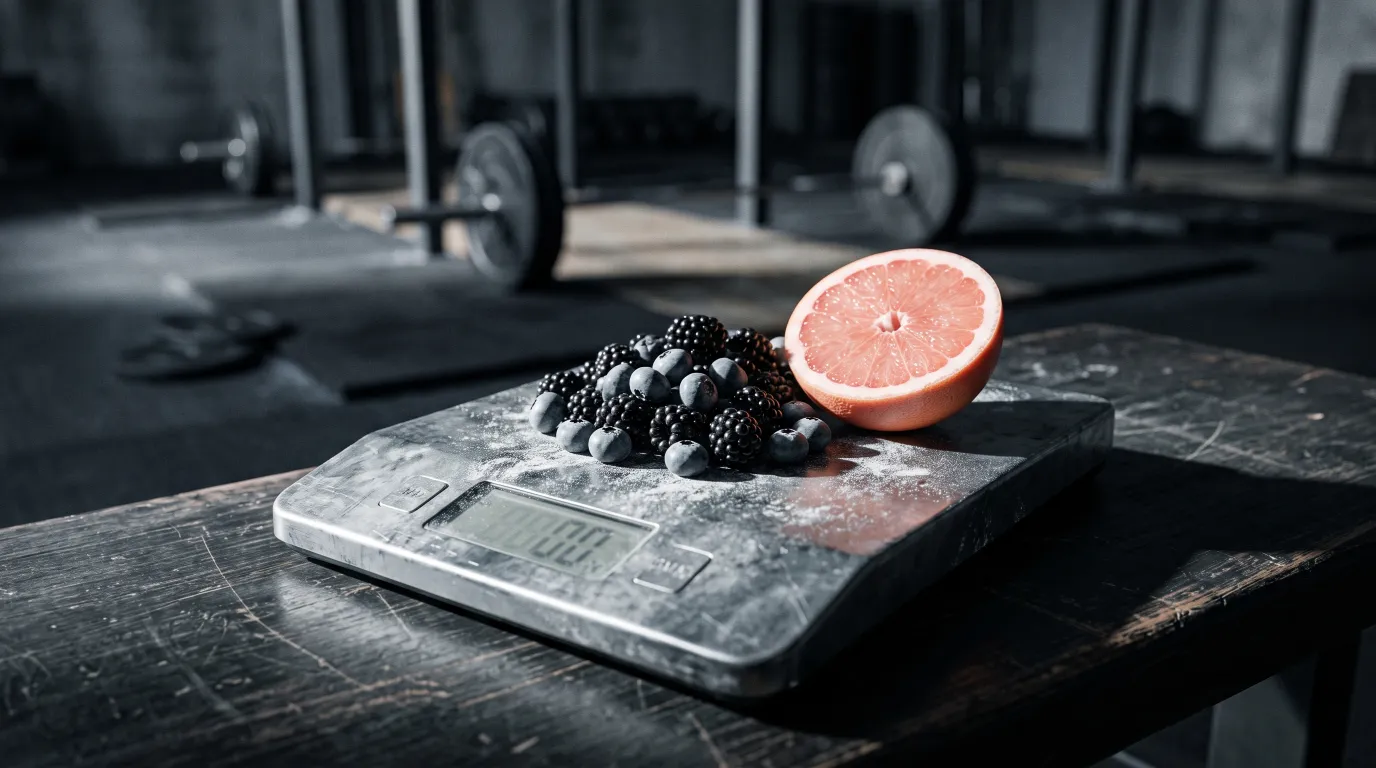
Fruit on a cut: sugar, fructose and the myth
The fructose scare came from studies of soft drinks and isolated sugar, not from apples. Here's what fruit costs per portion, which choices buy the most food, and the one form that is a genuine trap.

Whole eggs vs egg whites: the cholesterol question, settled
The yolk holds the nutrients and four fifths of the calories. Current guidance has moved on from the old 300mg limit — here's what that means for the ratio your breakfast should use.
The Cut: Field Manual
The cornerstone guides from this blog, cut into one PDF — calories, protein, training, sleep, plateaus and the exit plan.
The science under the system
These articles apply the science. The study guides teach it properly — five free guides, from gym basics to Level 4 strength & conditioning, behind every rule in the program. No signup.
Everything a new gym-goer actually needs — machines, the big lifts, cardio, soreness and the myths, in ten topics with 160 questions.
Muscles, energy systems, the heart and lungs — how training changes the body, in eleven topics with 254 practice questions.
Energy balance, macros, hydration and supplements — the theory behind the fuel plan, in eleven topics with 220 practice questions.
The programming and client-skills core of the Level 3 diploma — consultation to business, in twelve topics with 204 practice questions.
The Level 4 performance layer — programming, power, speed and periodisation, in fourteen topics with 237 practice questions.
Stop reading. Start Day 1.
Every workout written, every meal templated, every number computed — the full 30-day system behind these articles.
Start for free →Day 1 is free.