Cooking oil is the most underestimated calorie in your kitchen
Every food named in this article is an example, not an instruction — one way a person might choose to meet their targets. Swap anything for foods that fit your own needs, allergies, budget and beliefs. For advice specific to you, talk to a registered dietitian or your physician.
You weigh your chicken. You log your rice. Then you tip oil into the pan for a second and a half and log nothing, because oil does not feel like food. It is the largest single measurement error in most people's kitchens.
One level tablespoon of any cooking oil carries around 120 calories. A free pour is usually closer to two tablespoons, sometimes three, and it happens two or three times a day.
The number, and what it does over a month
Reference values put a tablespoon of olive, rapeseed, sunflower or coconut oil at roughly 120 calories and about 14 grams of fat. Butter is a little lower per tablespoon, around 100. There is no low-calorie cooking oil. Fat is nine calories a gram whatever the marketing on the front of the bottle says, and avocado oil is not lighter than sunflower oil in any sense that matters here.
So a pour you did not measure — say an extra tablespoon and a half at lunch and again at dinner — is roughly 360 calories a day, invisible. If your target sits at 1,500 with a 600-calorie deficit, that is more than half your deficit gone, every day, from a two-second habit you have never once thought about.
This is why the plan measures fat rather than leaving it to the eye. Not because fat is the enemy — it is essential, it is in the plan, and it makes food taste like something — but because it is the only macronutrient dense enough to erase a deficit before you notice it happened.
Where the oil actually hides
It is rarely the tablespoon you deliberately added. It is the four places you never counted.
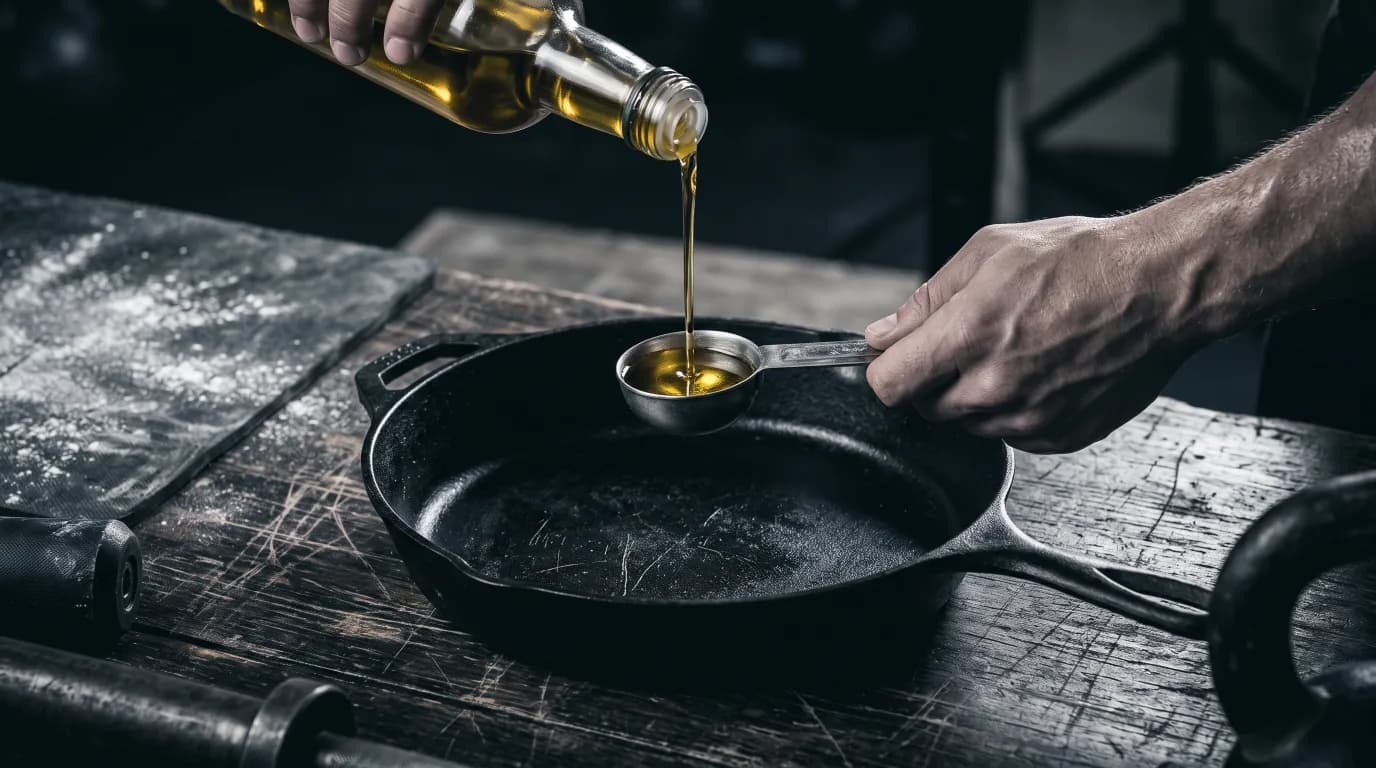
- The pan pour. A one-second free pour from a standard bottle is usually one and a half to two tablespoons — 180 to 240 calories before any food touches the surface
- Dressing. Most vinaigrettes are two-thirds oil, so three tablespoons over a salad can cost more than the chicken on top of it
- Roasted vegetables. Tossing a full tray takes far more oil than you would ever pour over the same vegetables on a plate
- Restaurant and takeaway cooking, where the oil is not on the menu, is not on the label, and is generally not modest
- Nut butters, pesto, mayonnaise and hummus — the same problem in a jar, where a heaped spoon is easily double a level one
Rules that cost you nothing
None of this requires eating dry food. It requires the oil going through something that measures it before it hits the pan.
Measure with a spoon, every time, for two weeks. Not to keep it up forever, but because after two weeks you will recognise what a tablespoon looks like in your own pan, and the estimate becomes reliable. Use a spray for anything where the oil is only there to stop sticking — eggs, a stir-fry base, a tray of vegetables. A spray delivers a fraction of a teaspoon per pass, and for non-stick cookware that is genuinely all the job needs.
The distinction worth learning is between oil that is doing a job you can taste and oil that is only there so the pan behaves. The first is worth measuring and spending. The second is worth replacing with a spray, a splash of stock, or a hotter pan. Almost all of the 300 calories people lose track of are in the second category, which is why cutting them changes the calorie line and changes nothing about how the food tastes.
Pan technique that needs less oil
Most people over-oil because their food sticks, and food sticks mostly because the pan was too cold when it went in. Heat the pan properly before the oil, let the oil shimmer, then add the food — a properly preheated surface needs a fraction of what a cold one does.
Two more that do real work. Sauté in a splash of stock or water and add the measured oil at the end, off the heat, where you can actually taste it. And finish with raw oil rather than cooking with it: a measured teaspoon of good olive oil drizzled over a finished dish reads much stronger on the palate than a tablespoon cooked into it, which means you spend fewer calories for more flavour.
“Nobody in the history of dieting has been undone by chicken. They were undone by the pan it was cooked in.”
Keeping fat in the plan
- Your fat allowance is a real number in the plan — spend it deliberately on food you taste, not on lubrication
- Buy a spray bottle you fill yourself, and keep the pouring bottle out of arm's reach of the hob
- Measure dressings into the bowl, or build them at a two-to-one vinegar-to-oil ratio and accept the sharper taste
- One tablespoon in, one tablespoon logged. The swap table's fat portions assume a measured spoon, not a pour
- If a dish genuinely needs more oil, take the calories from carbohydrate that day rather than from your protein portion
Sources
Written by Coach D — the voice of the certified personal trainers behind the SHRED30 system. Educational content, not medical or dietary advice.
Day 1 is free.
Go deeper: the free anatomy nutrition and strength & conditioning study guides teach the science under every article.