Creatine: 5 grams, 2 lbs of water, and no, it's not a steroid

Every food named in this article is an example, not an instruction — one way a person might choose to meet their targets. Swap anything for foods that fit your own needs, allergies, budget and beliefs. For advice specific to you, talk to a registered dietitian or your physician.
Creatine has more human trials behind it than every fat burner on the shelf combined, costs a few pounds a month, and is routinely avoided by the exact people it would help most — because it puts weight on the scale in the first week of a diet.
It is also not a steroid, not hormonal, and not a controlled substance. It is a compound your body makes and that you already eat, in small amounts, every time you have meat or fish.
What it actually does
Your muscles hold creatine as phosphocreatine, which is the fuel system for very short, very hard efforts — the first five to fifteen seconds of a set, a sprint, a jump. Supplementing raises how much you store, which means that system refills faster between efforts.
The practical effect is small and specific: one or two more good reps on a set, slightly better quality on the back end of a session. Do that across a month of training and the accumulated work is meaningfully higher, which is the mechanism that matters in a deficit — more quality training volume is one of the levers that biases loss toward fat and away from lean tissue.
It is not a fat burner. It does not raise your metabolic rate in any way you would notice, and it will not change what the calorie target has to be. Its entire contribution is to the training side of the ledger.
The water-weight bump that panics dieters
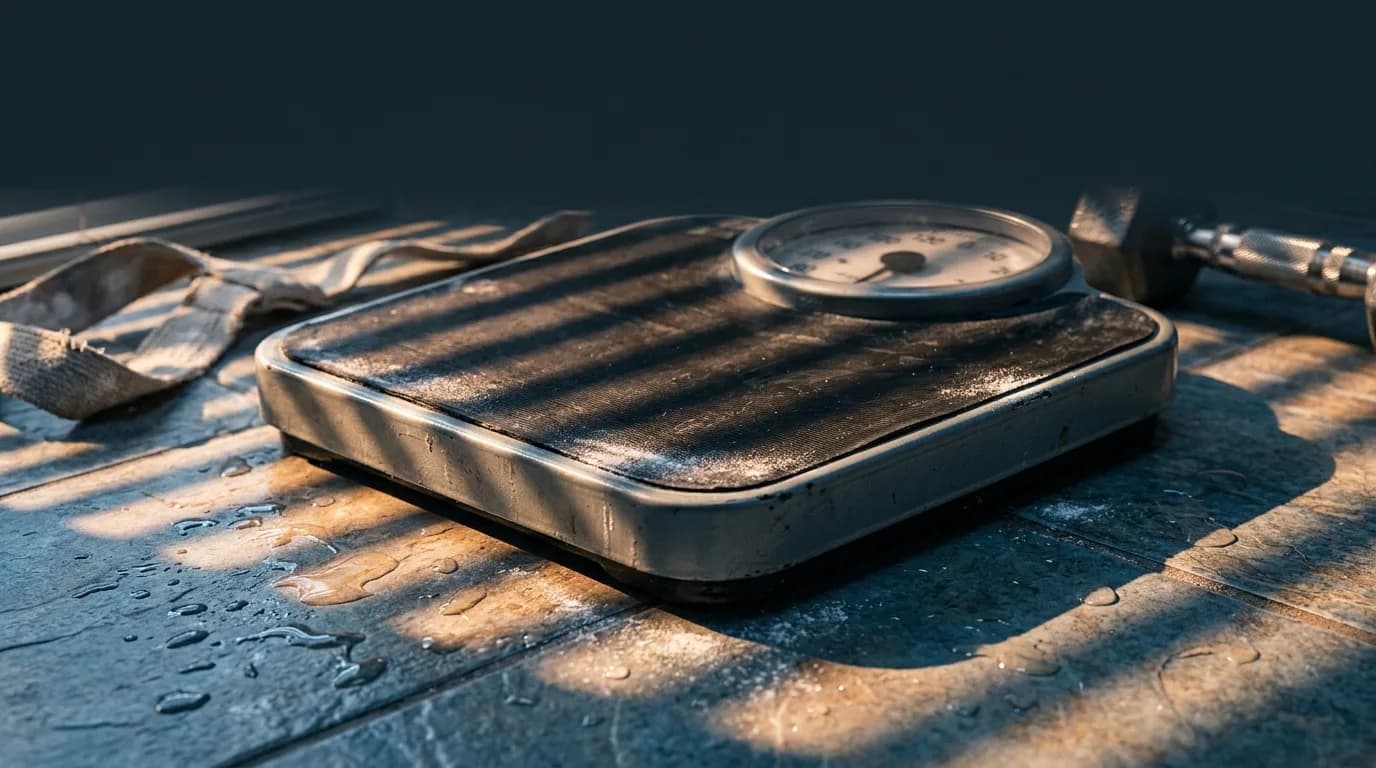
Creatine draws water into muscle cells. Start a standard loading protocol and the scale typically rises by something in the region of one to two kilograms — two to four pounds — over the first week, essentially all of it intracellular water.
For someone three days into a cut, watching the scale like a hawk, this is catastrophic news presented at the worst possible moment. It is not fat. It is inside the muscle rather than under the skin. And it comes off when you stop, which is not a reason to stop.
There are two ways to handle it. Start creatine on day one, so the bump lands inside the week you were already told would be noisy from water loss. Or skip the loading phase entirely and take 3 to 5 grams a day from the start — you reach the same muscle saturation in around three to four weeks instead of one, and the scale barely registers it.
- 3 to 5 grams a day of creatine monohydrate, every day, training or not
- Loading — around 20 grams a day split into four doses for five to seven days — is optional and saturates you faster
- Timing does not matter much. Take it whenever you will remember, with food or a drink
- Expect one to two kilos on the scale early if you load. It is water inside muscle, not fat
- Some people respond very little, usually because they already eat a lot of meat and fish and are close to saturated
The safety picture, honestly
Creatine monohydrate is among the most studied supplements in existence, and reviews from sports nutrition bodies and government health sources consistently find no evidence of harm in healthy adults at recommended doses, including in studies running for years.
One detail is worth knowing before your next blood test. Creatine raises serum creatinine, which is the marker used to estimate kidney function, so a routine test can look worse than it is. That is a measurement artefact, not damage — but tell whoever ordered the test that you take it, so nobody chases a problem that is not there.
The caveats are the ordinary ones. If you have kidney disease, take medication affecting your kidneys, are pregnant, or are under 18, this is a conversation with your clinician first. And the stomach upset people report is nearly always a dose taken all at once on an empty stomach — split it or take it with food.
“It adds a rep, not a physique. Over thirty days, the reps are the point.”
Buying it without being sold to
Buy creatine monohydrate. That is the form with essentially all of the research behind it, and it is the cheapest thing on the shelf. The hydrochloride, ethyl ester and buffered versions cost more and have never demonstrated a convincing advantage over the plain powder.
Ignore anything sold as a blend with a proprietary name, a flavour system and a training-day protocol. You want an unflavoured tub, a five gram scoop, and ideally a third-party testing mark on the label, since supplements are not approved before sale the way medicines are.
Is it worth it during these 30 days?
If you are lifting three or more times a week and intend to keep lifting after day 30, yes — it is cheap, well evidenced, and works on exactly the thing this program is trying to protect. Start it on day one and take the water with the week-one flush.
If you are two weeks in and have been watching your trend line settle, wait. Starting mid-program adds a couple of pounds of water on top of a chart you have finally learned to read, and there is no benefit to that timing. Start it on day 31, with the exit plan.
Sources
Written by Coach D — the voice of the certified personal trainers behind the SHRED30 system. Educational content, not medical or dietary advice.
Day 1 is free.
Go deeper: the free anatomy nutrition and strength & conditioning study guides teach the science under every article.