Hidden calories: the 300 a day you're not counting
Every food named in this article is an example, not an instruction — one way a person might choose to meet their targets. Swap anything for foods that fit your own needs, allergies, budget and beliefs. For advice specific to you, talk to a registered dietitian or your physician.
You logged everything. You hit the target on paper four days running and the seven-day average hasn't moved. Before you cut the target, audit the things you never thought of as food.
This is the second step of the plateau protocol for a reason: in most flat weeks the deficit was never actually there. It leaked out through the cooking oil, the dressing, the tasting spoon and the coffee — none of which feels like eating, all of which counts.
Oil is the biggest one, and it isn't close
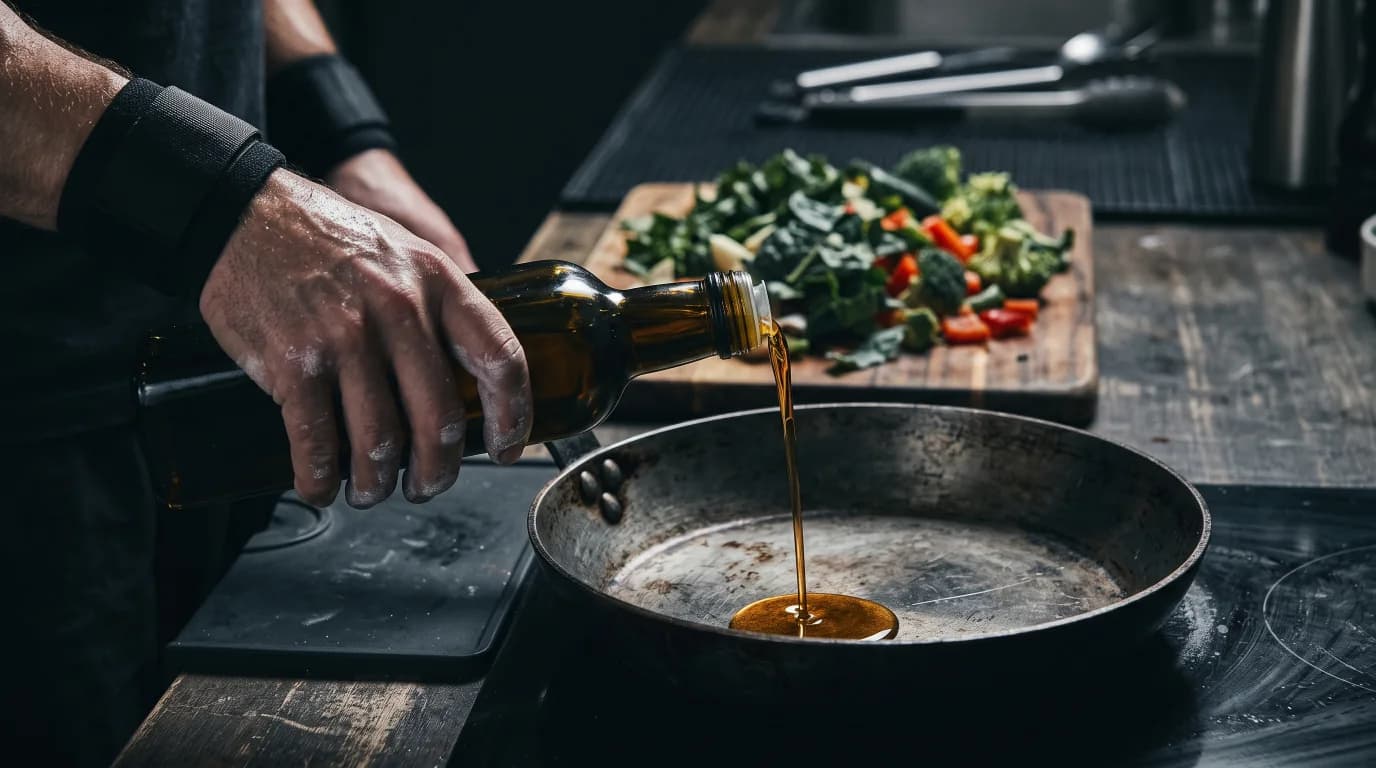
A tablespoon of any cooking oil is roughly 120 calories, per USDA's food composition data. That's true of olive, rapeseed, coconut and the expensive one. Fat is the most energy-dense thing in your kitchen and pouring it is the least precise thing you do all day.
Nobody pours a tablespoon. A free-hand glug into a hot pan is comfortably two to three, which means the pan alone can carry 250 to 350 calories before any food goes in. Measure it once with an actual spoon and you'll never guess again — that single habit is often the whole gap between a working deficit and a flat month.
The same applies to the oven tray, the roasted vegetables and anything described as drizzled. It's also why restaurant food is so hard to estimate: a kitchen cooking for flavour uses far more fat than you would at home, and none of it is visible on the plate.
The ranked audit
Work down this list in order. The first two items account for most of the missing calories for most people, and you'll usually find your answer before you reach the bottom.
Do it for one ordinary weekday and one weekend day. The weekend is where the pattern usually lives, and an audit built only from Tuesdays tends to exonerate you.
- Cooking fats — oil, butter, ghee. Roughly 120 calories a tablespoon and almost always underestimated by half
- Dressings, mayo and creamy sauces — a standard two-tablespoon serving of a full-fat dressing runs to well over a hundred calories, and restaurant portions are larger than that
- Bites while cooking and finishing the kids' plates — three or four unlogged mouthfuls a day is a realistic couple of hundred calories, and none of it gets recorded
- Coffee add-ins — a splash of whole milk is small, four splashes plus a syrup pump is not, and the milky coffees are drinks the size of a meal
- Cordials, squash, juices and sports drinks — sweetened liquid you drink out of habit rather than hunger
Bites, licks and tastes
The tasting spoon is genuinely invisible. It happens standing up, it isn't a meal, there's no plate involved, and the brain files it under cooking rather than eating. Multiply a couple of forkfuls of pasta, the end of a child's fish finger and a spoon of sauce across a week and you have most of a day's deficit gone.
The fix isn't willpower. It's a rule: nothing goes in your mouth standing at the hob. Taste with a teaspoon, once, or don't taste. Plate everything, sit down, and the audit takes care of itself.
The same rule covers the office biscuit tin and the leftovers you clear off someone else's plate while stacking the dishwasher. Neither feels like a decision. Both are, and both go in the log for three days so you can see the size of them.
What to do about it without weighing every meal
You don't need to track forever. Three honest days — everything measured, including what goes in the pan — will show you your own pattern, and your pattern almost never changes. After that you're managing two or three known leaks rather than auditing your entire diet.
The playbook line about sauces and dressings being where swaps go to die is the same idea from the other end. People swap the chicken for leaner chicken and keep the quarter cup of dressing, then wonder why the swap did nothing.
- Spray or spoon oil, don't pour it — one measured tablespoon per pan, per meal
- Dressings go on the side, applied by the teaspoon, or get replaced with vinegar, lemon, mustard and herbs
- Log the bites for three days. Just knowing the number usually ends the habit
- Take milky coffees down to one a day and make the rest black or with a small splash
- Pick one restaurant meal a week and order it plainly — grilled, sauce on the side — rather than trying to estimate a kitchen you can't see
“Nothing in the pan is free, and the pan is where most of the missing calories are.”
Before you cut the target
Run this audit first. Cutting calories to cover uncounted calories makes the plan harder to hold and doesn't fix the leak — you end up eating less on paper, the same in reality, and hungrier for the trouble.
Fix the measurement, then give it four days at the target you already have. That order solves most stalls without changing a single number on your dashboard.
None of this requires you to eat differently. The meals stay the meals. You're changing how the fat gets into the pan and what goes on top of the salad, which is the least painful three hundred calories you will ever remove from a day.
Sources
Written by Coach D — the voice of the certified personal trainers behind the SHRED30 system. Educational content, not medical or dietary advice.
Day 1 is free.
Go deeper: the free anatomy nutrition and strength & conditioning study guides teach the science under every article.