Whey protein: what it is, when to use it, what to buy
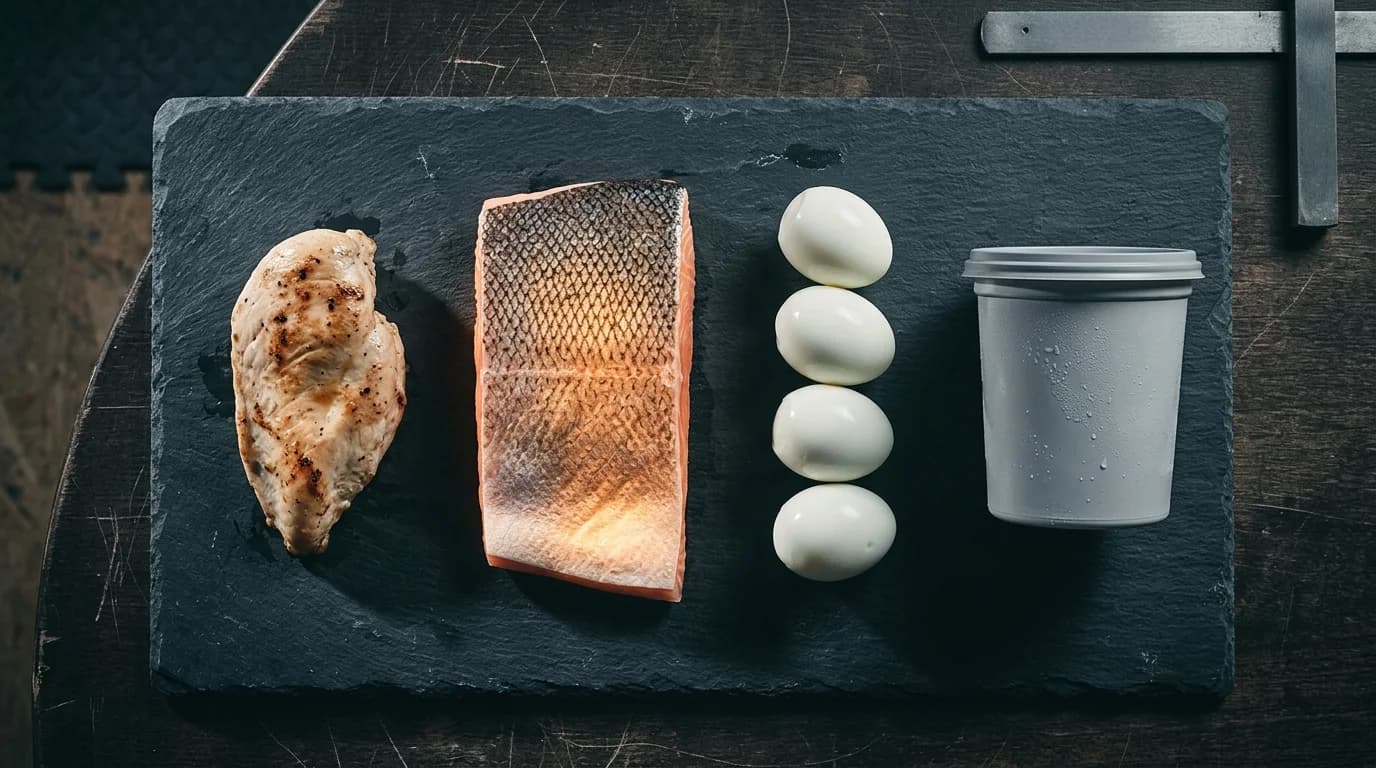
Every food named in this article is an example, not an instruction — one way a person might choose to meet their targets. Swap anything for foods that fit your own needs, allergies, budget and beliefs. For advice specific to you, talk to a registered dietitian or your physician.
The playbook lists two supplements worth the money, and whey is one of them. It is also the one most often bought for the wrong reason — as if the powder itself did something to your body fat.
It doesn't. What it does is make a 150-gram protein target achievable on a day with two meetings over lunch. That's a smaller claim, and a genuinely useful one.
What it actually is
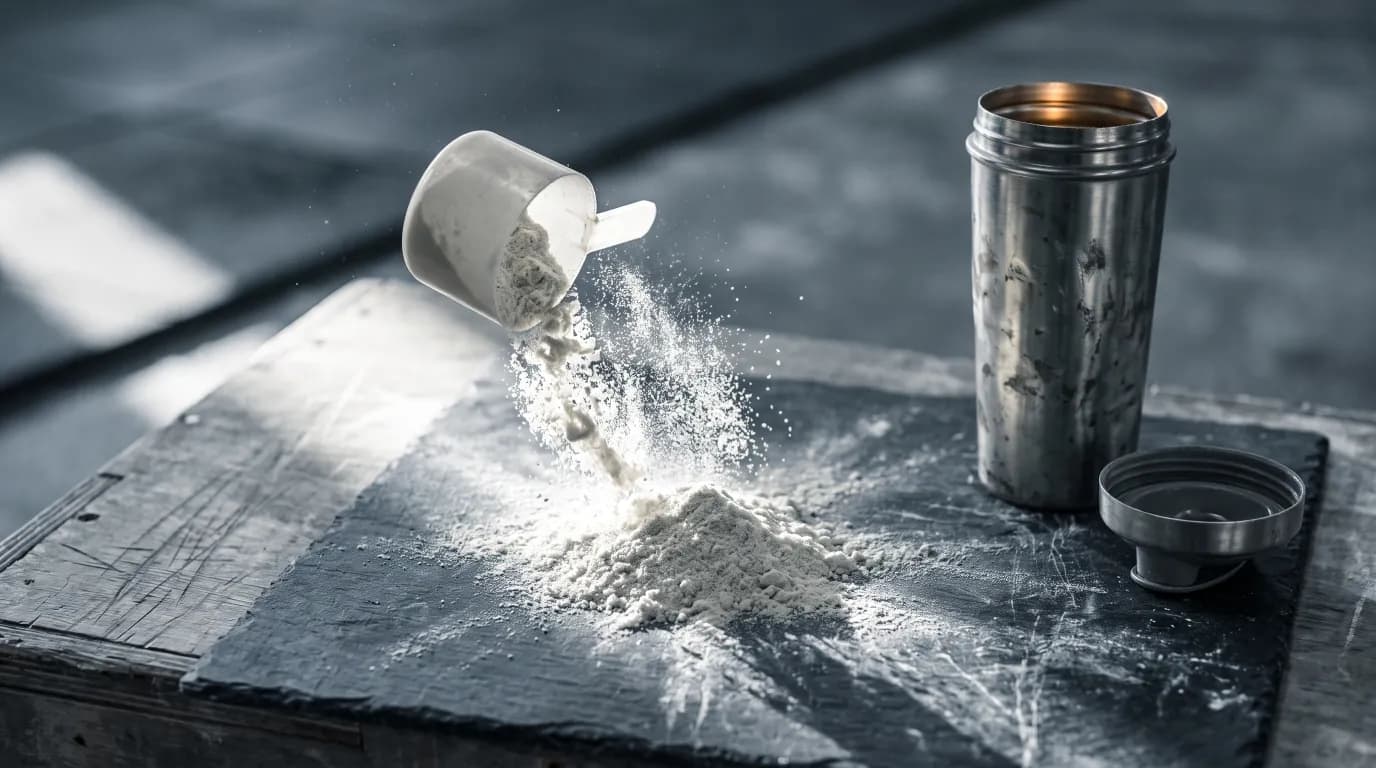
Milk protein comes in two fractions. Casein is roughly four fifths of it; whey is the rest — the liquid part left when milk is curdled, historically a by-product of cheesemaking. It digests fast, and it is one of the most leucine-dense proteins available.
That's the whole story. It is food, dried. It is not a hormone, a metabolic agent, or a substitute for a calorie deficit.
What it is, is convenient in three specific ways: it mixes into water without argument, it keeps for a year in a cupboard, and it costs less per gram of protein than most fresh food. Those three properties are why it's in the playbook. The biochemistry is a footnote.
Concentrate, isolate, hydrolysate
The three grades differ in how much processing has removed everything that isn't protein, and the price climbs with it.
The gap between them matters far less than the shelf suggests. Once the amino acids are in your bloodstream, your body has no way of knowing which filtration stage they came through.
- Concentrate is typically 70 to 80 percent protein by weight, with some lactose and fat left in. Cheapest per gram, and the correct default for most people.
- Isolate is filtered further, usually 90 percent protein or more, with very little lactose or fat. Worth the premium if dairy sugar upsets you, or if you want the highest protein-per-calorie option in the swap table.
- Hydrolysate is partially broken down before you drink it, so it absorbs marginally faster. It costs the most and tastes the worst, and for anyone not training twice a day the advantage is hard to notice.
- Blends and mass-gainer powders are a different product. Read the carbohydrate line before you assume you bought protein.
What to check on the tub
Supplements in most markets are not reviewed for safety or effectiveness before they go on sale — the NIH Office of Dietary Supplements is explicit about this. That puts the burden of verification on the buyer, and the shortcut is third-party certification.
Look for an NSF Certified for Sport or Informed Sport mark, which means independent batch testing for contaminants and banned substances. Then do the arithmetic yourself: divide grams of protein per serving by calories per serving. A good concentrate lands near 20 grams per 100 calories, a good isolate above that. Anything well below is selling you carbohydrate at protein prices.
Ignore the front of the tub entirely. Products marketed around recovery, lean muscle or metabolism are generally the same whey with amino acids added back that were already present in the whey, priced at a premium for the sticker. The nutrition panel and the certification mark are the only two parts of the packaging carrying information.
When to use it
Three slots earn it. Post-training, when you want protein fast and don't want to cook. Breakfast, if yours is otherwise carbohydrate-only — which is where most protein shortfalls actually originate. And the emergency kit, alongside the tuna pouches, for the day that gets away from you.
One rule that keeps it honest: whey should close a gap, not replace a meal you'd otherwise have eaten. Whole food comes with fibre, volume and micronutrients, and it keeps you full for considerably longer per calorie. A day built on three shakes will hit the protein target and leave you hungry by four o'clock.
A reasonable ceiling for most people is one or two servings a day, covering perhaps a quarter of the protein target. Past that you're trading away satiety and fibre for convenience you didn't need, and you'll feel it in the evening.
“A shake is not a meal you skipped well. It is protein you would otherwise have missed.”
The honest limits
Whey does not burn fat. Studies that show better body composition with higher protein intakes are showing you the effect of the protein, not the powder — hit the same grams from chicken and dairy and you get the same result. The powder's only edge is that it is fast, portable and hard to overeat by accident.
It also can't fix a protein target you aren't seriously trying to hit with food. If three of your four meals contain no protein source at all, a tub of whey is a plaster over a structural problem, and it will run out before the habit does.
For most healthy adults it is well tolerated at sensible amounts. If you have kidney disease, are pregnant, or take medication where protein intake is managed as part of your care, the target itself is a conversation for your clinician before you add a tub to the shopping list.
Sources
Written by Coach D — the voice of the certified personal trainers behind the SHRED30 system. Educational content, not medical or dietary advice.
Day 1 is free.
Go deeper: the free anatomy nutrition and strength & conditioning study guides teach the science under every article.