How to read a nutrition label in ten seconds
Every food named in this article is an example, not an instruction — one way a person might choose to meet their targets. Swap anything for foods that fit your own needs, allergies, budget and beliefs. For advice specific to you, talk to a registered dietitian or your physician.
You are standing in an aisle holding two similar products and you have about ten seconds before this stops being worth the effort. That is the real constraint, and it is why label advice that demands a full audit never gets used.
Four glances is what fits in ten seconds. In order, they answer: how much is this, is it protein, how sweet is it, and what is it mostly made of.
Glance one: the serving size
Everything else on the panel is scaled to a number the manufacturer chose, so read that number first. A bottle containing two and a half servings, a bag of crisps counted in twenty-five gram portions, a jar of sauce divided into six — the calorie figure that looks reasonable is often a fraction of what you will actually eat.
The honest correction takes a second: decide what you will really eat, then multiply. Half a bag is half a bag, not a serving.
This is where most well-intentioned tracking goes wrong. Nobody logs a bottle of smoothie as two and a half servings, and nobody eats a quarter of a pizza. Serving sizes are chosen partly to make the panel read well, and the panel is only honest if you correct for the portion you actually put on the plate.
Glance two: protein per 100 calories
This is the glance that does the most work on this program. Divide the protein by the calories and multiply by a hundred. Ten grams or more per 100 calories and you are holding a protein food. Under five and you are holding something else, whatever the front of the pack says.
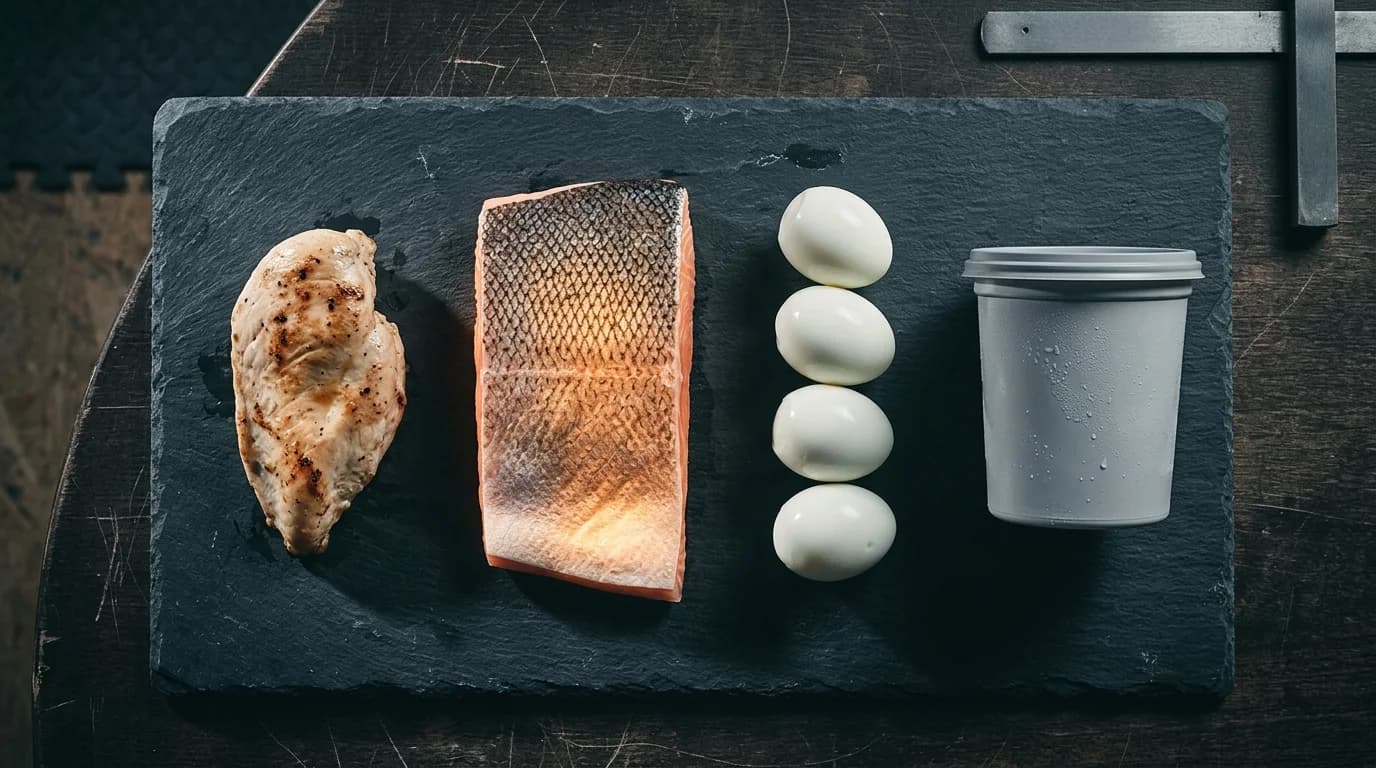
It is also the fastest way to compare across categories that look unrelated. Chicken, tinned fish, plain yoghurt and cottage cheese all clear the bar comfortably. Most cereals, most bread, most granola and most protein bars do not, and the ratio tells you that faster than any ingredient list.
The ratio matters more than the raw protein figure because you are buying inside a fixed calorie budget. A food with 20 grams of protein and 500 calories and a food with 20 grams and 120 calories deliver the same protein and cost you completely different amounts of the day.
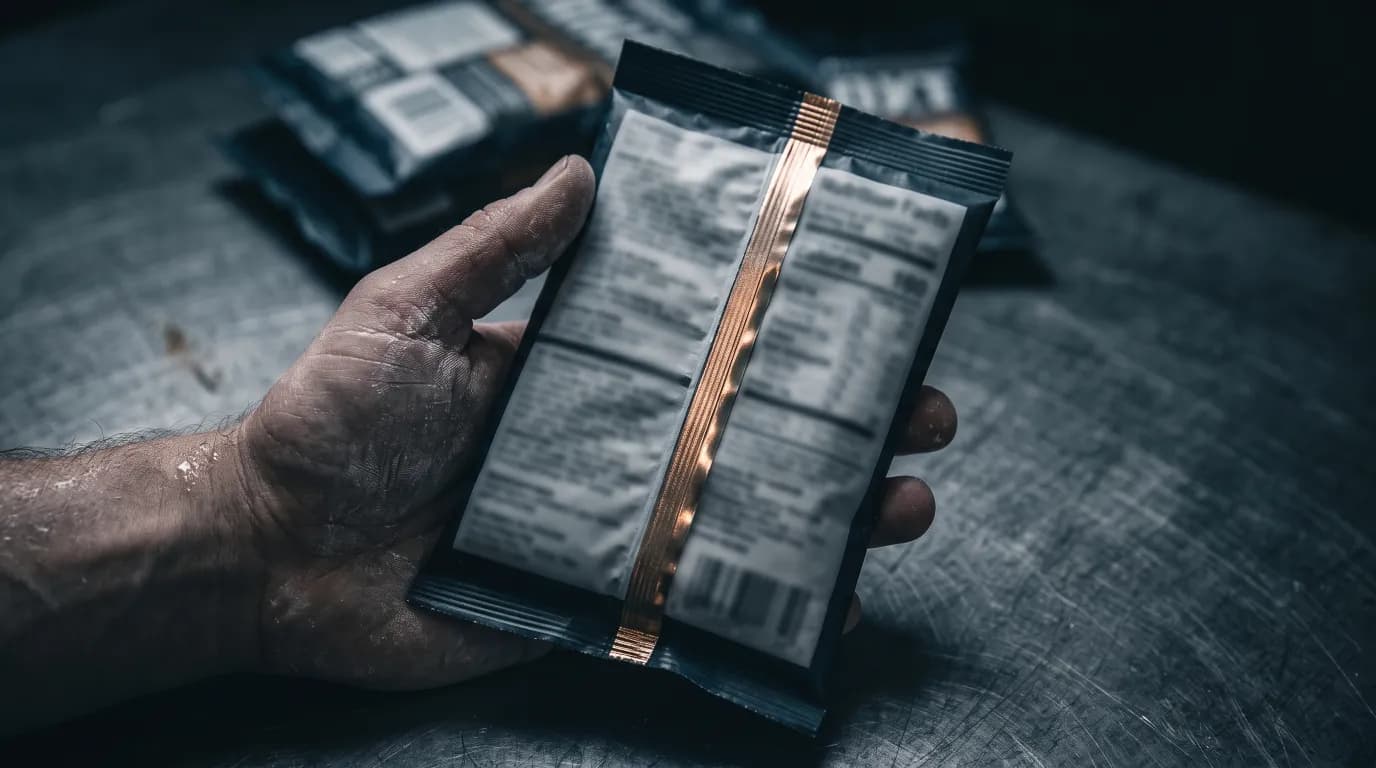
“The front of the packet is written by marketing. The back is written by law. Read the back.”
Glance three: the sugar line
In the US the panel separates added sugars from total sugars, which is the more useful distinction — a tub of plain yoghurt and a tub of fruit yoghurt can carry similar total sugar and completely different added sugar. On UK and EU labels, of which sugars combines both, and the ingredient list is where you find out which is which.
Nobody needs to hit zero. What you are looking for is context: a sauce, a cereal or a drink carrying a large share of its calories as added sugar is a food you were going to enjoy anyway, priced higher than you thought.
Glance four: the first three ingredients
Ingredients are listed by weight, heaviest first. That single rule turns the list into a summary — whatever appears in the first three positions is most of what you are buying.
Sugar appears under many names — syrup, molasses, dextrose, concentrated fruit juice, anything ending in -ose — and splitting it across several of them keeps each one further down the list. If two or three of those appear in the top five, the product is a sweet, regardless of the claims on the front.
The same glance settles the protein question honestly. A high-protein product whose first ingredient is flour, oil or syrup is a normal product with protein added late, and the ratio from glance two will have told you so already.
- Servings per pack first, then decide what you will actually eat and multiply
- Protein divided by calories, times a hundred. Ten or better, or put it back
- Added sugars in context, not in isolation
- First three ingredients tell you what the product mostly is
- Ignore light, natural, high-protein and low-fat on the front entirely — light is only relative to the same brand's own product
Where this pays off
Mostly in the categories your playbook flags as hidden calories: sauces, dressings, granola, cereal bars, flavoured yoghurts, drinks and anything described as a smoothie. These are the products where the front and the back disagree most sharply.
Use the per-100-gram column when comparing two products against each other, and the per-serving column when planning your own day. Mixing them up is the single most common way people end up several hundred calories out on a day they logged carefully.
You do not need to do this forever. Read the labels properly for the first week, learn the dozen products you actually buy, and after that the shop takes the same time it always did — you are simply buying different things.
Sources
Written by Coach D — the voice of the certified personal trainers behind the SHRED30 system. Educational content, not medical or dietary advice.
Day 1 is free.
Go deeper: the free anatomy nutrition and strength & conditioning study guides teach the science under every article.