Plant-based on SHRED30: hitting 150g without meat
Every food named in this article is an example, not an instruction — one way a person might choose to meet their targets. Swap anything for foods that fit your own needs, allergies, budget and beliefs. For advice specific to you, talk to a registered dietitian or your physician.
The protein target does not change because you don't eat meat. What changes is how many calories it costs you to get there, and how carefully you have to spread it.
Both problems are solvable, and neither requires a supplement. They require a different set of portions and one honest adjustment to the number itself.
Why plants make it harder
Three reasons, and they stack. Plant proteins generally carry more carbohydrate or fat alongside the protein, so the protein-per-calorie figure is lower — lentils land under 9 grams per 100 calories against chicken breast's 19. Getting 150 grams from legumes alone would eat most of a cutting budget.
They are also digested slightly less completely than animal proteins, and they tend to be lower in leucine — commonly around 6 to 8 percent by weight against 8 to 11 for animal sources. None of this makes a plant-based cut impossible. It makes the margin thinner, which is why the fix is structural rather than clever.
Amino acid profiles are the part you can stop worrying about. The old advice to combine rice and beans at the same sitting to make a complete protein has not held up — eating a range of plant proteins across the day covers the profile perfectly well, and soy is close to complete on its own. Total grams and leucine per feeding are the real constraints.
The parallel swap table
Portions below are the plant-column equivalents of the swap table's palm-and-a-half. Swap freely inside the list; the protein stays roughly constant and the calories move.
- Seitan — the densest whole-food plant protein by some distance, and the closest thing to a chicken-breast substitute on a per-calorie basis. Not suitable if you avoid gluten.
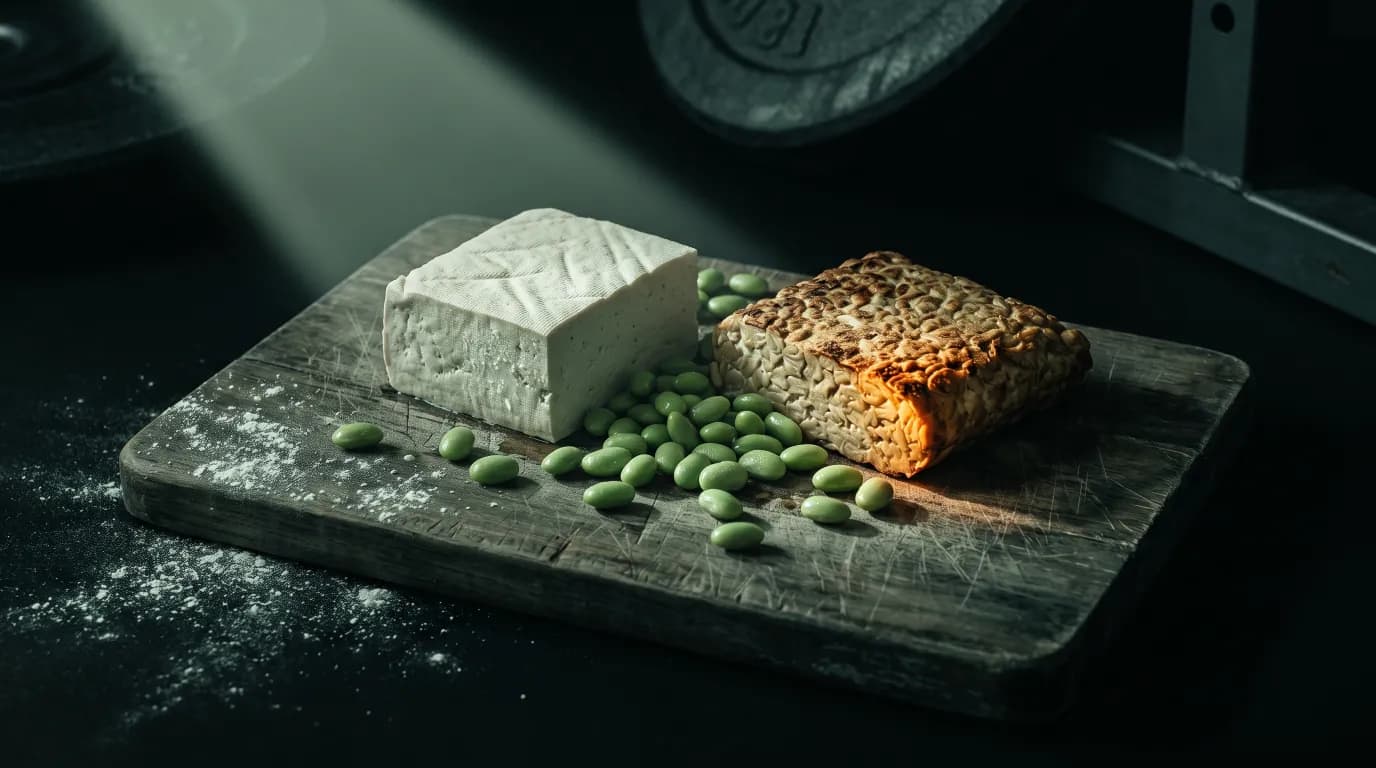
- Firm or extra-firm tofu — press it, and treat two-thirds of a standard block as one protein portion. Soy is the plant protein with the most complete amino acid profile.
- Tempeh — more protein and more fibre per 100 grams than tofu, and more calories with it. Excellent as the protein in one meal a day rather than all of them.
- Edamame and lentils — the best of the legumes per calorie, and they carry serious fibre. Use them to top up a meal, not to be the whole protein serving.
- Soy or pea protein isolate — the plant equivalent of whey, and the cleanest way to close a 30-gram gap when the calories are already spent.
The two adjustments
First, aim a little higher on the total. The ISSN position stand notes that intake needs sit at the upper end of the range for people training hard in a deficit, and lower digestibility argues for adding some margin on top of that. In practice: treat your dashboard number as a floor rather than a ceiling, and don't be shy about landing 10 to 20 grams above it.
Second, spread it wider. Four or five eating occasions rather than three, each carrying a real protein serving. Lower leucine per gram means each feeding needs to be large enough to matter, and it is much easier to build five 30-gram servings from plants than three 50-gram ones.
“The plant-based fix is more total protein and more eating occasions, not a cleverer powder.”
What a day actually looks like
Concrete beats theory here, so: a tofu scramble with spinach at breakfast, around 30 grams. A lentil and grain bowl at lunch with a scoop of soy or pea isolate stirred into a drink alongside it, 35 to 40. Tempeh with vegetables and rice at dinner, another 30. A pot of soy yogurt with pumpkin seeds in the evening, 15 to 20.
That's four occasions, no unusual ingredients, and it lands around 115 to 120 grams from a plan most people could cook on a weeknight. Add a fifth occasion — a second shake, or edamame with lunch — and you're at 150. Note what did the work: not one heroic meal, but four ordinary ones that each carried a real protein serving instead of three that carried two.
The two things that go wrong
Fibre is the first. A day built on legumes, tempeh and vegetables can push past 50 grams of fibre without trying, which is a great deal more than most digestive systems appreciate arriving overnight. Raise it across a week or two, not in a day, and drink to the water target while you do.
The second is drift. Plant-based diets slide toward carbohydrate quietly — the meal has rice, vegetables, sauce and forty grams of nothing in particular where the protein should be. Build the plate protein-first, exactly as the playbook says, and audit three days of intake in week one to see whether you're actually landing where you think.
One practical note: plant-based eating warrants attention to vitamin B12 and iron in particular. That's worth a conversation with a dietitian or your clinician rather than guesswork, especially if you're new to it.
Sources
Written by Coach D — the voice of the certified personal trainers behind the SHRED30 system. Educational content, not medical or dietary advice.
Day 1 is free.
Go deeper: the free anatomy nutrition and strength & conditioning study guides teach the science under every article.