Why there are no liquid calories for 30 days
Every food named in this article is an example, not an instruction — one way a person might choose to meet their targets. Swap anything for foods that fit your own needs, allergies, budget and beliefs. For advice specific to you, talk to a registered dietitian or your physician.
Nutrition rule 2 in the playbook is blunt: for thirty days, nothing you drink has calories in it. It reads like arbitrary strictness, and people resent it more than the calorie target itself.
It's there because drinking calories is the one place where you can remove several hundred a day and feel almost nothing. Every other cut costs you food on a plate. This one mostly costs you a habit.
Why drinks don't register
Solid food does several things a drink doesn't. It takes time and effort to eat, it sits in the stomach and stretches it, it leaves the stomach slowly, and it triggers a set of fullness signals that a liquid passing through in minutes largely bypasses.
The consequence is well documented in the nutrition literature and summarised plainly by Harvard's Nutrition Source: people who take in calories as drinks tend not to compensate by eating less later. The same calories eaten as food would have displaced part of a meal. Drunk, they simply stack on top of everything else you were going to eat anyway.
Run the comparison yourself. Two hundred calories of apple is two apples and takes ten minutes to get through. Two hundred calories of apple juice is a glass and takes forty seconds. Same fruit, same energy, and only one of them ends with you not wanting anything else.
The cheapest few hundred calories you own
Add up an ordinary day. A large milky coffee on the way in, a glass of orange juice with breakfast, a soft drink at lunch, a couple of glasses of squash in the afternoon. None of that is a meal. None of it made you less hungry. It's routinely a few hundred calories, and in some days it's more than that.
Delete it and your deficit is largely built before you've made a single decision about food. That's the entire logic of the rule: take the calories that bought you nothing first, so the ones that buy you a satisfying dinner survive.
It's also the least demanding rule in the program to follow, because it needs no measuring and no arithmetic. You are not weighing anything or estimating anything. You are answering one question at the counter, and the answer is the same every time.
- Juice and smoothies — fruit with the chewing and most of the fullness removed
- Milky coffee shop drinks — a large one is a snack in a cup, and the syrups add more on top
- Soft drinks, cordials and squash — sweetened out of habit rather than hunger
- Sports and energy drinks — designed for endurance events, not for a desk and a 45-minute session
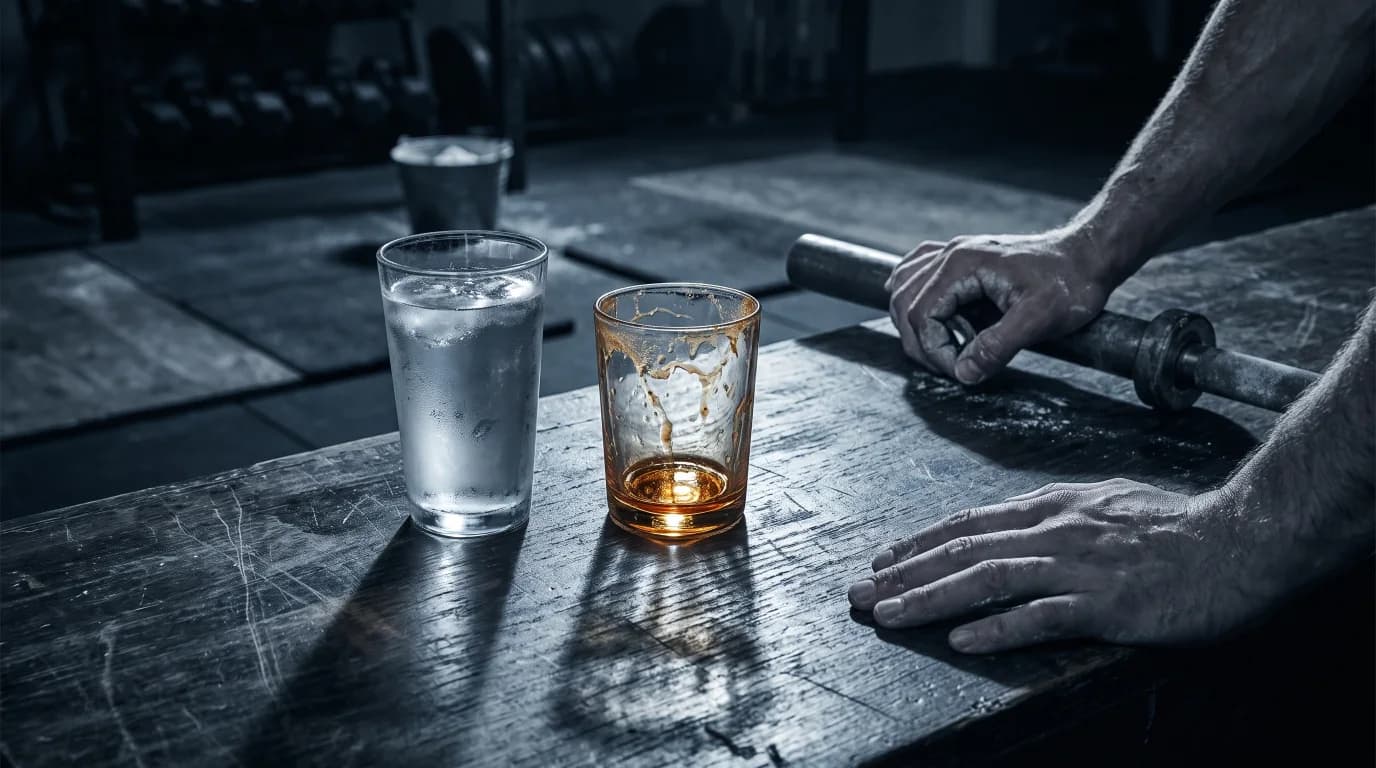
- Alcohol — energy-dense, and it reliably loosens what you eat for the rest of the evening
The one narrow exception
A protein shake is the single carve-out, and it comes with conditions. It counts fully against your calorie target and your protein target, it goes in the log like anything else, and it's a patch for a travel day or a missed meal rather than a daily fixture.
The reason to keep it rare is the same reason the rule exists. A shake is less filling than the equivalent chicken and rice, so a shake habit quietly costs you satiety at exactly the point in the month when satiety is the thing keeping you on plan.
Which means whole food first, every time it's available. Protein powder is a convenience, not a category of nutrition, and the NIH's supplement fact sheets are consistent that it does nothing food doesn't when your intake is already adequate.
What thirty days of this actually teaches
The interesting part isn't the deficit. It's that after two or three weeks most people stop wanting the drinks at all — the sweet coffee turns out to have been a routine attached to a walk and a time of day, not a craving.
That's the piece worth keeping after day 30. Not everyone needs the rule permanently, but almost everyone benefits from having found out what those drinks were actually doing for them, which in most cases is nothing.
“Drink your calories and you pay for them twice: once on the target, and again at dinner when you are still hungry.”
What to reach for instead
Water is the default, and it doubles as progress on the 3.5 litre target on your dashboard. Black coffee, plain tea, herbal tea and sparkling water all count as fluid and cost nothing. Sparkling water with a squeeze of lime handles the evening habit for most people better than they expect.
Have the substitute ready before you need it. The rule breaks at predictable moments — the coffee run, the pub, the fridge at 9pm — and having decided in advance what you order at each of those is worth more than any amount of resolve in the moment.
If you take medication or manage a condition where fluid or caffeine intake matters, check the specifics with your clinician rather than assuming a program rule fits you.
Sources
Written by Coach D — the voice of the certified personal trainers behind the SHRED30 system. Educational content, not medical or dietary advice.
Day 1 is free.
Go deeper: the free anatomy nutrition and strength & conditioning study guides teach the science under every article.