Rice, oats, potato, quinoa: the carb swap cheat sheet
Every food named in this article is an example, not an instruction — one way a person might choose to meet their targets. Swap anything for foods that fit your own needs, allergies, budget and beliefs. For advice specific to you, talk to a registered dietitian or your physician.
The swap table says you can trade any carbohydrate for any other at the stated portion. The part that trips people up is that the portions are not the same weight, because cooked grains and potatoes are mostly water, and how much water they hold differs by a factor of three.
So here is the cheat sheet: what roughly 150 calories of each carbohydrate looks like on the scale, and what else arrives with it.
Cooked-weight equivalents
All figures are cooked and plain, rounded from USDA reference values. Weigh cooked or weigh dry — just don't mix the two, which is the single most common tracking error in this category.
The 150-calorie unit is arbitrary but useful: it's roughly one swap-table carbohydrate portion, so most people are eating two or three of these a day. Scale them up or down together and the ratios between the foods hold.
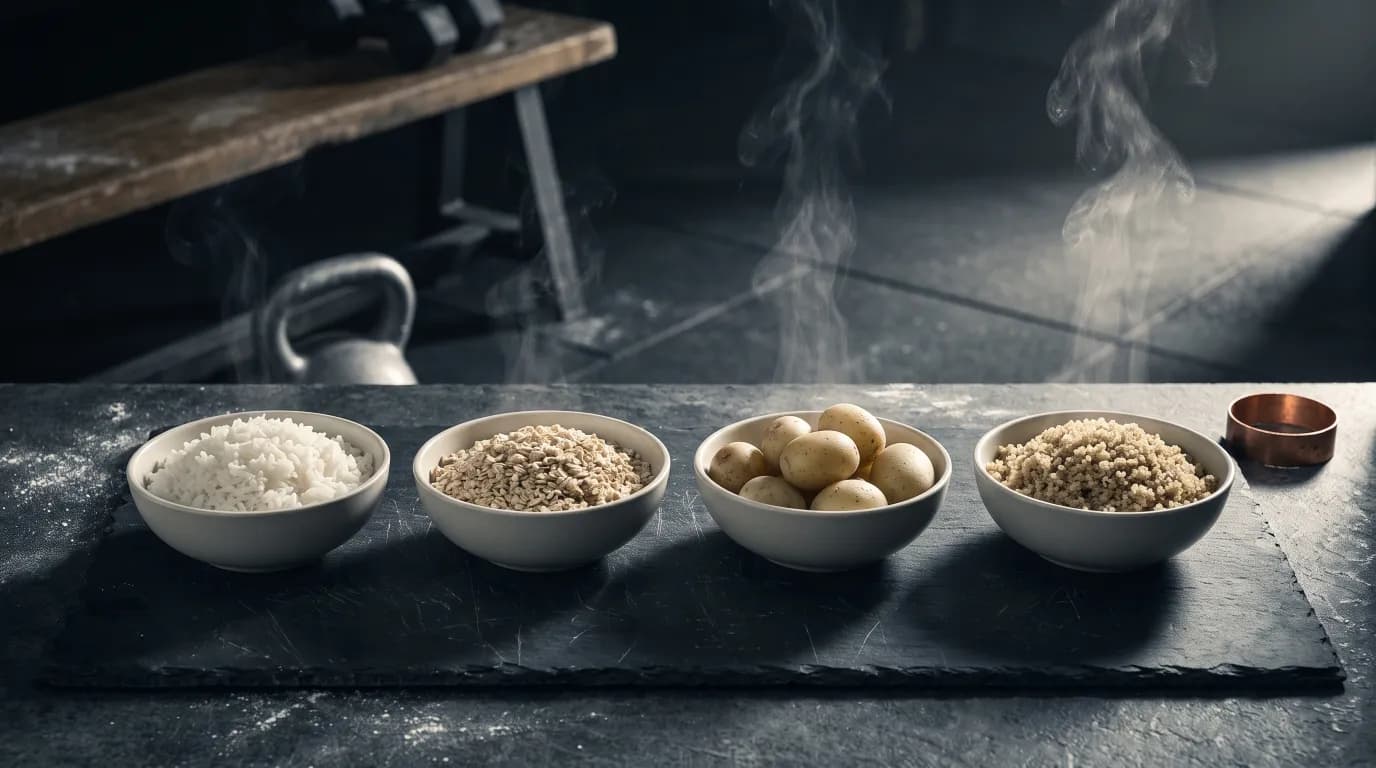
- Rolled oats: about 40 grams dry. The smallest number on the list, because oats are weighed before they absorb anything.
- Pasta: about 95 grams cooked, from roughly 45 grams dry. Pasta roughly doubles in weight; a supermarket 'portion' is often twice this.
- White rice: about 115 grams cooked, from roughly 40 grams dry. Rice roughly triples, which is why cooked rice looks so generous.
- Quinoa: about 125 grams cooked. Slightly fewer calories than rice per cooked gram, and more fibre.
- Potato or sweet potato: about 170 grams cooked with the skin on. Nearly half again the weight of the rice portion for the same calories.
Why the potato is so much bigger
Water. A boiled potato is around 77 percent water by weight; cooked white rice is closer to 68 percent, and dry oats are under 10. Water contributes weight and volume to the plate without contributing a single calorie, so the wetter the food, the more of it you get.
That matters because volume and weight of food are among the things that make a meal feel like a meal. Same calories, more plate, more chewing, more time spent eating. On a cut, that's not a trivial difference — it's most of what separates a portion that satisfies from one that leaves you back in the kitchen at nine.
It also explains the oldest tracking mistake in this category. Log 100 grams of rice when the entry in your app means dry rice, and you have just recorded three times what you ate. Log it the other way round and you have recorded a third. Pick one convention — cooked is easier, because it's what's on the plate — and never mix them.
The fibre column
The second thing separating these foods is fibre, and the gaps are large. Per 150-calorie portion, oats deliver roughly 4 grams. Quinoa, sweet potato and potato with the skin on land somewhere around 2 to 3. Brown rice sits near 2. White rice and most white pasta deliver well under 1.
Over a day with three carbohydrate portions in it, choosing the top of that list rather than the bottom is worth around 8 to 10 grams of fibre — a meaningful chunk of the daily target for no extra calories at all. Nothing else on this page moves a number that much for free.
“Same calories, three times the weight on the plate. That is the entire argument for the potato.”
What the sheet doesn't say
Brown rice is not a lower-calorie food than white rice. Wholemeal pasta is not a lower-calorie food than white pasta. The difference is fibre and micronutrients, and it's a good reason to choose them — but people routinely treat the brown version as if it were a discount, and then eat a third more of it.
Nothing on this list stays where it is once fat gets added, either. Fry the rice and it moves a band. Butter the pasta, load the potato, stir oil through the quinoa — each of those is easily another 100 to 150 calories, and none of them changes the number you logged if you only logged the carbohydrate. Weigh what goes in the pan, not just what comes out of the bag.
How to use the sheet
Put the wet, fibrous options — potato, sweet potato, oats, quinoa — in the meals where you tend to get hungry afterwards. Usually that's lunch and the evening meal.
Put white rice and pasta where volume matters less and convenience matters more: the meal before training, the batch-cooked lunch, the dinner you're eating late. They're not worse foods. They just do less work per calorie, and you should spend them where that doesn't cost you anything.
And weigh for the first three days only. After that you'll recognise a 115-gram scoop of rice by sight, and the scale goes back in the drawer. Learning the portions is the point of the exercise; weighing your food for thirty days is not.
Sources
Written by Coach D — the voice of the certified personal trainers behind the SHRED30 system. Educational content, not medical or dietary advice.
Day 1 is free.
Go deeper: the free anatomy nutrition and strength & conditioning study guides teach the science under every article.