Meal prep in 90 minutes: the batch-cook blueprint
Every food named in this article is an example, not an instruction — one way a person might choose to meet their targets. Swap anything for foods that fit your own needs, allergies, budget and beliefs. For advice specific to you, talk to a registered dietitian or your physician.
Meal prep fails for a boring reason: people try to build seven finished dinners and give up somewhere around the fourth identical box of chicken and rice.
The version that survives a month builds components instead. Three proteins, two carbohydrates, one tray of vegetables and one sauce, cooked in a single ninety-minute session and assembled differently every night.
The running order
Ninety minutes only works if the oven, the hob and your hands are all busy at once. Idle equipment is where the session bloats to three hours.
Run it in this sequence and almost nothing waits on anything else:
- Minutes 0–5: oven to 200C, a large pan of water on to boil, containers out on the worktop
- Minutes 5–15: season two trays — chicken on one, potatoes and peppers on the other — and get both in
- Minutes 15–35: mince browning in a pan while rice or potatoes cook, eggs boiling alongside
- Minutes 35–60: trays out and resting, second vegetable tray in, sauce blended while the oven works
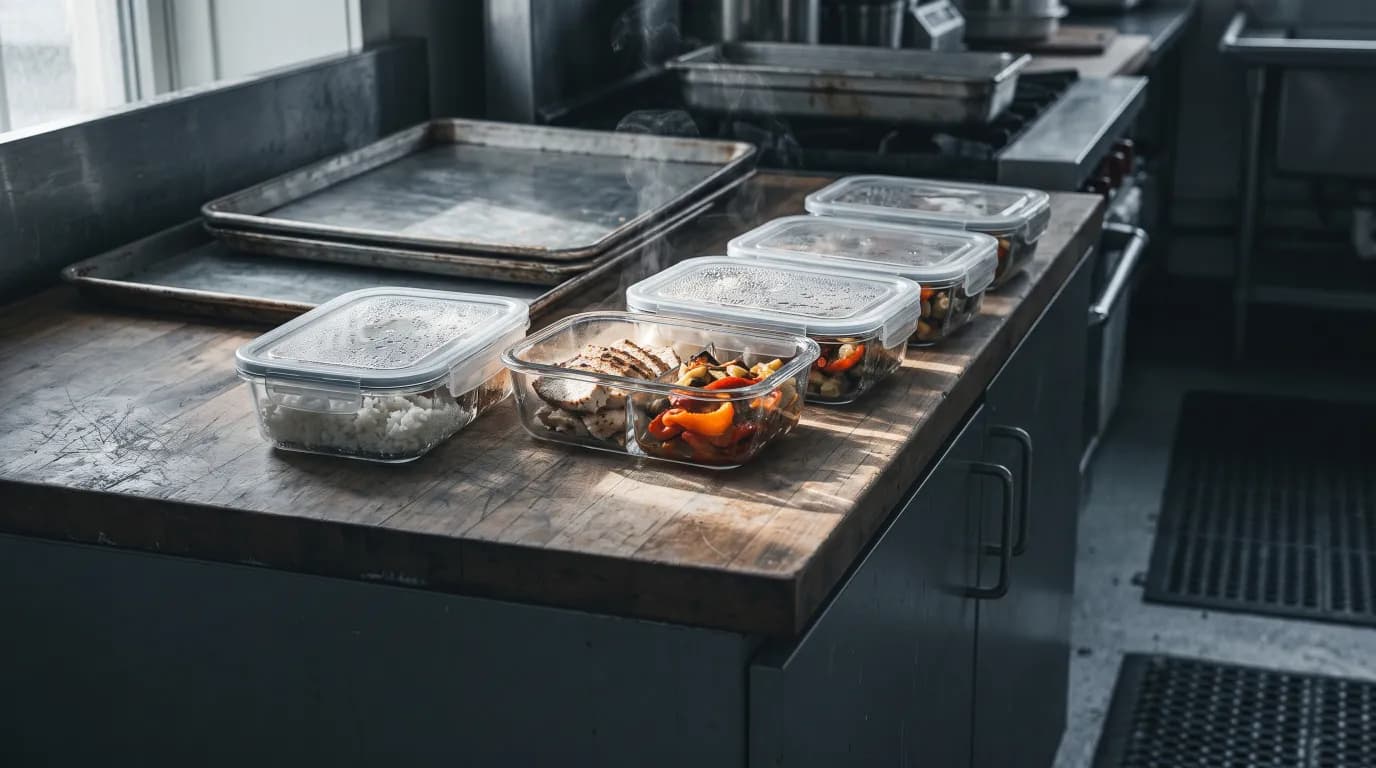
- Minutes 60–90: cool, portion, label with the date, and wash up while the last tray finishes
What to cook, and what not to
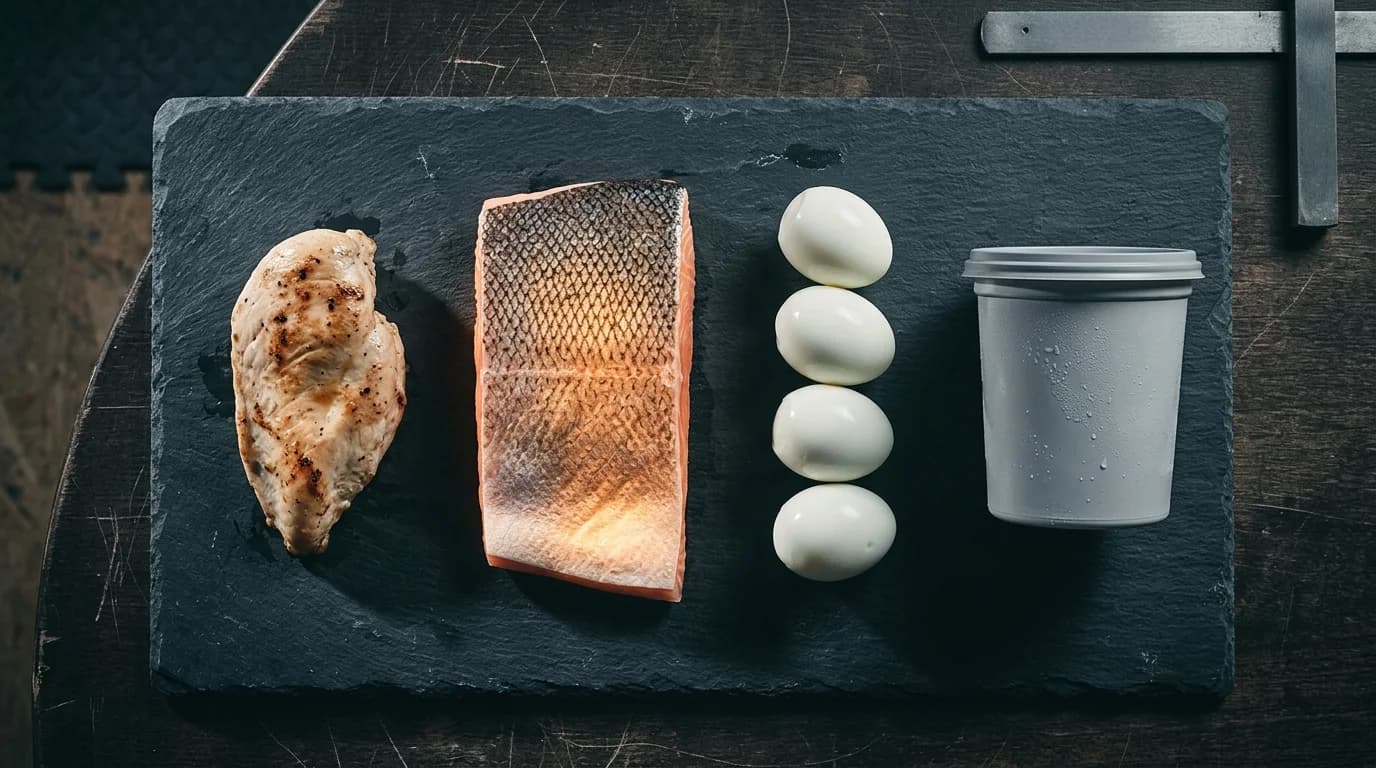
Three proteins gives you variety without complexity: a tray of chicken thighs or breasts, a pan of mince, and a dozen boiled eggs. Two carbohydrates covers everything else — a pot of rice and a tray of roasted potatoes, or oats portioned dry into jars for breakfasts.
Do not batch-cook anything that goes soft. Leaves, cucumber, avocado and anything crisp are assembled on the night, not on Sunday. Fish is better cooked fresh or bought tinned, because reheated white fish is the single fastest way to make yourself hate meal prep.
Season the trays differently from each other rather than seasoning everything the same and hoping the sauce fixes it later. One tray paprika and garlic, one tray lemon and oregano, one pan of mince taken toward chilli. Same ninety minutes, four distinguishable meals instead of one repeated seven times.
The sauce is the whole point
One sauce turns identical components into different meals. A yoghurt, lemon, garlic and herb base costs almost nothing in calories and takes two minutes in a blender. Swap it for salsa, a soy and ginger mix, or a spoonful of harissa stirred through yoghurt, and Monday's plate is not Thursday's plate.
This is also where prep quietly leaks calories. Oil, mayonnaise-based dressings and shop-bought sauces are easy to pour and hard to estimate, which is why the sauce gets measured while everything else gets eyeballed. A generous free pour of olive oil across two trays is a couple of hundred calories that never registers as food.
Store sauce separately from the food it is going on. A dressed salad container is inedible by Wednesday, and a portion of chicken sitting in sauce for three days ends up tasting like all the others.
“Nobody quits a diet because the chicken was dry. They quit because every plate tasted the same.”
Storage, and the limits that are not negotiable
Cooked food needs to be cooled quickly and refrigerated, not left on the side to reach room temperature over the evening. Portion into shallow containers so the heat has somewhere to go, get them into the fridge within two hours of cooking, and keep the fridge at or below 4C.
Cooked leftovers keep three to four days refrigerated. That is the rule that shapes the whole session: cook for four days, freeze the rest on the day you cook it, and reheat until steaming hot the whole way through rather than warm in the middle. Rice deserves particular care — cool it fast, refrigerate it promptly, and do not leave it standing out.
- Fridge at 4C or below, freezer at minus 18C
- Into the fridge within two hours of cooking, in shallow containers
- Three to four days refrigerated; anything beyond that goes in the freezer on day one
- Reheat once, until steaming hot throughout, and do not re-reheat the same portion
- Label every container with the date it was cooked — memory is not a food-safety system
How this connects to the dashboard
The fuel plan on your dashboard tells you what a day should contain. Prep decides whether that day is available at 7pm on a Tuesday when you get home late and hungry.
It also fixes the protein target more reliably than willpower does. If a cooked, weighed protein portion is sitting in the fridge, hitting your number is an assembly job. If it is not, it is a decision — and decisions made at 7pm while hungry go the way they always go.
Ninety minutes on a Sunday buys back roughly twenty minutes of cooking on each of the next four evenings, which is the actual trade. If ninety minutes is not available, run the half version: one tray of protein and one pot of rice, thirty-five minutes, and you have still removed the worst three decisions of the week.
Sources
Written by Coach D — the voice of the certified personal trainers behind the SHRED30 system. Educational content, not medical or dietary advice.
Day 1 is free.
Go deeper: the free anatomy nutrition and strength & conditioning study guides teach the science under every article.