Fruit on a cut: sugar, fructose and the myth
Every food named in this article is an example, not an instruction — one way a person might choose to meet their targets. Swap anything for foods that fit your own needs, allergies, budget and beliefs. For advice specific to you, talk to a registered dietitian or your physician.
Someone will tell you to stop eating fruit because of the sugar. It is one of the most durable pieces of misinformation in fat loss, and it survives because it contains a real word — fructose — attached to research that was not about fruit.
Fruit is in your carbohydrate swap list for good reasons. Here is what the evidence actually says, and how to spend a carbohydrate portion on it well.
Where the fructose scare came from
The unflattering studies on fructose largely used isolated fructose, or sugar-sweetened drinks, at intakes far above what anyone gets from eating fruit. That is a fair way to study a sweetener and a poor way to study an apple.
Whole fruit arrives with water, fibre and a physical structure that has to be chewed, which changes both how fast it is absorbed and how much of it you can comfortably eat. Population research on whole fruit intake has consistently pointed the other way from the scare — toward better weight and health outcomes, not worse.
Fruit juice is the genuine exception, and it is the one that should be treated differently. The fibre is gone, the volume is gone, and a glass takes ten seconds to drink. On this program it fails the no-liquid-calories rule anyway, which settles the question without needing the nutrition argument at all.
What a portion actually costs
The numbers are far less alarming than the reputation. A medium apple is roughly 95 calories and carries around four grams of fibre. A medium banana is around 105. A hundred grams of strawberries is nearer 30 calories, blueberries closer to 55, watermelon around 30.
Put that next to almost anything else you might eat for a sweet finish to a meal and fruit stops looking like a compromise. It is one of the highest-volume, most filling ways to spend a hundred calories available to you, which is the entire principle the meal plan runs on.
The sugar figure that frightens people is the same story in a different unit. A banana carries somewhere around 14 grams of sugar, which sounds alarming until you notice that a single can of soft drink carries closer to 40, arrives with no fibre, and is gone in a minute. The number on its own tells you nothing. What it arrives with tells you everything.
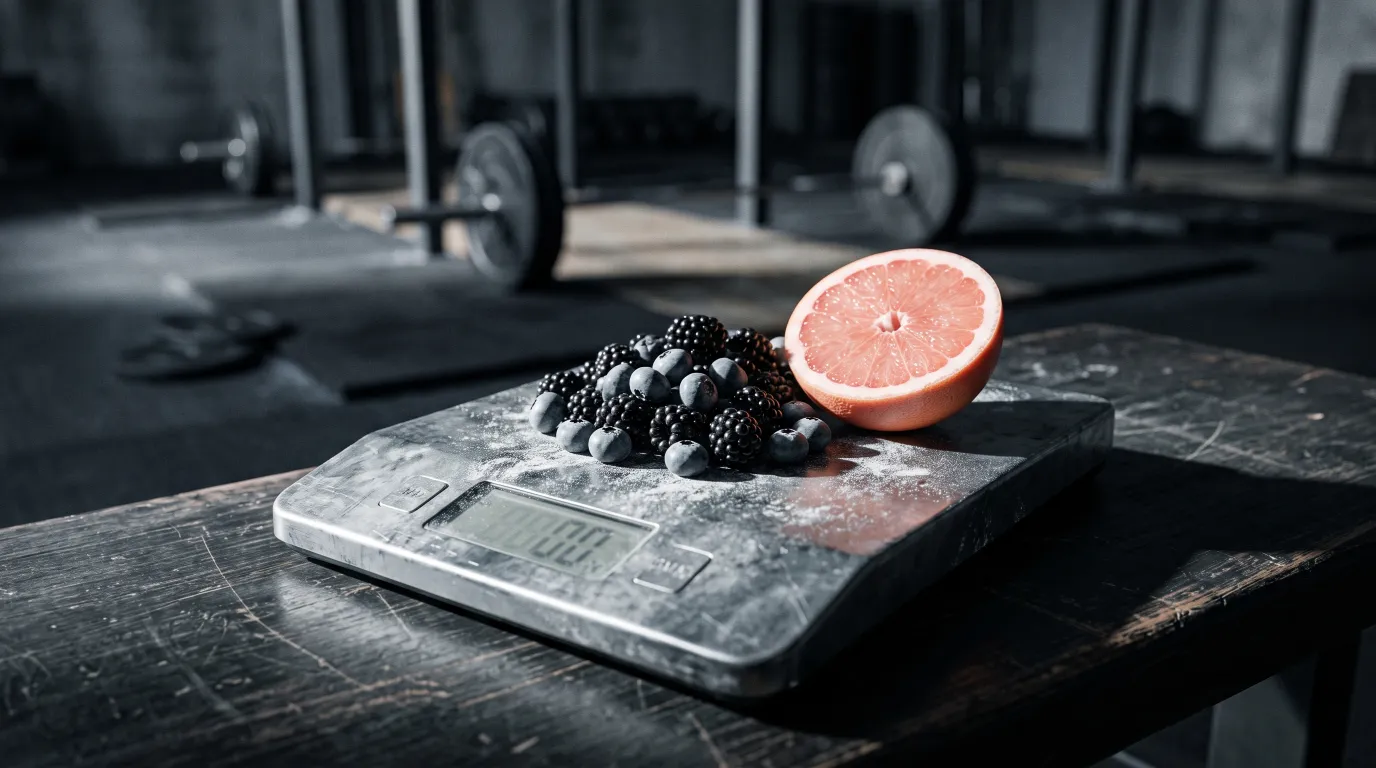
- Highest volume per calorie: strawberries, raspberries, watermelon, melon, grapefruit — a large bowl for around a hundred calories
- Middle ground: apples, pears, oranges, kiwi, peaches. One piece, one portion, roughly 60 to 100 calories
- Denser: bananas, grapes, mango, cherries. Excellent food, but a bowl of grapes goes past a portion very quickly
- The actual trap: dried fruit. Drying removes the water and keeps everything else, so a small handful of raisins can cost more than a whole banana
- Frozen berries are the cheapest tool in the kitchen for an evening sweet craving, and they keep for months
How the swap table treats it
Fruit sits in the carbohydrate column, and it swaps against the other carbohydrate portions rather than being added on top of them. One portion is a fist-sized piece of fruit or a cupped handful of berries — the same hand measures used everywhere else in the plan.
That framing solves the whole argument. Nobody gets fat from an apple; people run over their calorie target by eating four portions of fruit and still having the rice. Count it, swap it, and it behaves like every other carbohydrate on the plan.
It also earns its place on fibre. A medium apple carries around four grams, a pear rather more, and raspberries are among the highest-fibre foods you can put in a bowl. Fibre is one of the nutrients most people fall short of at normal intakes and it gets tighter in a deficit, so a carbohydrate portion spent on fruit generally buys more fibre, more volume and more chewing than the same portion spent on bread.
“Nobody has ever ruined a diet with an apple. The bag of dried mango is a different conversation.”
Where to place it
- Before training: a banana or a piece of fruit an hour out is easy carbohydrate that will not sit heavily during a session
- After dinner: frozen berries with Greek yogurt is a sweet course for a hundred and fifty calories and adds protein to the day
- With breakfast, where fruit adds fibre and volume to oats without meaningfully changing the calorie line
- Not as a drink. Juice and smoothies deliver the calories without the fullness and break the liquid rule
- Two to three portions a day fits comfortably inside most targets. It is a swap, not a free food
The one caveat
Whole fruit is fine for most people on a cut, but carbohydrate targets are individual if you have diabetes or take medication that affects blood glucose. In that case portion sizes and timing belong with your clinician or dietitian rather than a swap table.
And if a very high fibre intake has your digestion complaining in week one, increase it gradually and drink your water target rather than dropping fruit altogether. The adjustment usually takes a few days.
Sources
Written by Coach D — the voice of the certified personal trainers behind the SHRED30 system. Educational content, not medical or dietary advice.
Day 1 is free.
Go deeper: the free anatomy nutrition and strength & conditioning study guides teach the science under every article.