The emergency kit: jerky, tuna, bars — what to actually buy
Every food named in this article is an example, not an instruction — one way a person might choose to meet their targets. Swap anything for foods that fit your own needs, allergies, budget and beliefs. For advice specific to you, talk to a registered dietitian or your physician.
The failure is always the same. You are three hours past a meal, nowhere near your kitchen, and the only food within reach is a garage forecourt or a vending machine.
An emergency kit is not a snack habit. It is two small caches — one in the desk drawer, one in the glovebox or bag — that exist so a missed meal costs you thirty minutes instead of the day.
One number decides everything
Judge every candidate on grams of protein per 100 calories. Divide the protein by the calories, multiply by a hundred, and you have the only figure that matters for a food whose job is to defend your protein target inside a deficit.
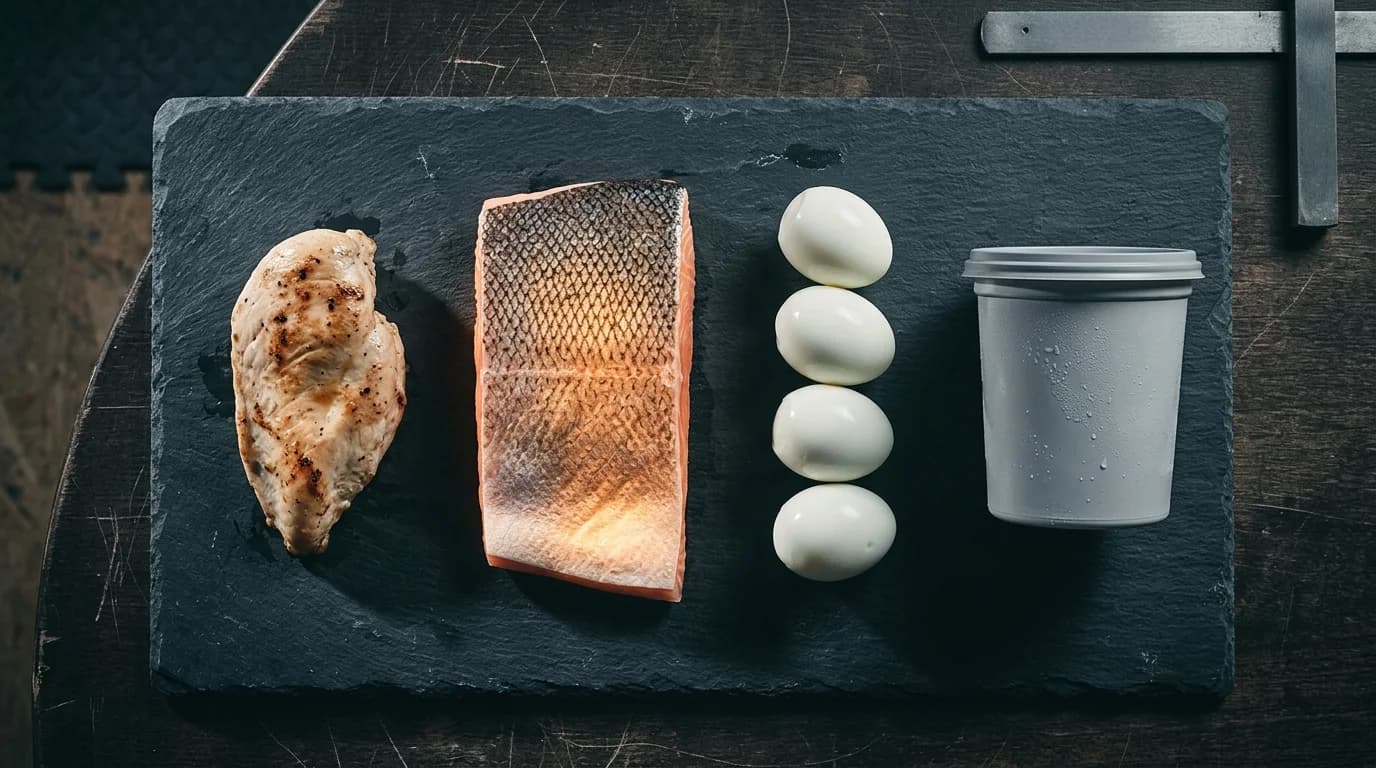
Ten grams per 100 calories is the threshold. Above it, you are buying protein. Below about five, you are buying a snack that happens to contain some. A drained tin of tuna in water comes in around twenty. A whey shake made with water is around twenty. Beef jerky, which everyone assumes is the winner, is usually nearer eight because of the sugar in the marinade. Almonds are around three or four — an excellent food, a poor emergency protein.
Jerky has a second cost that rarely gets mentioned: it is heavily salted, and a large bag can carry a substantial share of a day's sodium on its own. That will not make you fat, but it will show up on tomorrow's scale as water and give you a morning you did not need.
The desk drawer
Room temperature, no fridge, no cutlery beyond a fork you keep there. That constrains the list more than most people expect.
This is the working set:
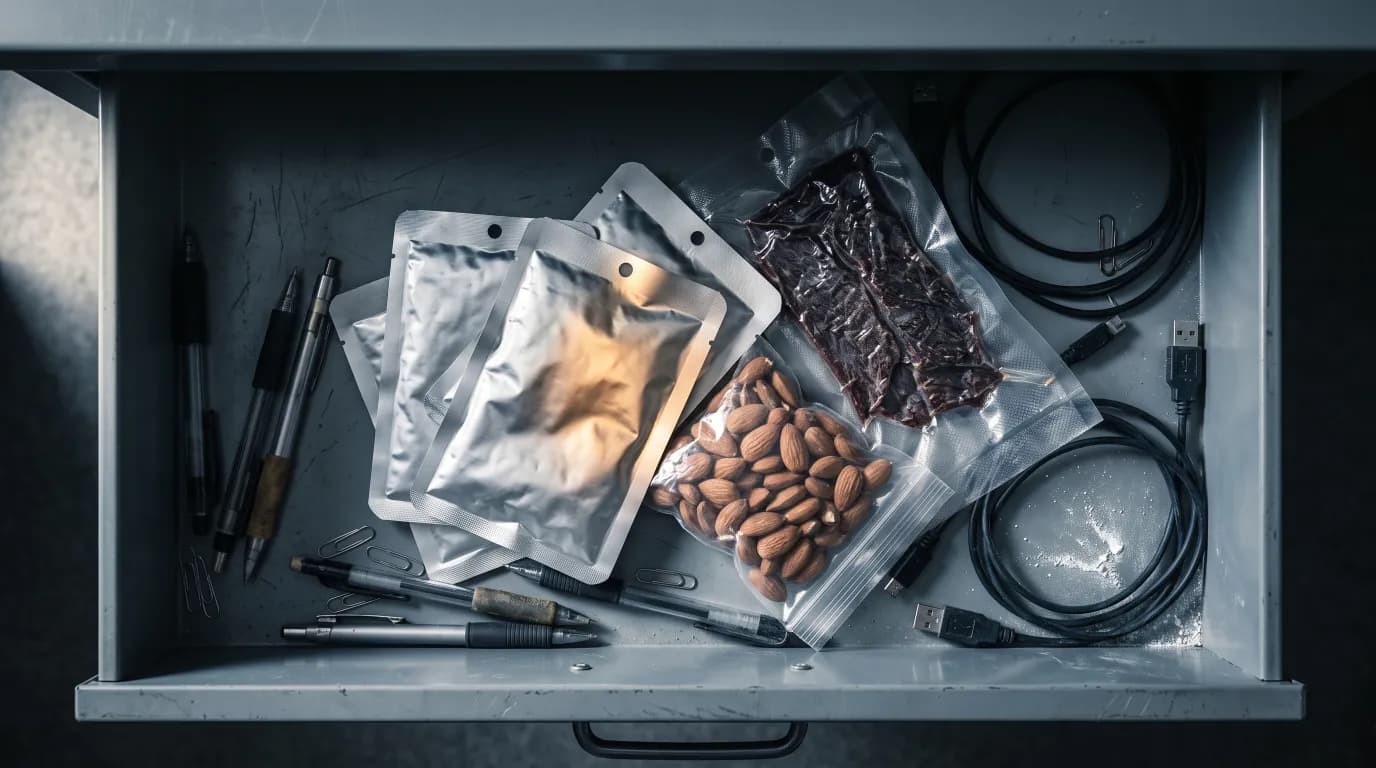
- Tuna or salmon pouches — no draining, no tin opener, around twenty grams of protein for well under 150 calories
- A tub of whey and a shaker, which is the cheapest thirty grams of protein you can hold at a desk
- Two or three genuinely high-protein bars, chosen on the ratio rather than the packet
- Roasted chickpeas or edamame for the days when the problem is chewing, not protein
- Instant miso or a stock cube — nearly no calories, and it reliably ends a low-grade afternoon craving
The glovebox is a different problem
A car in summer is an oven. Anything chocolate-coated melts, anything with a soft protein coating separates, and anything in a fragile pack bursts. Vacuum-sealed jerky, foil fish pouches and sealed nut packs survive; most bars do not.
Rotate it monthly. A glovebox kit that has been there since March is not an emergency kit, it is litter you feel guilty about.
Keep it small on purpose — two items, not eight. A car stocked like a corner shop stops being a fallback and becomes a place you eat, and the calories that come out of it are the hardest ones in the week to account for because you were never sitting at a table.
“The kit is not there to be enjoyed. It is there so a bad afternoon does not become a bad week.”
The label traps on protein bars
Protein bars are a confectionery category wearing sports kit. Four traps repeat across almost the entire shelf.
First, the calorie load: a bar with twenty grams of protein and 400 calories is a five-per-hundred food, which is a chocolate bar with a supplement in it. Second, blends — protein listed as a proprietary blend tells you nothing about how much of it is doing the work. Third, sugar alcohols and chicory root fibre, which keep the sugar line low and cause genuine digestive trouble for some people in the quantities a bar delivers. Fourth, the front of the packet, which is advertising, not information.
- Turn the packet over before you read the front
- Ten grams of protein per 100 calories or it goes back on the shelf
- Check the fat line — most bars carry their calories there, not in the protein
- If two bars a day have become normal, the problem is the meal plan, not the bar
What the kit is not for
It is not a fourth meal. Every item in it counts toward your daily calorie target exactly as a plate of food would, and a kit eaten out of boredom will quietly close a deficit you worked for.
Use it when a real meal is genuinely unavailable. When you are simply hungry between meals, the playbook answer still applies: protein and green vegetables, from the fridge.
One honest test at the end of each week: how many times did you open the kit. Once or twice is a kit doing its job. Five times is not an emergency pattern, it is a meal plan with a hole in it — usually a lunch that is too small or too low in protein to reach dinner.
Sources
Written by Coach D — the voice of the certified personal trainers behind the SHRED30 system. Educational content, not medical or dietary advice.
Day 1 is free.
Go deeper: the free anatomy nutrition and strength & conditioning study guides teach the science under every article.