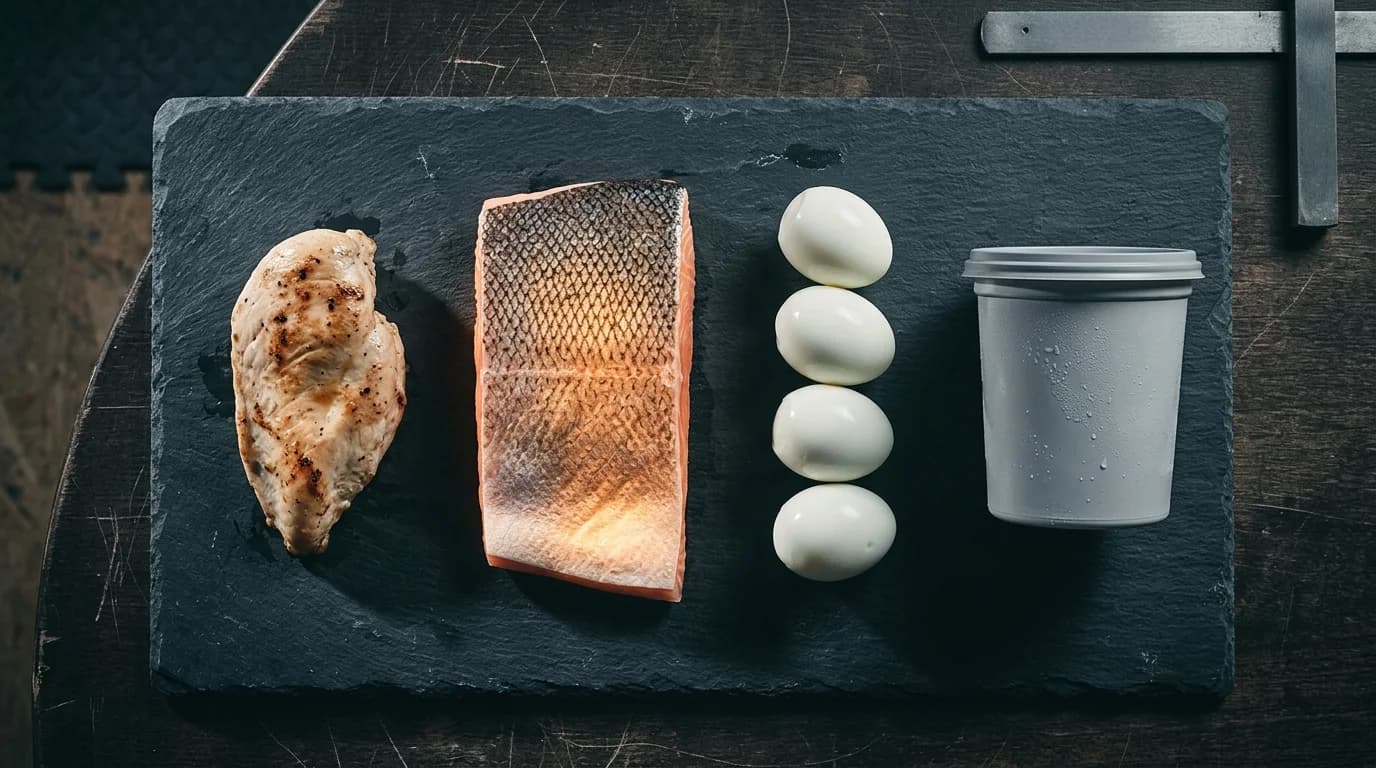
Palm, fist and thumb: portions without a food scale
Every food named in this article is an example, not an instruction — one way a person might choose to meet their targets. Swap anything for foods that fit your own needs, allergies, budget and beliefs. For advice specific to you, talk to a registered dietitian or your physician.
Nobody weighs their food on day twenty-two. The scale comes out for a week, it's genuinely useful, and then it lives in a cupboard while the portions quietly drift.
The hand system exists for the twenty-three days after that. It's less precise than a scale and considerably more likely to still be in use at the end of the month, which is the trade that actually matters over thirty days.
The four measures
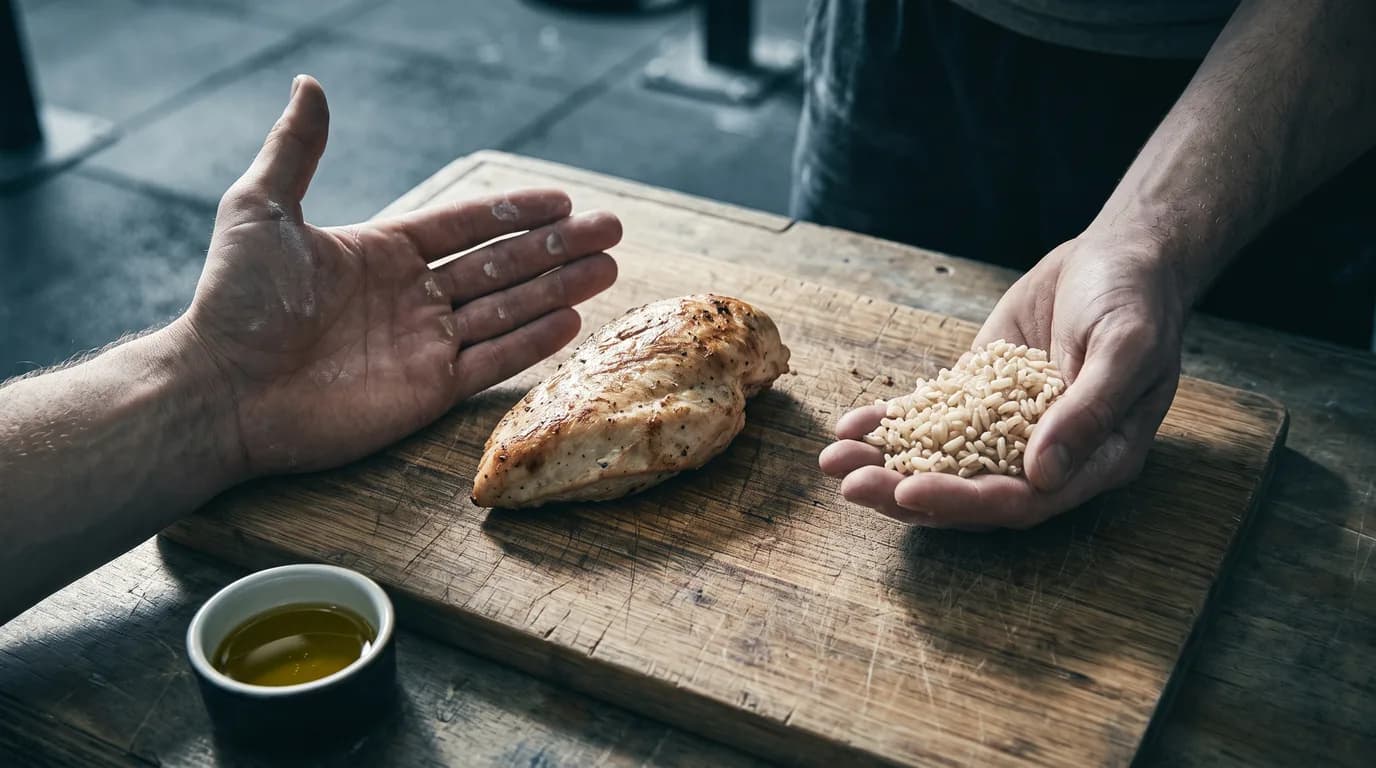
Your hand is the tool, and the mapping is one measure per row of the swap table. It takes about a day to learn and then you have it permanently.
- Palm — one protein portion. The thickness of your palm as well as the outline, so a thin fillet needs more area to count
- Cupped hand — one carbohydrate portion, measured cooked. Rice, potato, pasta, oats
- Fist — one vegetable portion, and you're encouraged to take two or three of these
- Thumb — one fat portion. Oil, nut butter, cheese, nuts. Roughly the size of your thumb from the knuckle
- Two palms, one or two cupped hands, two fists and a thumb is a complete plate for most people at most meals
Why the hand works better than it should
Because hand size correlates with body size. A bigger person has a bigger palm and gets a bigger protein portion automatically, which means the system scales without anyone doing a calculation — the same reason your protein target is anchored to your goal weight rather than a flat number for everybody.
It's also always with you, which sounds trivial and isn't. A method you can use in a canteen, at a friend's house or in an airport is a method that survives the whole month. A kitchen scale covers roughly the two meals a day you eat at home, and the other meals are usually where a plan comes apart.
How accurate it really is
Per meal, not very. Expect meaningful error on any single plate — hands vary in shape, foods vary in density, and a cupped hand of rice is not the same as a cupped hand of oats.
Across a week, much better, and for one specific reason: the errors are random rather than systematic. Some portions land over, some land under, and they largely cancel in the daily average — which is the number your calorie target is set against anyway.
That only holds if you're not rounding in the same direction every time. The failure mode isn't imprecision, it's drift: portions that grow by about ten per cent a week until, by week three, the day looks identical and contains a few hundred more calories. If your seven-day average stalls while compliance stays high, that's the first place to look.
“The scale is more accurate. The hand is the one you'll still be using in week four.”
The two things to keep weighing
Fats, first. They're the most energy-dense thing on the plate, so the same absolute error costs you far more than it does anywhere else, and a thumb of oil poured freehand into a hot pan is routinely two or three thumbs. Weigh or measure oil, nut butter and cheese with a spoon for the first week until you can recognise the real portion by eye.
Dry grains, second. The cupped hand measures cooked food, and dry rice, pasta and oats roughly triple in weight when cooked. Guessing a dry portion by hand is a multiplier error rather than a rounding error, and it's the single largest miss available in the carbohydrate row.
Everything else — protein, vegetables, fruit — is fine on hands after a short calibration period.
Calibrating in three days
Do this once, at the start. Weigh your usual portions for three days and hold your hand next to each one before you eat it. You're not building a habit of weighing — you're teaching yourself what your own palm and cupped hand actually correspond to, which is different for everyone.
Then put the scale away and use the hands. Re-check for a day around the halfway point if the trend line flattens, and again if you change your usual foods — a new brand of yogurt or a switch from chicken to salmon is enough to move a portion meaningfully.
One shortcut that saves most of the calibration: find the two or three plates you actually eat most days and learn those. Almost nobody eats thirty different dinners in a month. Nail your standard breakfast and your two default dinners and you've covered the large majority of the month's calories with about ten minutes of work.
One note on when this isn't the right tool: if measuring, weighing or tracking food has been a difficult area for you in the past, the hand system's looseness may be a feature or may be the wrong approach entirely. That's worth a conversation with a clinician or a registered dietitian before you start, not a decision to make on your own on day one.
Sources
Written by Coach D — the voice of the certified personal trainers behind the SHRED30 system. Educational content, not medical or dietary advice.
Day 1 is free.
Go deeper: the free anatomy nutrition and strength & conditioning study guides teach the science under every article.