The four checkpoints: what to measure on days 1, 10, 20 and 30
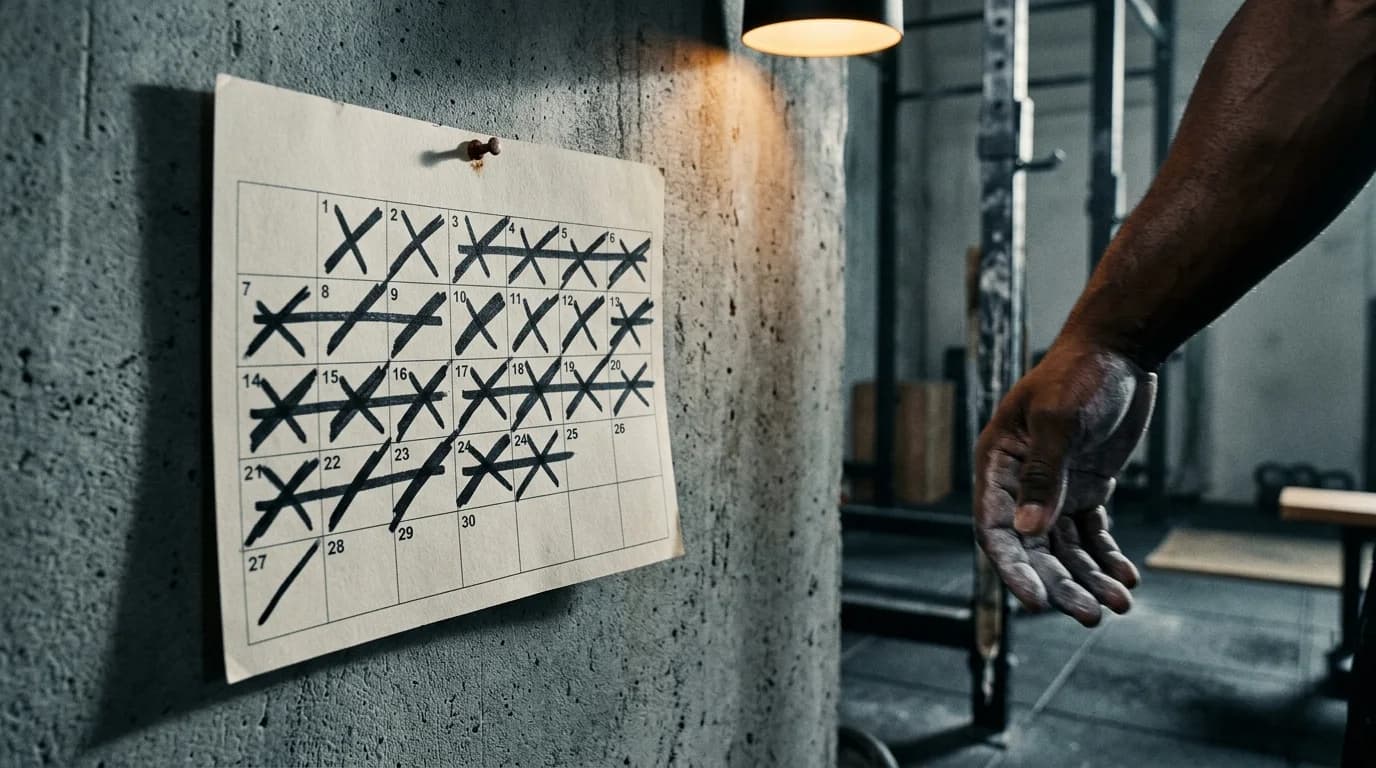
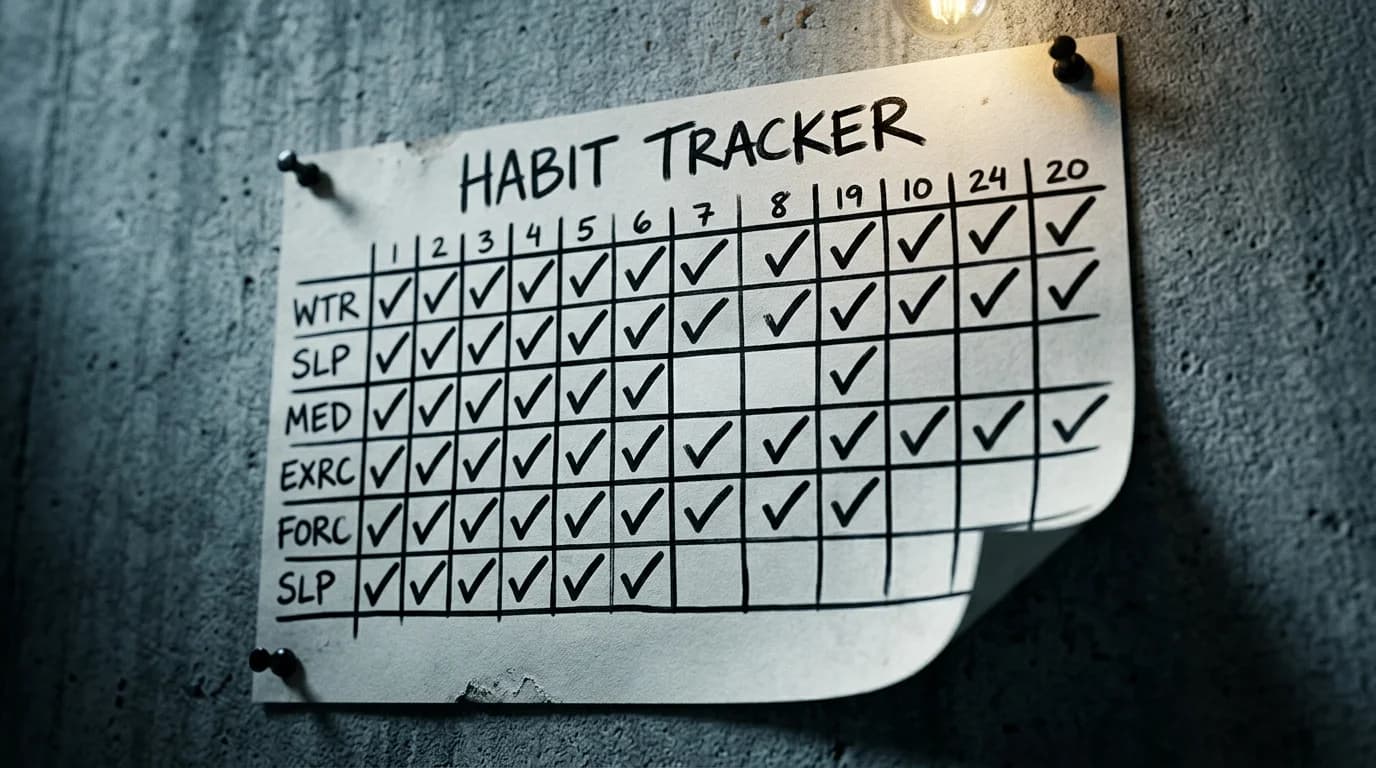
Your plan carries CHECKPOINT markers on days 1, 10, 20 and 30 — one at the start and one at the close of each phase. They exist because the middle of a cut is where people lose the plot: the scale stalls for four days, memory rewrites what day one looked like, and a month of real work gets thrown away over a Tuesday morning.
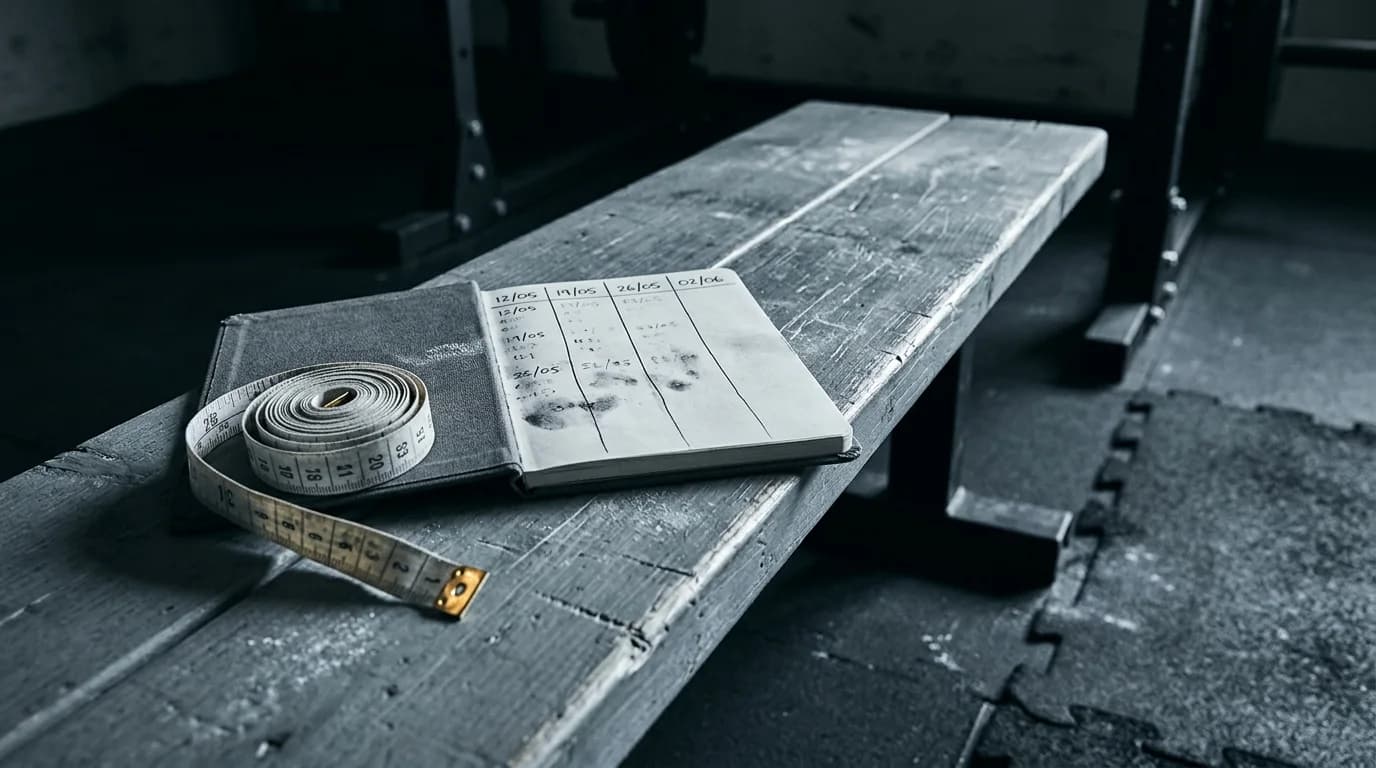
A checkpoint is a fixed record taken under fixed conditions: one weight, four tape sites, three photographs, two lift numbers. Ten minutes, four times a month. Here's exactly what goes in it and, more importantly, how to read one against another.
The record, in full
Take all of it on the same morning, before food, after the bathroom, in the same minimal clothing. Anything you change between checkpoints becomes a variable you can't separate from the result.
- Body weight — the seven-day average from your progress page, not that morning's raw reading
- Four tape sites: waist at the navel, hips at the widest point, chest at the nipple line, one thigh at its midpoint
- Three photographs: front, side, back, relaxed rather than flexed, feet on the same taped mark every time
- Two lift numbers: the working weight and reps you managed on one upper-body press and one lower-body pattern
- One line of context — sleep last night, cycle phase if it applies, anything unusual you ate in the last two days
Why ten days apart
Because fat loss over a week is smaller than the water your body moves in a day. Measure weekly and the noise is bigger than the signal; measure at ten-day gaps and the change has room to exceed the wobble.
Ten days is also roughly how long it takes a tape measurement to move enough that you can trust it against your own hands. Half an inch is a real change. A quarter of an inch is you pulling the tape tighter than you did last time.
And the spacing isn't arbitrary. Each checkpoint sits on a phase boundary, so you're comparing a complete block of training against a complete block of training rather than a hard week against an easy one.
What each checkpoint is for
Day 1 is a baseline, and it is the only one you take without judging it. The single most common mistake here is skipping the photos because you don't want to look — those are the images that make day 30 mean anything, and no one else ever has to see them.
Day 10 is a calibration, not a verdict. Most of what has moved by then is water and gut content, which is why the weight drop looks generous and the tape barely blinks. Day 20 is the honest one: the water flush is long finished, so whatever the average has done between days 10 and 20 is close to your real rate. Day 30 is the comparison you actually signed up for, and the one to read against day 1 rather than against day 20.
The two lift numbers nobody records
Almost everybody tracks the shrinking and nobody tracks the holding. That's a problem, because in a deficit the point isn't only to weigh less — it's to keep the muscle you have while the fat goes. Strength is the cheapest available proxy for that.
Pick one press and one lower-body pattern from your plan, write down the weight and the reps at each checkpoint, and treat the trend as data. Holding your day-1 numbers at day 30 on fewer calories is a good outcome. A sharp drop across two checkpoints usually means protein, sleep or the deficit needs looking at before the training does.
Make them comparable. The same two exercises every time, the same rep target, and record the actual working set rather than your best set ever — three sets of eight at a stated weight is data. A note saying roughly the same is not.
Comparing without lying to yourself
The dishonesty is rarely deliberate. It's taking the day-20 photo after a light day and the day-10 photo after a heavy dinner, or measuring the waist a little higher when the lower spot disappoints you. Standardising the conditions is what removes the argument.
When the instruments disagree, they're telling you something specific rather than nothing. A flat average with a waist down half an inch and steady lift numbers is a recomposition hiding under retained water. A falling average with falling lift numbers and no tape change is worth slowing down for. And if measuring your own body reliably ruins your day, take that seriously and speak to a clinician rather than pushing through it.
Do the comparison on a screen, side by side, not from memory. You see yourself every morning and stop noticing by about day four, which is why the day-20 photo looks like nothing until you put it next to day 1. That single habit is what stops people writing off a month of real work.
“Same time, same tape, same light — or you have not measured anything, you have collected four opinions.”
Sources
Written by Coach D — the voice of the certified personal trainers behind the SHRED30 system. Educational content, not medical or dietary advice.
Day 1 is free.
Go deeper: the free anatomy nutrition and strength & conditioning study guides teach the science under every article.