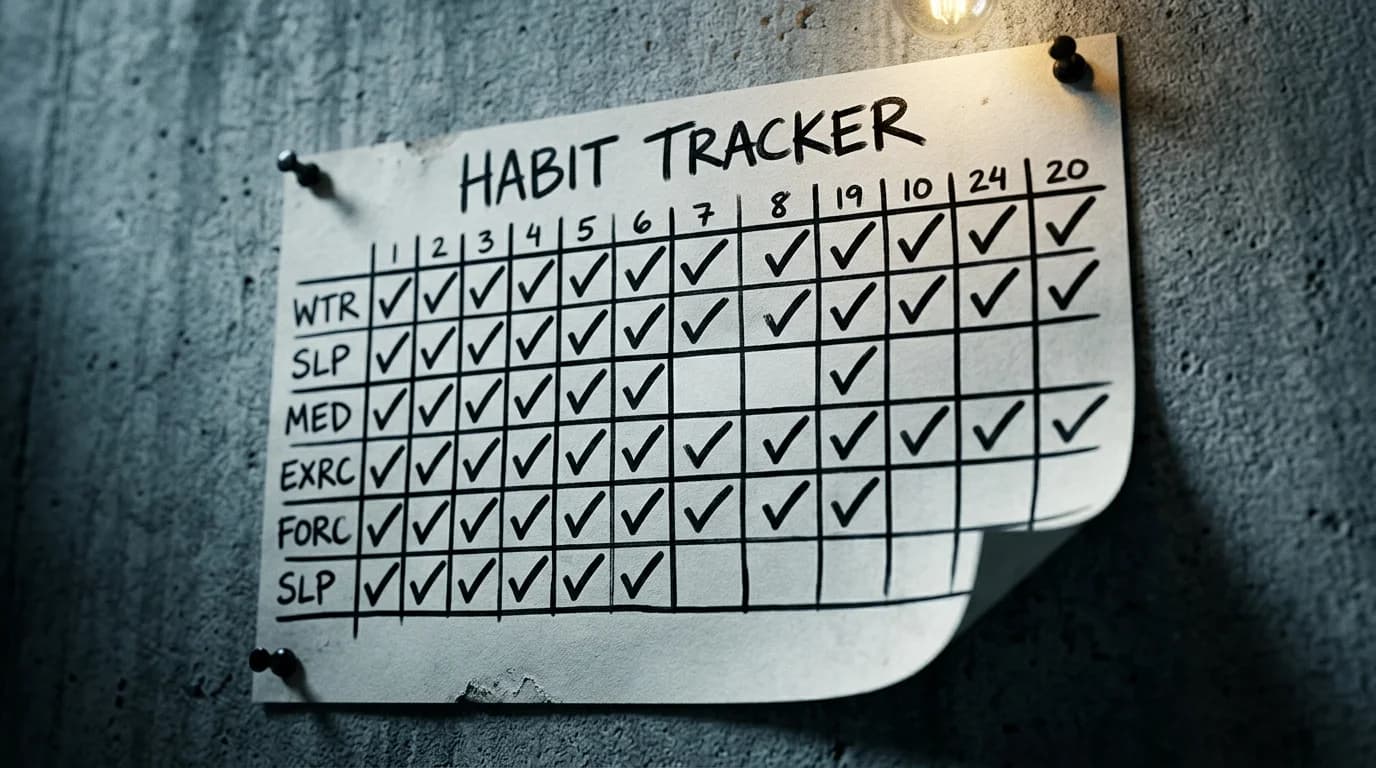
Why 30 days is the perfect length for a transformation

Ask anyone who quit a 12-week program when they quit. It's almost never week one — week one is adrenaline. It's almost never week eleven — by then the finish is visible. It's week three or four: the long flat middle where the novelty is dead, the results are quiet, and the end is nowhere in sight.
Thirty days deletes the long flat middle. By the time the novelty wears off you're nearly halfway. By the time the halfway slump lands you're ten days from photos. There is never a moment in a 30-day block where the finish line isn't in view.
Short enough to be non-negotiable
The power of a hard 30-day window is that it removes negotiation. You don't need a sustainable relationship with dessert for one month — you need a decision, made once, that holds for 30 mornings. Discipline is expensive; decisions are cheap. The tighter the window, the fewer decisions you have to fund.
That's also why the rules inside a sprint can be stricter than anything you'd tolerate long term. Zero liquid calories for a year is a lifestyle overhaul. Zero liquid calories for a month is a bet you can win.
Long enough for the body to answer
Thirty days is also the shortest window in which everything visible moves at once. Federal activity guidance is built around a weekly dose — 150 minutes of moderate activity plus two strength sessions — which means a month gives you four full doses of the thing that actually drives change, not a token sample.
On the nutrition side, a moderate deficit held for four weeks lands most people in a real, measurable range rather than a rounding error. Add the strength gained from simply learning the movements — most of the first month's progress on the bar is your nervous system, not new muscle — and the mirror has something to report.
- Four complete training weeks — enough to progress every main lift at least three times
- One full turnover of your kitchen, shopping list and default meals
- Roughly 120 repetitions of the same six daily targets
- Two photo checkpoints far enough apart to actually differ
What one month won't do
It won't take you from deconditioned to shredded, and any program promising that is selling you the photo, not the process. Habits don't finish forming in 30 days either — the research on automaticity puts the average closer to two months, with wide variation between people and behaviours.
What it will do is take you from 'I keep meaning to' to a side-by-side you'd actually show someone, with four weeks of repetitions banked. That's the fuel for whatever comes next, and it's the reason the program has an exit plan rather than a cliff edge.
The catch
A 30-day sprint only works if every day is already written. The moment you have to decide what today's workout is, or what dinner should be, you've reopened negotiations. Systems beat willpower precisely because they spend none of it.
“Motivation gets you to Day 3. The calendar gets you to Day 30.”
Sources
Written by Coach D — the voice of the certified personal trainers behind the SHRED30 system. Educational content, not medical or dietary advice.
Day 1 is free.
Go deeper: the free anatomy nutrition and strength & conditioning study guides teach the science under every article.