Photos beat the scale: how to actually track a transformation
The scale is a single number describing a body made of fat, muscle, bone, food, and several litres of water that come and go on their own schedule. It's useful. It is not the whole story, and in the middle two weeks of a cut it is frequently the least informative number you have.
Photos and a tape measure are slower, less dramatic, and far harder to argue with.
Why the mirror lags
Visible change is not linear and it isn't proportional to weight lost. Fat leaves from wherever your body decides, in an order you don't control, and the last week's water shifts can hide a fortnight of progress on any given morning.
Which is why day-to-day mirror checks are a bad instrument. You are comparing today to yesterday, with different light, different hydration and a different mood. Four fixed checkpoints, ten days apart, compare like with like.
The photo protocol
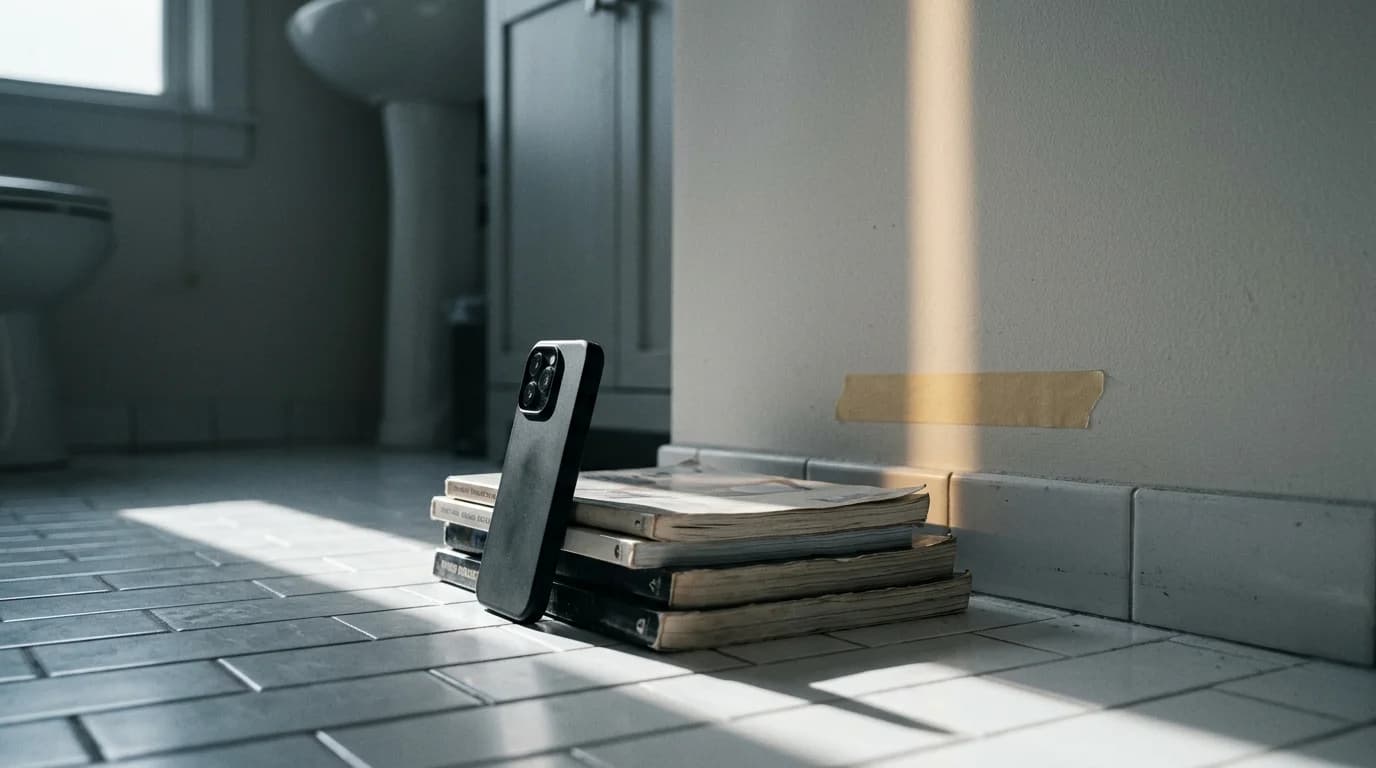
Standardise everything you can, so that the only variable left is you. Take them on days 1, 10, 20 and 30, at the same time of day, before eating.
- Three angles every time — front, side, back. Mark where you stand with tape
- Same room, same light, same time of morning, same minimal clothing
- Phone at the same height, propped, never handheld, never at an angle
- Relaxed, not flexed, on at least one shot per angle. Flexed shots are optional extras, not the record
The tape does the arguing
Four sites, measured on the same mornings as the photos: waist at the navel, hips at the widest point, chest at the nipple line, and one thigh at mid-point. Relaxed, tape snug but not compressing.
The waist number is the one to watch. It moves earlier and more honestly than body weight, and a flat scale week paired with a waist that lost half an inch is not a plateau — it's a recomposition you'd have missed.
Use all three, weight the last one
Weight daily, judged as a seven-day average. Tape and photos every ten days. When the three disagree, the photos and the tape win — they're measuring the thing you actually asked for.
And keep the Day 1 photo where you'll see it at day twenty, which is when everybody forgets what they looked like at the start.
“The scale measures gravity. The tape measures progress.”
Sources
Written by Coach D — the voice of the certified personal trainers behind the SHRED30 system. Educational content, not medical or dietary advice.
Day 1 is free.
Go deeper: the free anatomy nutrition and strength & conditioning study guides teach the science under every article.