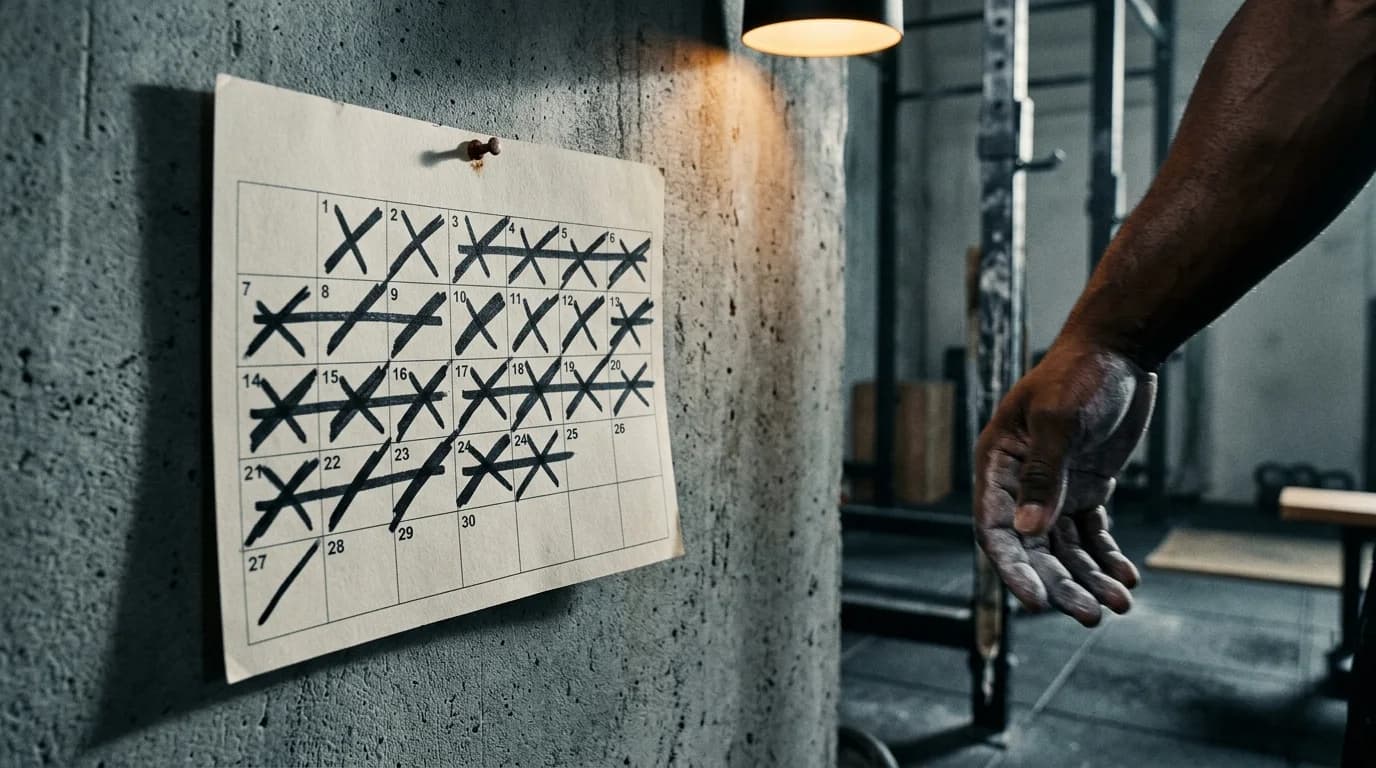
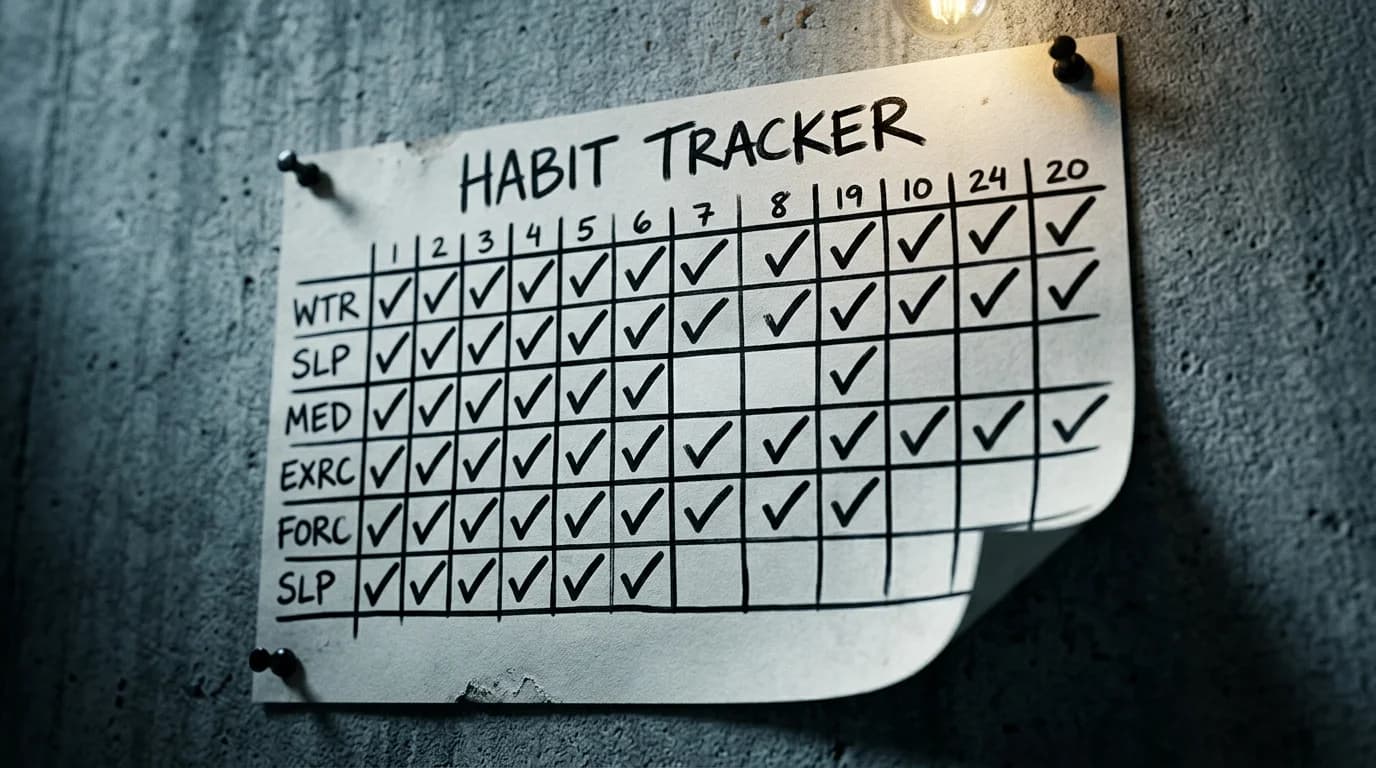
The mirror lies for two weeks. The tape doesn't

By about day twelve most people have decided nothing is happening, and they've decided it in front of a mirror. The scale has done something ambiguous, the reflection looks identical to last Tuesday, and the obvious conclusion is that two weeks of work produced nothing.
The mirror is the least reliable instrument you own, and for a specific reason that has nothing to do with your body. The tape measure costs about three pounds, takes four minutes, and settles the question with numbers you can put side by side.
Why you can't see it
You see yourself every single day. Change that accumulates at a fraction of a percent a day is invisible against a reference image that updates continuously — you're comparing today to yesterday, and yesterday was almost identical. The comparison that matters is against day one, and you cannot hold day one in your head.
Then there's the physical lag. Early fat loss comes off across your whole body rather than the one place you're watching, and it comes off underneath a layer of retained water that hasn't rearranged yet. Add lighting, time of day, how much you've eaten, and whether you trained yesterday, and the reflection has more noise in it than the scale does.
This is why the program asks for photographs at the four checkpoints and why you take them under fixed conditions. A photograph is a mirror that can't update. Day 20 next to day 1, side by side on a screen, is the comparison that actually contains information.
The four tape sites
The tape is the instrument that moves earliest and argues least. It doesn't care about water in your legs after a heavy session, and it can't be talked out of a result by bad bathroom lighting.
The program uses four sites, taken at each checkpoint on days 1, 10, 20 and 30, on the same morning as the weight and the photos.
Four is a deliberate number. One site is too easy to dismiss as a fluke and too easy to take badly; a dozen turns a ten-minute record into a chore you'll skip by day twenty. Four gives you a shape — where the change is happening and where it isn't — without turning your bathroom into a laboratory.
- Waist at the navel — the site that moves first and matters most for the shape you're after
- Hips at the widest point, tape level all the way round rather than sloping
- Chest at the nipple line, at the end of a normal breath out — not held in, not puffed up
- One thigh at its midpoint, and note which leg, because they aren't identical
- Record all four even when one of them disappoints you — a site you skip once becomes a site with a hole in its history
Taking it so it means something
The tape is easy to take badly, and taken badly it's worse than useless because it feels precise. Same morning conditions as your weigh-in: before food, after the bathroom, minimal clothing, standing relaxed rather than braced.
Pull the tape snug, not tight. The standard is that it sits flush against skin without denting it — and the way you get consistency isn't judgement, it's taking each site three times and writing down the middle value. Mark the sites the same way every time, breathe out normally, and don't measure after training.
Half an inch is a real change. A quarter of an inch is very often you pulling harder than you did ten days ago.
One more thing that costs nothing and saves the whole record: write the numbers down at the moment you take them, in the same place every time, next to the date. Measurements you intend to remember are measurements you will later reconstruct in whichever direction suits your mood.
“You cannot notice a change you are looking at every day. That is what the tape is for.”
Running the comparison
At each checkpoint, put three numbers next to each other: the seven-day weight average, the four tape sites, and the working weights on your two tracked lifts. Read them as a set rather than one at a time.
Average flat, waist down, lifts holding: you're losing fat and holding water, and the correct response is to change nothing. Average falling, tape unchanged, lifts falling: that's worth slowing down for — check protein and sleep before you check anything else. Everything down together, at a moderate rate: the program is working exactly as intended.
Compare against day 1, not against the last checkpoint. Ten days of change is small enough to disappoint you; thirty days of it is the reason you started. And if reading a tape measure or a scale reliably wrecks your day regardless of what the numbers say, that's worth taking seriously with a clinician rather than measuring more carefully.
Sources
Written by Coach D — the voice of the certified personal trainers behind the SHRED30 system. Educational content, not medical or dietary advice.
Day 1 is free.
Go deeper: the free anatomy nutrition and strength & conditioning study guides teach the science under every article.