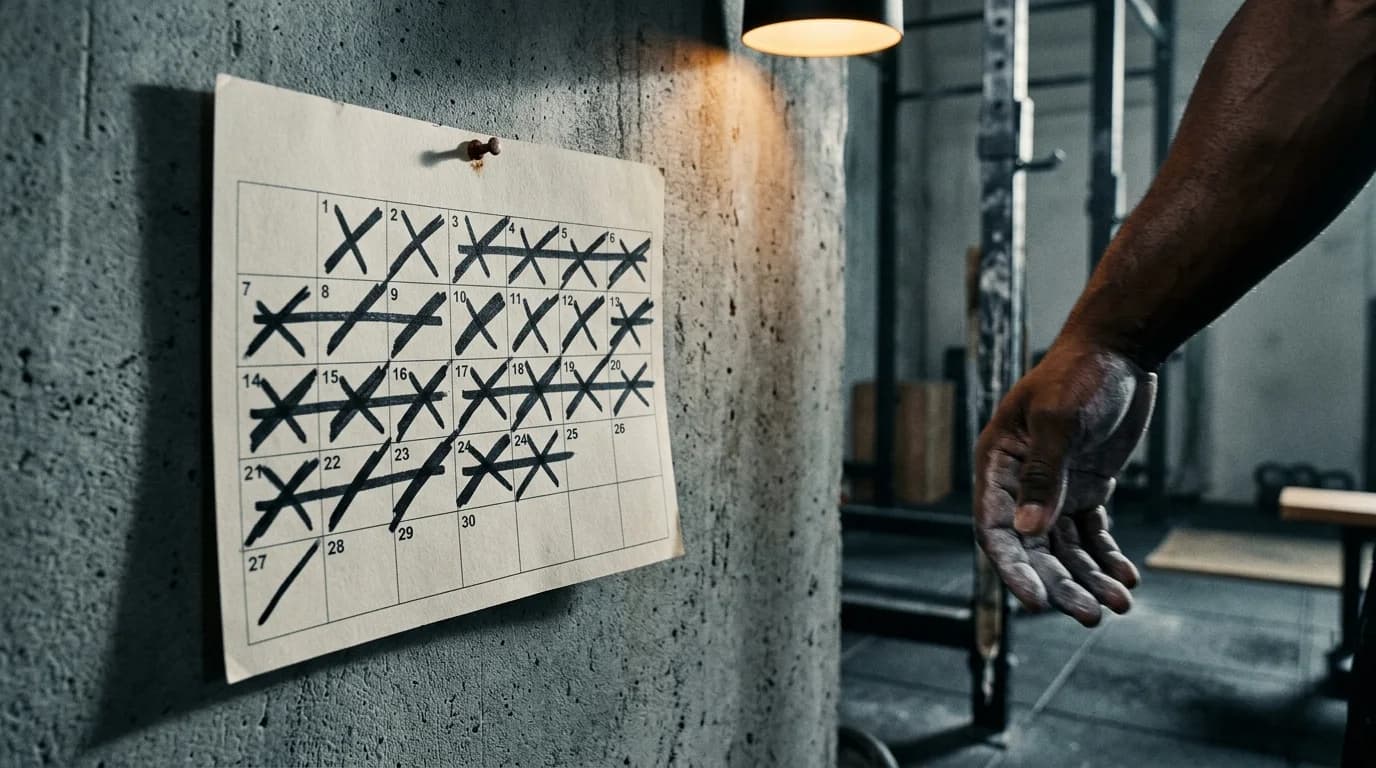
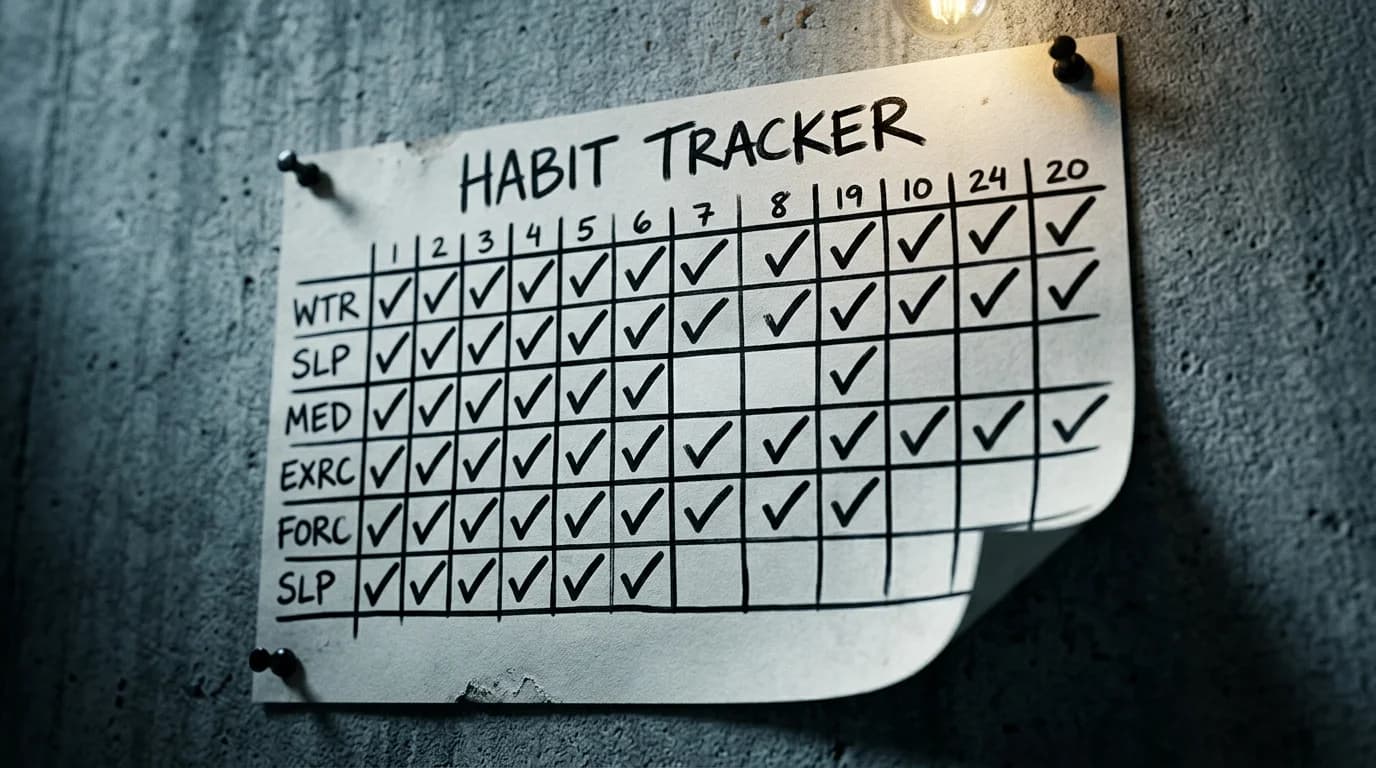
Decide once: removing food decisions for 30 days
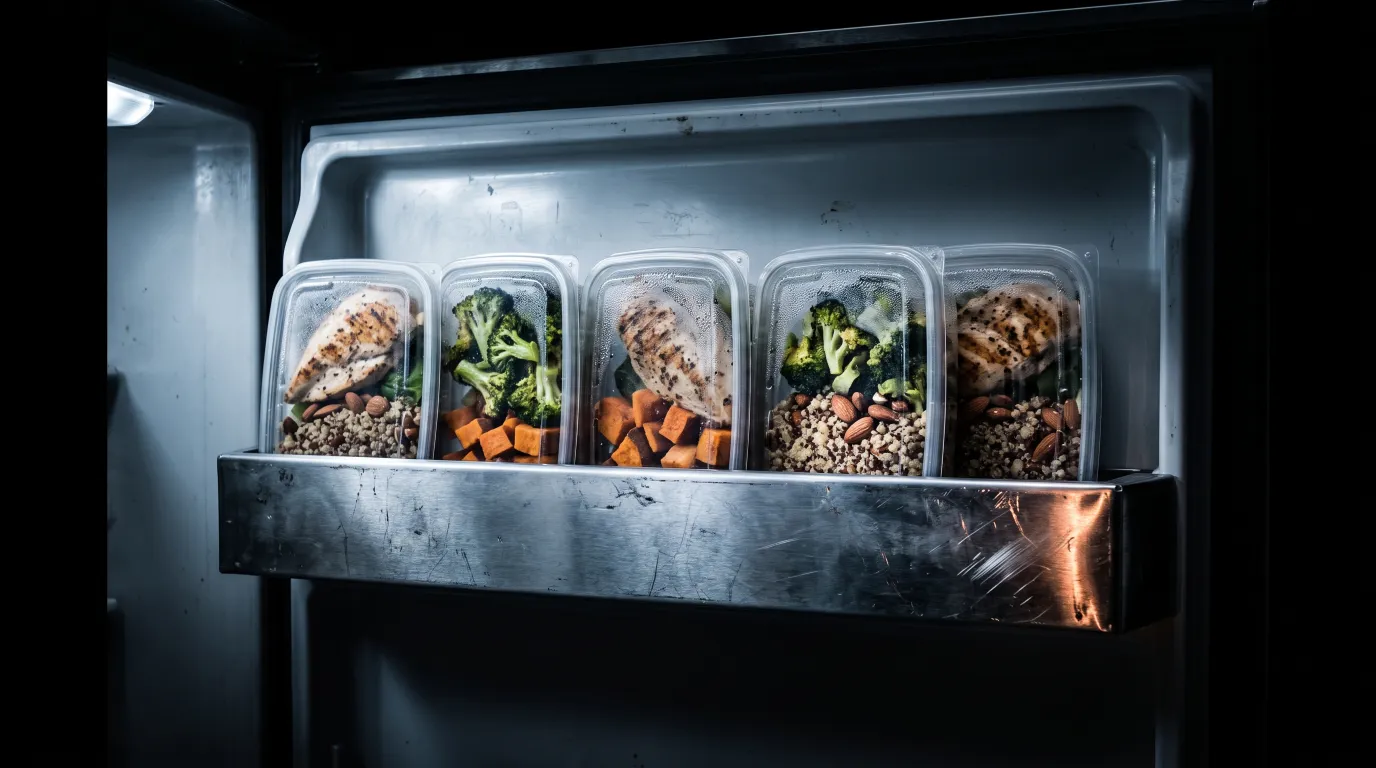
Most diets fail in the gaps between meals, not during them. Not because the plan was wrong, but because at 4pm, in an office, tired, you were asked to make a decision you'd already made forty times that day.
The fix isn't more discipline at 4pm. It's arranging the month so that 4pm doesn't contain a question.
What an open decision costs you
Be careful with the science here, because the popular version overreaches. The idea that willpower is a fuel tank that empties over the day has had a rough decade in the lab — the effect is smaller and less reliable than the paperback version suggests.
What survives is simpler and more useful. Every open decision is an opportunity for a bad outcome, and the number of opportunities is what you can actually control. A day with fifteen unmade food choices has fifteen chances to go sideways. A day with one has one.
There's a second cost that has nothing to do with willpower: an unmade decision is a delay. Delay means you're hungry when you finally choose, and hungry choosing is worse choosing. The fastest available option wins, and the fastest available option was designed to be chosen by hungry people.
How the fuel plan collapses the choices
Your dashboard doesn't ask what you fancy eating. It states what today's meals are, at a calorie and protein total that already reconciles with your targets, which converts a day of open questions into a shopping list.
That's the whole trick, and it's why the homepage promises zero decisions left to willpower. The decisions still happen — they happened once, when the plan was generated, in a calm moment, with the arithmetic visible.
Compare the two versions of a Wednesday. In the first, you know roughly what you should eat and you assemble each meal from whatever is in the fridge and whatever you feel like, which is six or seven live decisions before dinner. In the second, breakfast, lunch and dinner are already named, the ingredients were bought on Sunday, and the only thing left to do is cook. The second version isn't more disciplined. It has fewer moving parts.
- One decision at the start of the week: buy the list. Everything downstream is execution
- Every meal already has its protein share built in, so you don't have to reverse-engineer the target at dinner
- The swap table gives you variety inside the plan, so boredom doesn't force you back outside it
- Repetition is the point. The same breakfast for ten days is a feature, not a failure of imagination
- Nothing needs weighing after the first few days — you learn the portions and the plan runs itself
The swap table is not a loophole
People assume a swap table reintroduces choice, and used badly it can. Used properly it does the opposite: it fixes the structure and varies only the ingredient. Protein portion for protein portion, carbohydrate for carbohydrate, and the day's numbers land in the same place.
The rule to hold is that you swap inside the row, not between rows. Trading a carbohydrate portion for a second protein portion isn't a swap, it's a new plan, and now you're doing arithmetic at dinner again.
Do the swapping at the shopping stage, not at the eating stage. Choose the week's protein and carbohydrate sources when you write the list, buy those, and then the fridge itself enforces the plan. A decision made in a supermarket on a Sunday afternoon is a completely different quality of decision from one made in front of an open fridge at nine at night.
“You cannot lose an argument you never have.”
Where the decisions creep back in
Three places, reliably. The unplanned lunch out, the drink someone hands you, and the evening where dinner wasn't prepped and something has to be found. Each one reopens a question the plan had closed.
So pre-decide those too, in advance and in one sitting. Pick your default restaurant order now — a protein, a carbohydrate portion, vegetables, no liquid calories — and use it every time rather than reading the menu. Keep one shelf-stable emergency meal in the cupboard that hits roughly the plan's numbers. And decide your answer on drinks before you're standing in a bar being asked.
None of this is about eating perfectly. It's about making sure the decision was made by the version of you that was calm, fed and looking at the numbers.
One warning worth taking seriously. Rigidity is useful for thirty days and it is not a way to eat forever — a plan that leaves no room at all tends to break loudly rather than bend. If fixed rules around food have caused you trouble in the past, or the idea of a locked menu produces more anxiety than relief, build in flexibility from the start and talk it through with a clinician rather than pushing into it.
Sources
Written by Coach D — the voice of the certified personal trainers behind the SHRED30 system. Educational content, not medical or dietary advice.
Day 1 is free.
Go deeper: the free anatomy nutrition and strength & conditioning study guides teach the science under every article.