Day 3 is the hardest day. Here's why

Ask anyone who has finished a 30-day program which day nearly ended it, and a surprising number say the third. Not the last week, not the hardest session — day three.
There's a reason it clusters there, and it's a stack of three unrelated things that happen to land at the same time. None of them are a sign the program isn't working. All of them pass by about day five.
The novelty has run out
Day one runs on a genuinely useful chemical: the decision itself. You've bought in, the plan is new, the first session feels significant. Day two coasts on the same supply.
By day three the newness is gone and what's left is the actual arrangement — you eat this, you train then, you walk further than you'd like. That's a fair description of the next twenty-seven days, and meeting it for the first time without any novelty to soften it is genuinely unpleasant.
It's worth naming that clearly, because the story people tell themselves at this point is that they've lost their motivation. They haven't. They've simply run out of the temporary supply that came free with the decision, and the permanent supply — structure, repetition, a plan that tells you what to do — hasn't been built yet. It takes about a week.
There is nothing to look at yet
Two days of a deficit produce a change too small for a mirror and mostly buried in the noise of the scale. You cannot see anything, and your seven-day average doesn't even have seven days in it, so the progress page can't reassure you either.
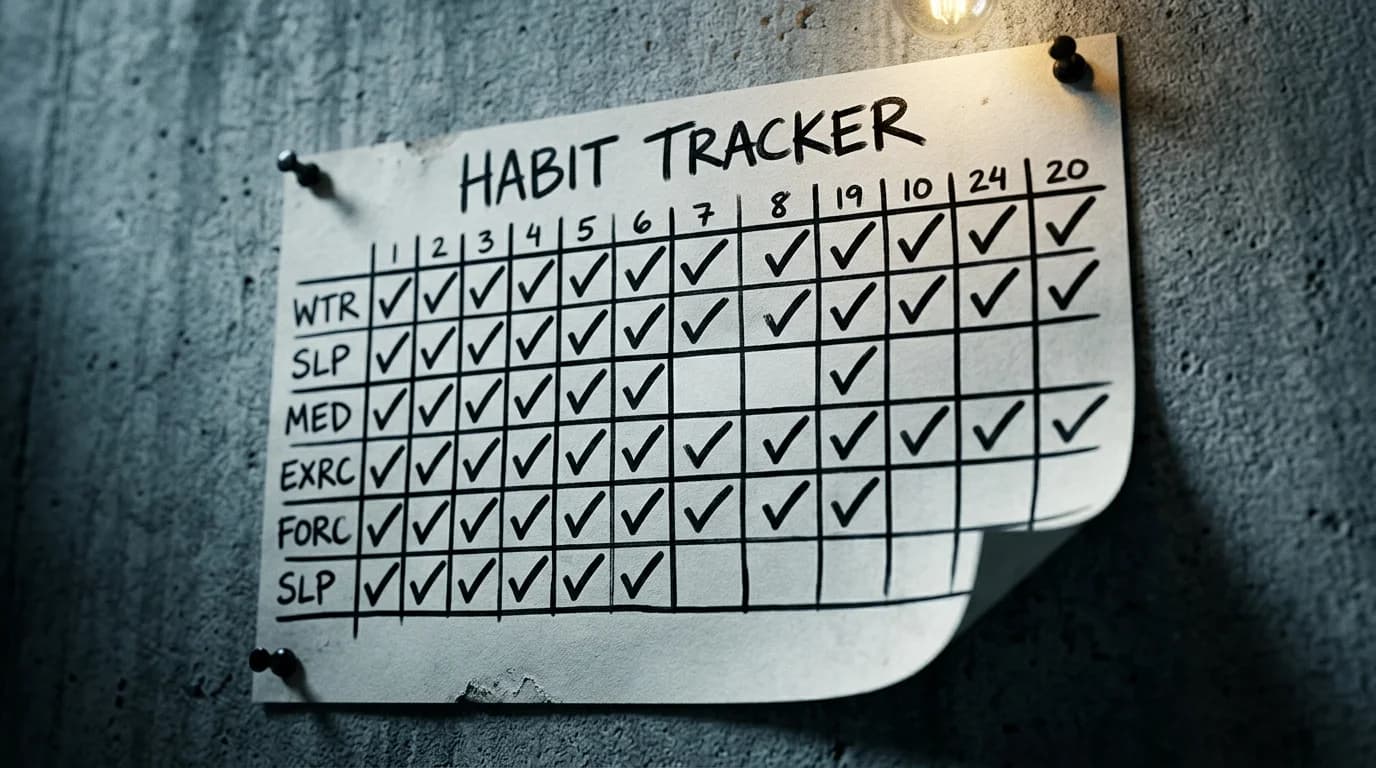
This is the specific gap the streak counter and the compliance percentage exist to fill. On day three they are the only honest evidence available that you're doing the thing, and looking at them is not a consolation prize — it's the correct instrument for that point in the month.
Your glycogen is down and your brain has noticed
In the first few days of eating less carbohydrate than you were, stored glycogen falls. Water leaves with it, which is why the scale often drops fast in week one, and which is also why the first days can feel oddly flat — heavy legs in the warm-up, a session that costs more effort for the same weights, a low hum of tiredness in the afternoon.
Add reduced total food volume and the salt drop that comes with cooking your own meals, and day three is a fairly predictable trough. Your body is mid-adjustment. It resolves.
It resolves faster if you stop fighting the wrong part of it. The heavy-legs feeling in a session is not a sign you should train harder to prove something, and it's not a sign the level you picked is wrong. Hold the reps, take a little off the bar if you need to, and let the second week tell you what your real working weights are.
The four moves
Nothing here is inspirational. They're all mechanical, and they all work by shrinking the decision in front of you until it's smaller than the resistance to it.
- Shrink the target to today. Do not think about day thirty on day three — the only decision available to you is the next meal and the next session
- Use the ten-minute floor. Warm-up plus the first exercise, done properly. You'll usually finish the session, and if you don't, the context survived
- Eat your protein early. A carbohydrate-only breakfast is where most day-three hunger comes from, and a quarter of the day's protein at the first meal fixes it before it starts
- Check the water target before you decide you're hungry. Week one dehydration is common and it reads as appetite
- Go to bed thirty minutes early. It is the highest-leverage thing you can do on a day that has otherwise gone badly
What day four looks like
Better, usually — not because you toughened up, but because the glycogen and fluid adjustment settles, the meal plan has stopped being unfamiliar, and the day counter on your dashboard has passed the point where quitting still feels like it costs nothing.
The other thing that changes is that you stop having to decide. By the end of the first week the meal plan has become a shopping list rather than a set of instructions, the session has a familiar shape, and the walk has found its slot in the day. That's the permanent supply arriving, and it is far more durable than the day-one feeling ever was.
If it's still hard on day six, that's worth a look rather than more willpower. Persistent dizziness, cold hands, wrecked training and no energy usually mean the intake is genuinely too low for you or something else needs checking — take that to a clinician instead of pushing harder into it.
“Day three isn't the program failing. It's the program starting.”
Sources
Written by Coach D — the voice of the certified personal trainers behind the SHRED30 system. Educational content, not medical or dietary advice.
Day 1 is free.
Go deeper: the free anatomy nutrition and strength & conditioning study guides teach the science under every article.