The Daily Six, ranked by impact

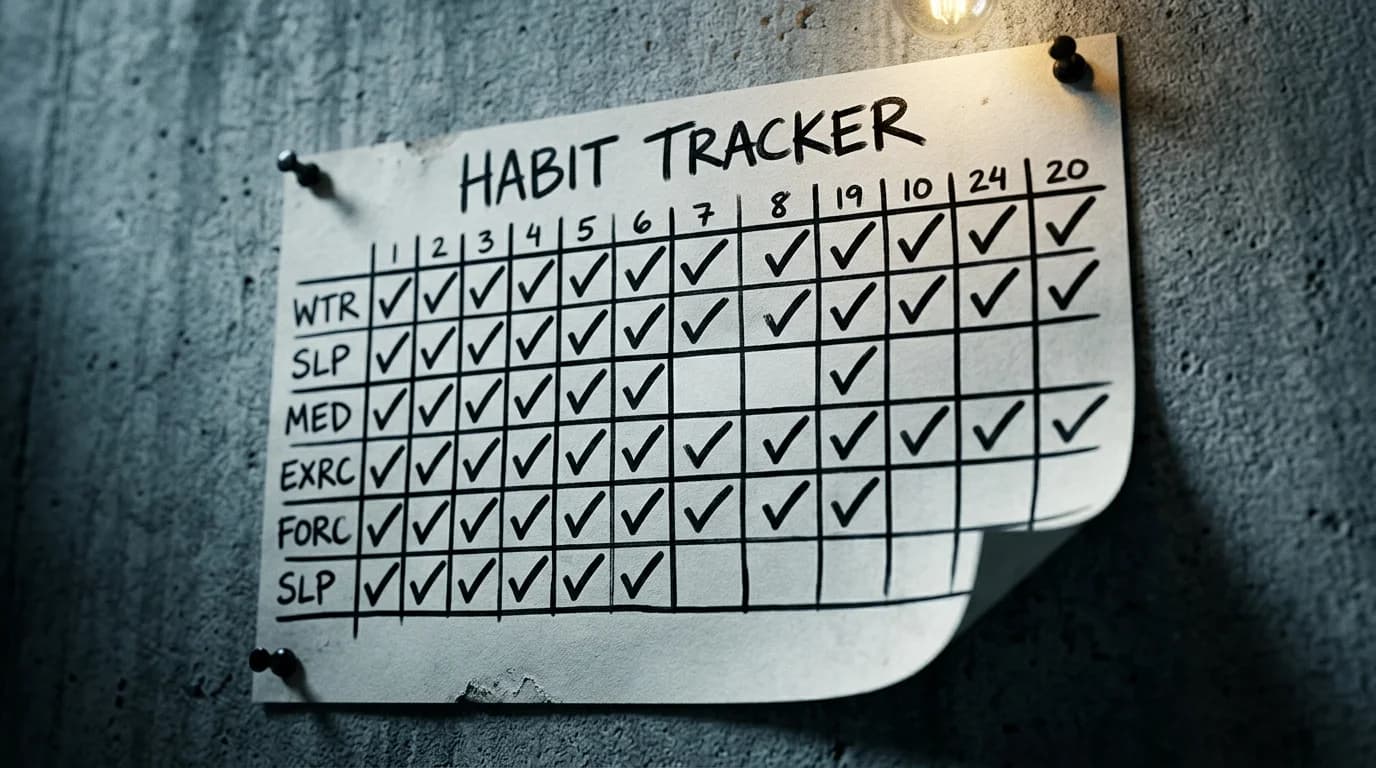
The dashboard gives you six targets and shows them as equals: training done, calories on target, protein hit, steps, 3.5 litres of water, seven hours of sleep. Six identical boxes, one tick each.
That's deliberate — a scoreboard that weighted them would be harder to read and easier to game. But on a day when work explodes and three of them are gone by 6pm, you need to know which three to save. This is that ranking, and the reasoning behind it.
The order
Ranked by contribution to what the scale and the tape do over thirty days, for most people, most of the time.
- Calories on target — the deficit is the mechanism. Nothing else on this list substitutes for it
- Protein hit — decides how much of the loss comes from fat rather than muscle, and makes the calorie target survivable
- Training done — the signal that tells your body to keep the muscle it has while you cut
- Steps — the largest adjustable slice of daily burn, and the one that quietly collapses when you diet
- Sleep — small on paper, but it moves appetite, training quality and adherence on the three targets above it
- Water — the easiest to hit, the least dramatic if you miss it by half a litre for one day
Why the top three are the top three
Fat loss requires an energy deficit. That's not a philosophy, it's the mechanism, and every other target on the list is either supporting it or protecting what you keep while it happens. Miss the calorie target badly enough, often enough, and nothing else you do that month matters.
Protein sits second because it changes the composition of what you lose. The ISSN position stand puts intake for building and maintaining muscle at roughly 1.4 to 2.0 grams per kilogram of body weight per day, with the higher end favoured when you're training hard in a deficit — which is exactly your situation. Training sits third for the same reason: it's the stimulus that makes protein worth eating. The two are a pair, and neither works nearly as well alone.
Protein also earns its rank a second way, which is that it makes the first target achievable. It's the most satiating macronutrient per calorie, so the day you hit your protein number is reliably the day the calorie number feels manageable. Miss it and you spend the evening negotiating with yourself.
Why sleep's rank is slightly dishonest
Sleep is fifth on direct contribution and roughly first on everything indirect. Short sleep raises appetite and perceived effort, which makes hitting the calorie target harder and the training worse — so a bad sleep week shows up as a bad compliance week on the three targets that actually drive the result.
The AASM and Sleep Research Society recommend seven or more hours a night for adults. Treat it less as the fifth box and more as the multiplier applied to the first three. Persistent trouble sleeping over weeks is worth raising with a clinician rather than absorbing as a personality trait.
The practical version: don't trade sleep for any of the targets above it. A 5:30am session that costs you ninety minutes in bed is a bad trade even though it ticks target one, because it degrades the next two days of eating. Move the session instead.
“Sleep is ranked fifth and behaves like a multiplier on the first three.”
The three-target day
So the rescue order on a collapsing day is calories, protein, training. Two of those three are decisions rather than time — you can hit your calorie and protein numbers in a day that contains no gym and no walk at all, which is why they're the ones to defend when the diary turns hostile.
If training is genuinely gone, take the miss cleanly. Four out of six is a good day in a bad week, and your compliance score is an average across 180 targets rather than a streak that shatters. Nothing about a four-target day requires a response tomorrow.
Decide the three in advance rather than at 9pm. Know which meals hold your protein, know the shortest version of the session that still counts, and the collapsing day has a plan attached to it before it arrives.
What not to do with this ranking
Don't use it to retire the bottom half. Water is last because it's easy and forgiving, not because it's optional, and a week of ignoring steps is a few thousand calories of burn you simply didn't do.
The ranking is a triage tool for bad days. On ordinary days the answer stays six out of six, and the whole reason the program works is that most days are ordinary.
It's also a general ranking rather than a personal one. If you sleep five hours a night, sleep is your first target and everything above it is theoretical. Look at which box you miss most often across a fortnight — that one, for you, outranks this list.
- Use the order only to triage a day that has already gone wrong, never to plan a normal one
- Your own worst-hit target outranks the ranking — check a fortnight of boxes before you decide which that is
- Never trade sleep for a target above it. The trade looks good on the dashboard and costs you the next two days
- The bottom two are easy, not optional. Water takes no effort, and a week of ignored steps is real burn you simply didn't do
Sources
Written by Coach D — the voice of the certified personal trainers behind the SHRED30 system. Educational content, not medical or dietary advice.
Day 1 is free.
Go deeper: the free anatomy nutrition and strength & conditioning study guides teach the science under every article.