Progressive overload in 30 days without getting hurt
Progressive overload is usually explained as 'add weight to the bar'. That is decent advice for month six and poor advice for a 30-day cut, because you are eating below maintenance and the bar is not going to move up every week. Treating that as failure is how people reach for a number their tendons have not agreed to.
The actual definition is broader and more useful: give the body a demand slightly larger than the one it has already adapted to. Load is one way of doing that. There are at least four others, and most of them are safer.
The five levers
Every one of these makes a session harder than last week's without touching the weight. Pull one at a time, and change one variable per exercise rather than three at once — otherwise you cannot tell what worked.
- Reps at the same load — add one or two per set before you touch the weight. It is the cheapest progression available and the one the rule of two is built around
- Sets — a single extra working set on the main lift adds real volume without asking you to lift anything heavier
- Range of motion — a squat two inches deeper is a harder squat at identical load, and it costs nothing but honesty
- Tempo — three seconds lowering instead of one roughly doubles the time the muscle spends under tension per rep
- Rest — the same sets and the same weight completed in less time is more work per minute, which is exactly the progression the later phases lean on
Why reps come before weight in a deficit
Two reasons. Recovery capacity falls when energy intake falls, so the same jump in load costs more than it would at maintenance. And connective tissue — tendon, ligament, the parts that actually get injured — adapts more slowly than muscle does, so muscle can often move a weight that the structures around it are not yet ready for repeatedly.
Reps sidestep both. Work the top of your rep range at a given weight for a week, then move the load up and start again at the bottom of the range. That is the whole system, and it will carry you through thirty days without a single heroic decision.
In practice it looks like this. Three sets of eight at 20kg becomes three sets of ten, then three sets of twelve, at which point the weight goes to 22.5kg and you are back to eight. Every one of those weeks was harder than the last, and you never once guessed at a jump.
Sensible weekly increments
When the load does move, move it in the smallest jump the equipment allows, roughly once a week rather than every session. Upper-body lifts take smaller increments than lower-body ones because the muscles involved are smaller — a 2.5kg jump on a lateral raise is a huge relative increase, while the same jump on a leg press is invisible.
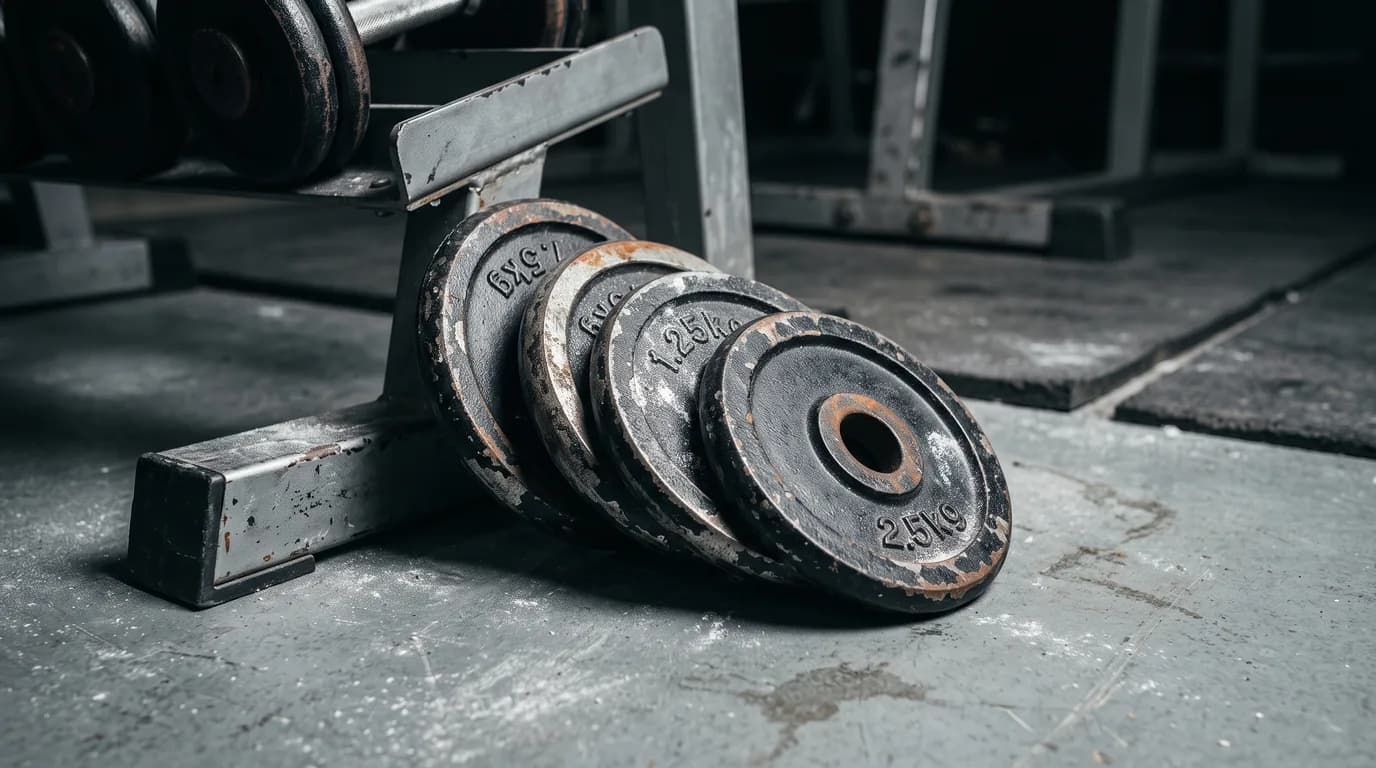
As a working rule: around 1 to 2.5kg on upper-body lifts, around 2.5 to 5kg on lower-body lifts, per week, and only when the current load already meets the rule of two comfortably at the top of the rep range. Dumbbells often jump in bigger steps than that, so bridge the gap with reps until the next pair up becomes manageable.
A flat week is not a failed week
In a deficit, holding the same weight for the same reps while your body weight falls means you got stronger relative to your size. That is a real adaptation and it does not show up anywhere on the dashboard, which is why it is worth saying out loud.
Expect the progression to slow in PEAK. By then your calories are lower, your step target is higher, and rest periods have shortened. Maintaining load under those conditions is the win.
One more thing about thirty days: a large part of the early improvement is not new muscle at all. Your first fortnight of gains comes mostly from learning the movements — better coordination, a more confident bottom position, less hesitation under the bar. That is real progress and it is also why week-one jumps are much larger than anything you will see in week four.
“In a deficit, the same weight for the same reps at a lighter body weight is progress wearing a disguise.”
When to add nothing at all
Bad sleep, illness, a stressful week, or a session where your form changed shape on the second set — those are all days to repeat last week's numbers exactly. Nothing is lost. Overload is a monthly trend, not a daily obligation.
And the hard rule: never progress load through pain. Sharp pain, joint pain, or discomfort that is still there the following day means stop the movement and get it assessed by a clinician rather than adding another 2.5kg to see what happens.
Sources
Written by Coach D — the voice of the certified personal trainers behind the SHRED30 system. Educational content, not medical or dietary advice.
Day 1 is free.
Go deeper: the free anatomy nutrition and strength & conditioning study guides teach the science under every article.