Knee pain when squatting: causes and substitutions
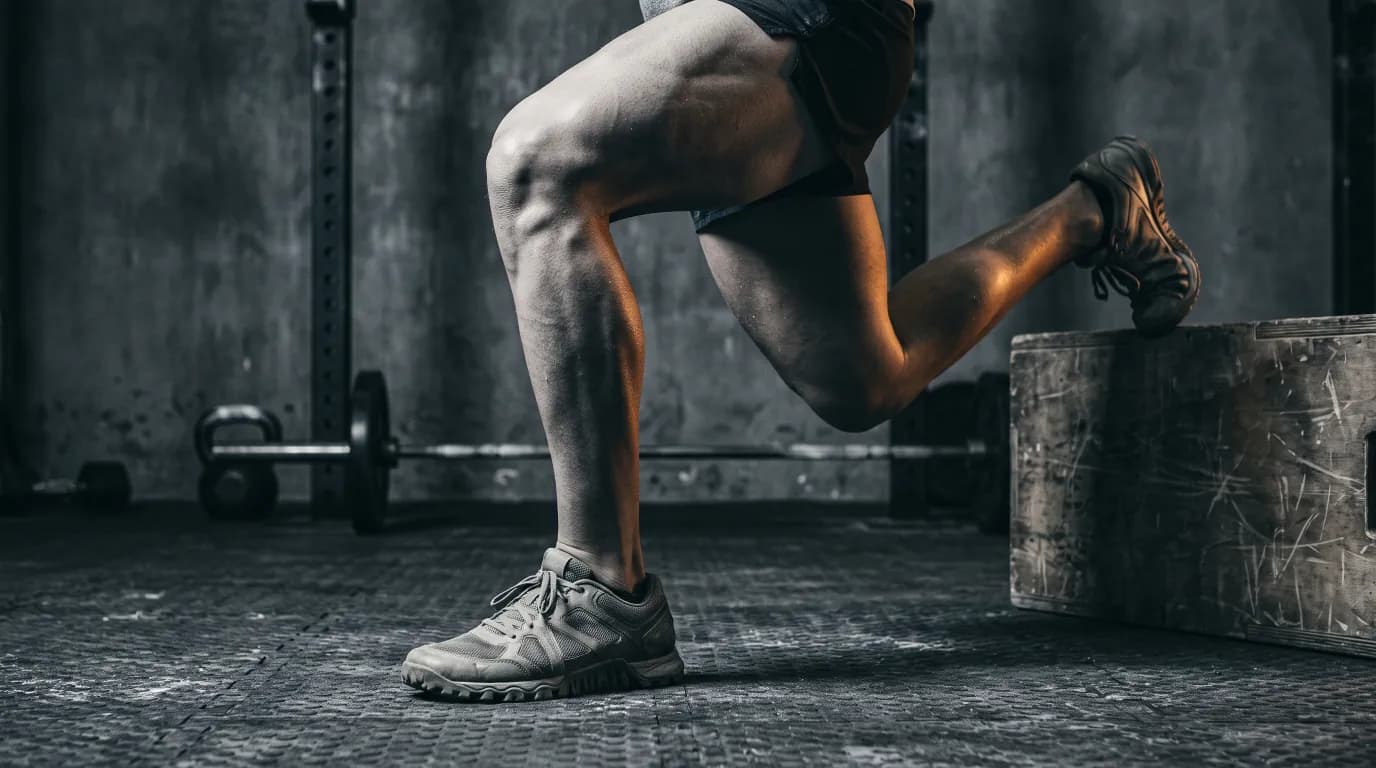
Knee pain in a squat is usually reported at the front of the joint, around or under the kneecap, and it usually turns up in week two — a few days after the loads started getting interesting.
That timing is the clue. In most cases nothing is damaged. The joint is being asked to absorb more than it has adapted to, in a position it isn't yet strong in, and there are four things to change before you change the exercise.
The variables to change first
Work through these one at a time and give each two sessions before judging it. Changing three things at once means you learn nothing about which one mattered.
- Load — take twenty-five percent off and keep the reps. This alone resolves a large share of front-of-knee pain within a week
- Depth — work in the range that doesn't provoke it, using a box or a target you can reach cleanly, then lower the target as it settles
- Tempo — three seconds down instead of dropping in. Most kneecap pain is provoked by the speed of entry into the bottom position, not the position
- Stance — a slightly wider stance and toes turned out a little lets the hips share more of the work. Small adjustments, then retest
- Volume — if you've added squat days, jumped a level, or doubled your step count in the same week, that's the change to undo first
What knees over toes actually means
The rule that your knees must never pass your toes has been comprehensively retired, and it caused real problems while it lasted. Blocking forward knee travel doesn't remove load from the body, it moves it — the hips have to travel further back and the spine takes more of it.
Forward knee travel is normal, it's necessary for a squat to reach depth, and it's how you walk down stairs. The knee joint is built for it.
What isn't ideal is the knees collapsing inward under load, which is a different thing entirely. That's usually either a load too heavy for the position or an ankle that can't bend forward far enough — the ankle test in the mobility article in this batch is the first place to look.
Four substitutions that keep the stimulus
If none of those variables have fixed it, swap the movement rather than skipping the day. Lower Body Power days exist to load the quads, glutes and hamstrings hard. All four of these do that.
- Box squat — the pause at a fixed height removes the fast bottom position and gives you a depth you can raise or lower precisely
- Rear-foot-elevated split squat — one leg at a time, far less absolute load, and often comfortable when a back squat isn't
- Leg press through a partial range — set the range you tolerate and load it properly. The stimulus survives the shortened range
- Hip thrust and Romanian deadlift — hip-dominant work that keeps lower-body volume going while the knee gets a quieter week
“You are not skipping the day. You are choosing the version of it the joint will let you do properly.”
Building the knee back up
Load management is what settles it. Load is also what fixes it, which is the part people miss — a joint that hurts under load usually needs graded, tolerable load rather than avoidance.
In practice that means slow, controlled quadriceps work in the range that doesn't provoke symptoms, three times a week, gradually adding either weight or range but not both at once. Step-downs from a low box, split squats to a comfortable depth and slow leg extensions through a partial range all qualify. Aim for discomfort you'd rate as mild that has gone by the next morning.
Expect this to take weeks rather than days. It will often outlast the thirty days, which is fine — the program is a start, not the whole training life.
One thing not to do is drop lower-body training and add the steps somewhere else. Walking is fine and usually helpful, but a knee that hurts under load doesn't get stronger from more walking, and the step target climbing through the month means the joint is getting more of that either way.
When to get it looked at
Some presentations need assessment rather than a substitution: swelling that comes up after a session, a knee that locks or gives way, pain following a specific twist or impact, or pain that is getting steadily worse across two weeks despite everything above.
The same applies if you've had knee surgery, have a diagnosed knee condition, or are managing arthritis. A physiotherapist can tell you which loading is right for your knee in a way an article about a general program cannot.
The rest of the time, the honest expectation is this: a knee that started complaining in week two will usually settle inside a fortnight of lighter, slower, shallower squatting, and will be stronger at the end of the month than it was at the start. What it won't survive is being ignored for three weeks and then asked for a heavy set on day twenty-eight.
Sources
Written by Coach D — the voice of the certified personal trainers behind the SHRED30 system. Educational content, not medical or dietary advice.
Day 1 is free.
Go deeper: the free anatomy nutrition and strength & conditioning study guides teach the science under every article.