Bike, rower, sprint or burpees? Choosing one HIIT modality
The HIIT note on the dashboard is one line — pick one modality and keep it for 30 days — and it's the instruction people most often ignore, because variety feels like it should be good.
Here it isn't, for two specific reasons. And once you've accepted that you're choosing once, the choice deserves five minutes of thought about joints and skill rather than whichever machine is free.
Why one modality for the whole block
The first reason is measurement. Intervals only progress if you can compare this week to last week. Same modality means the numbers mean something — calories on the bike, metres on the rower, reps in a round. Switch every session and you have four unrelated data points and no way to know whether you're getting fitter.
The second is tissue tolerance. Every modality loads different structures, and tissues adapt to repeated exposure gradually. Rotating through four unfamiliar options during a month when you're also lifting hard and eating less is how you introduce soreness and niggles that cost you sessions. Pick one, let your body get used to it, then progress inside it.
The four options, honestly compared
Rank them on two axes: how much load goes through your joints, and how much technique the movement demands when you're tired. Both matter more than which one burns most, because the one you can do hard for 30 days beats the one that looks best on paper.
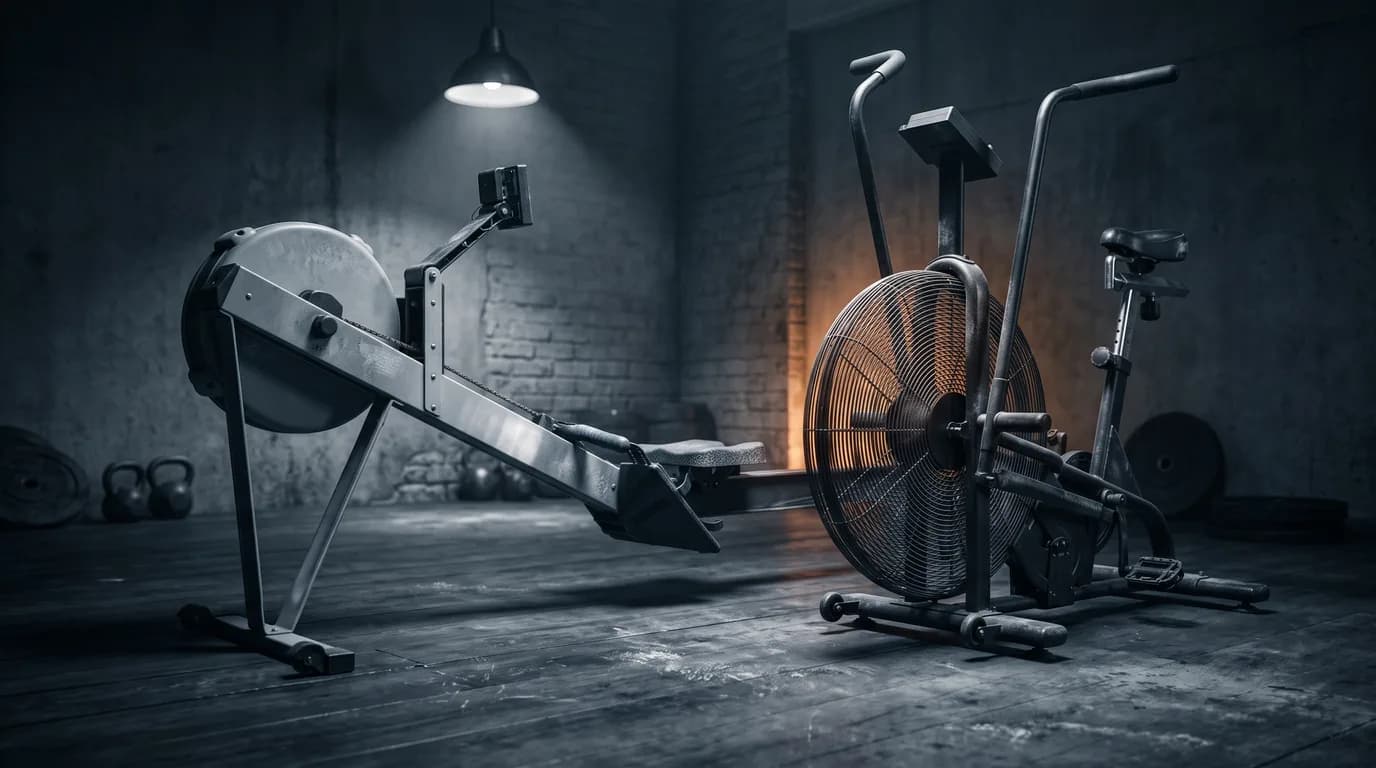
- Stationary or air bike: lowest joint load, lowest skill, easiest to push genuinely hard on. The default choice if you're carrying more weight, coming back from a lower-limb injury, or new to intervals.
- Rower: excellent full-body option and the highest technique demand of the four. Form degrades under fatigue and a poorly executed row loads the lower back. Worth it if you already row well or will spend a session learning.
- Sprints, running or hill: highest joint load and the highest injury risk of the four, particularly to the hamstring, and particularly for people who haven't sprinted in years. If you choose this, build in with hill sprints or a gradual acceleration rather than flat-out from day one.
- Burpees: no equipment, moderate joint load, and a hidden skill cost — the push-up and the jump both degrade when you're gassed. Best used as the fallback for travel days rather than as the primary choice for the block.
Match it to where you are
If you're at the beginner level or carrying significant weight, take the bike. It lets you reach a genuinely high effort without asking your knees and ankles to absorb it, which means you get the training stimulus that interval work is for rather than a manageable version of it.
If you have a lower-limb niggle, the bike or the rower. If you're already a runner, sprints are a legitimate choice and you'll progress them faster than anything else. If your only equipment is a floor, burpees, with the push-up scaled to a step you can hold form on.
Whatever you pick, the guidance from the major activity bodies is the same underneath: vigorous activity delivers the same benefits as moderate activity in about half the time, which is exactly what a short interval session is for.
One thing that shouldn't drive the decision is calories burned. The differences between these four over a short session are small, they're smaller than the measurement error on any machine's display, and none of them is large next to your calorie target. The intervals are there for conditioning and for the training effect, not as a way to earn food back.
“The best modality is the one you will still push hard on in week four.”
Progressing inside the choice
Once the modality is fixed, progression is straightforward. Hold the work interval and the rest interval as written, and improve the output — more metres, more calories, more reps in the same time. That's the number to write down and beat.
Write the number down somewhere you'll see it — a note on your phone is enough. Interval sessions are short and they blur together, and the difference between week one and week four is invisible unless you recorded it. This is the same reason the dashboard tracks the rest of the Daily Six rather than trusting your memory.
Add rounds only when the plan does. Interval work is potent and expensive, and adding your own volume on top of a program that already includes lifting, steps and a deficit is the fastest way to arrive at week three too tired to lift.
One caution before you start
High-intensity intervals mean genuinely hard efforts, and that's a real cardiovascular demand. If you have a heart condition, high blood pressure, chest pain on exertion, or you've been inactive for a long time, get clearance from a clinician before you start interval work — and start with the bike when you do.
For everyone else, the instruction stands. Choose once, note what you did, and spend the next 30 days beating your own number instead of shopping for a new machine.
Sources
Written by Coach D — the voice of the certified personal trainers behind the SHRED30 system. Educational content, not medical or dietary advice.
Day 1 is free.
Go deeper: the free anatomy nutrition and strength & conditioning study guides teach the science under every article.