Cold, dark, silent: the bedroom protocol
Target six on the dashboard asks for seven hours or more. Most people trying to hit it are working on the wrong end of the problem — lying in the dark negotiating with themselves, in a room that is quietly making the job harder.
Everything below is a one-off. You set the room up on a Sunday evening and it goes on working every night for the rest of the program, without you having to remember anything at 11pm.
Cold, and colder than you think
Falling asleep requires your core temperature to drop, and your body does that by dumping heat out through your hands, feet and face. A warm room slows the dump down. That's the physiology behind the specific experience of being exhausted and still lying there wide awake.
Sleep guidance converges on a bedroom in the mid-to-high teens Celsius — roughly 60 to 67°F. That is colder than most people keep a living room, and it feels wrong for about two nights. The shape you want is cold room, warm bed: turn the heating down and add a layer to the duvet rather than to the air.
A hot shower an hour before bed works with this rather than against it. The heat brings blood to the skin, and when you get out, the same heat dump happens faster.
This matters more during a cut than it does the rest of the year. You're training harder, you're carrying more heat into the evening from an afternoon session, and a bedroom that was fine in January becomes the reason you're lying awake in week three.
Dark, including the lights you stopped noticing
Light is the main signal your circadian system uses to work out what time it is, and it doesn't only count the bright stuff. A streetlight through a gap in the curtains, a standby LED on the television, a charging indicator on the desk — all of it is input.
Blackout curtains are the complete fix. An eye mask is the five-pound version and works nearly as well. Electrical tape over every standby light in the room costs nothing and takes four minutes.
The other half of the same system runs in the morning. Getting outside into daylight in the first hour after waking is the strongest available anchor for the timing of the following night, and it costs you nothing you weren't already spending. Do it on the way to your first thousand steps and you've hit two targets with one walk.
Silent, or at least consistent
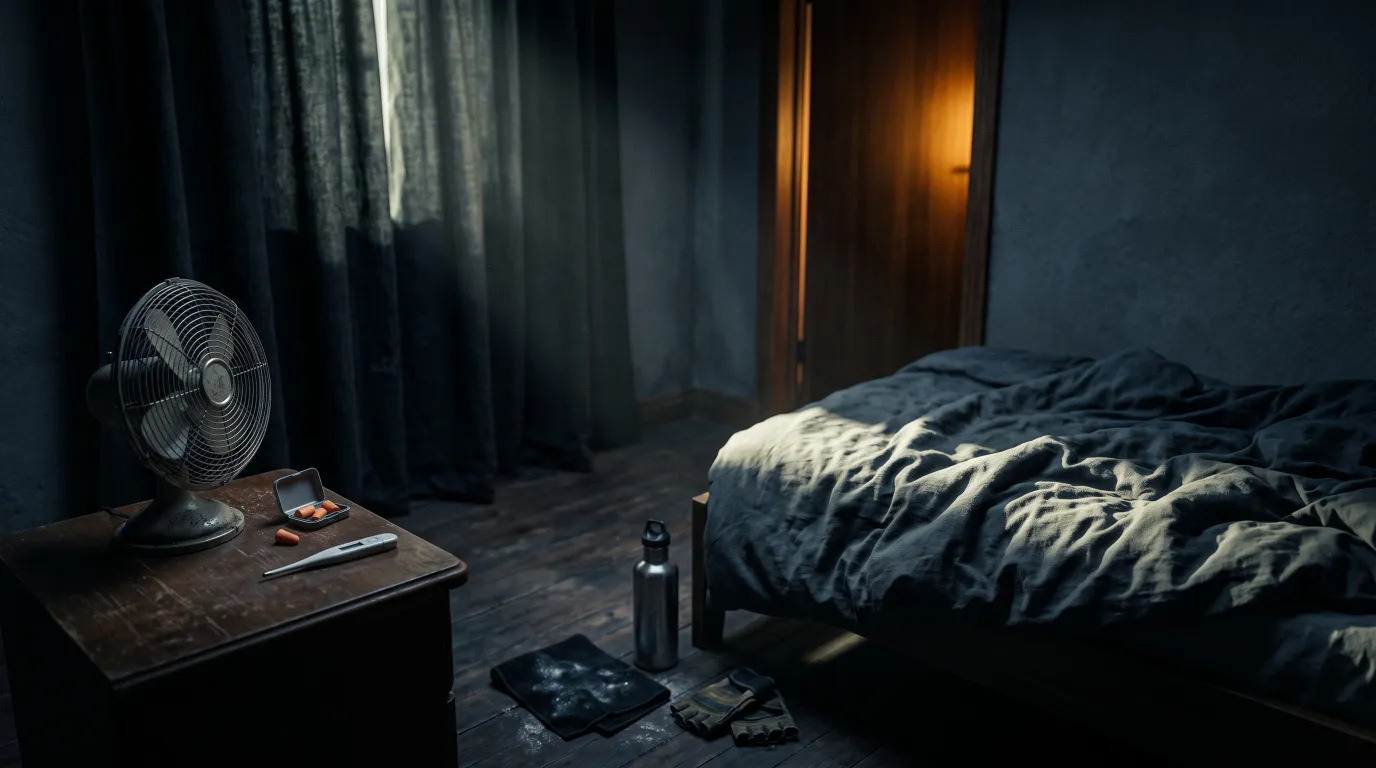
What wakes people isn't volume, it's change in volume. A road that is steadily loud disturbs sleep far less than a quiet street with one car door at 2am. That's why masking beats silencing: a fan or a white-noise source raises the background floor so individual events stop standing out against it.
Foam earplugs do the same job from the other direction and cost pennies. Try both — most people find one of them tolerable and the other unbearable, and which is which is not predictable.
One thing here isn't an equipment problem. If your partner snores loudly and you notice pauses in their breathing, or if you're gasping awake yourself, that is worth raising with a clinician rather than solving with earplugs.
The twenty-minute rule
If you've been awake for roughly twenty minutes, get up. Leave the bedroom, keep the lights low, do something dull, and go back when you feel sleepy. Don't check how long it's been — estimate, because clock-watching is its own stimulant.
This feels like the opposite of the right answer, and it's the single most evidence-backed behavioural piece of insomnia treatment. Lying awake in bed teaches your brain that bed is a place where you lie awake. Getting up protects the association you actually want, which is bed means sleep.
Persistent trouble falling or staying asleep — weeks of it, not a bad Tuesday — is a clinical matter and worth taking to your doctor rather than to another article.
“A bedroom is a piece of equipment. Most people have never set theirs up.”
The one-evening checklist
The Sleep section of the playbook at /dashboard/guide runs through the same list in the order the program expects you to do it. Set the room up once, then spend your attention on the two behaviours in the next two articles — caffeine timing and the last hour before bed — which are where the remaining minutes actually are.
None of this is dramatic. The reason it's worth an evening is that it's the only sleep intervention that doesn't ask anything of you at eleven at night, when you have the least willpower available and the most reason to spend it elsewhere. Everything else on the Daily Six needs a decision every day. The room only needs one.
- Turn the thermostat down for the bedroom and add a duvet layer instead — cold room, warm bed
- Blackout curtains or an eye mask, plus tape over every standby LED in the room
- A fan or white-noise source running continuously, or foam earplugs — mask the noise floor rather than chasing silence
- Phone charges in another room. If it's your alarm, buy the cheapest clock you can find and end the argument
- Fix the wake time first, including at weekends. It's the anchor everything else hangs from
Sources
Written by Coach D — the voice of the certified personal trainers behind the SHRED30 system. Educational content, not medical or dietary advice.
Day 1 is free.
Go deeper: the free anatomy nutrition and strength & conditioning study guides teach the science under every article.